Methanol
67-56-1 · a primary alcohol · a secondary alcohol · Alcohol, methyl · Alcohol, Wood · Alcool methylique · Alcool metilico · Alkohol metylowy · Carbinol · Carbonal · CAS-67-56-1 · Caswell No. 552 · CCRIS 2301 · EPA Pesticide Chemical Code 053801 · Freers Elm Arrester · HSDB 93 · Hydroxymethane · MeOH · Metanol · Metanolo · Methanol · Methanol cluster · Methanol LC-MS · Methanol, ACS Grade · Methanol, ACS reagent, >=99.8% · Methanol, anhydrous · Methanol, for HPLC · Methanol, for HPLC, >=99.9% · Methanol, HPLC grade · Methanol, or methyl alcohol [UN1230] [Flammable liquid, Poison] · methanol- · Methanol; Methyl alcohol · methly alcohol · Methoxide, Sodium · methyl alcohol · Methyl alcohol (NF) · Methyl hydrate · Methyl hydroxide · Methylalcohol · Methylalkohol · Methylol · Methynol · MetOH · Metylowy alkohol · MOH · Monohydroxymethane · Primary alcohol · Purity of Methanol · Pyro alcohol · RCRA waste no. U154 · Rcra waste number U154 · Secondary alcohol · secondary alcohols · Surflo-B17 · Wilbur-Ellis Smut-Guard · Wood · wood alcohol · Wood naphtha · X-Cide 402 Industrial Bactericide · Y4S76JWI15CAS 67-56-1
Listed as a solvent by Canada and the US.
Listed as solvents and vehicles (CA, US) · carriers (CA)
- Canada: Carrier solvent — Health Canada, List of Permitted Solvents (List 15)
- Canada: Extraction solvent — Health Canada, List of Permitted Solvents (List 15)
- United States: Solvent or vehicle — FDA, Substances Added to Food: METHYL ALCOHOL
- Canada: Carrier solvent — Health Canada, List of Permitted Solvents (List 15)
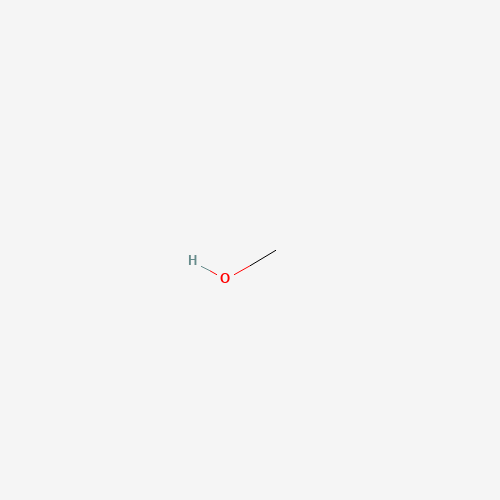
Methanol is an extraction solvent. It is acutely toxic if drunk, which is why it is used to denature ethanol, and why its use in food processing is as a solvent that is removed rather than as an ingredient.
Where it is and isn’t permitted
| Jurisdiction | Status | Scope and limits | Citation |
|---|---|---|---|
| Australia and New Zealand | No listed food uses foundThis site has not matched this substance to any food use on this jurisdiction’s list of authorised food additives. A food additive may be used only in foods that list names. Flavourings, enzymes, processing aids and added nutrients are regulated separately and do not appear on it. | ||
| Canada | Permitted, with conditions | highest permitted level 200 mg/kg 4 permitted uses Show every permitted use
| Health Canada, List of Permitted Solvents (List 15)and 3 further provisionsretrieved 2026-10-17 |
| European Union | No listed food uses foundThis site has not matched this substance to any food use on this jurisdiction’s list of authorised food additives. A food additive may be used only in foods that list names. Flavourings, enzymes, processing aids and added nutrients are regulated separately and do not appear on it. | ||
| Great Britain | No listed food uses foundThis site has not matched this substance to any food use on this jurisdiction’s list of authorised food additives. A food additive may be used only in foods that list names. Flavourings, enzymes, processing aids and added nutrients are regulated separately and do not appear on it. | ||
| Japan | No listing matchedThis site imports only Japan’s list of designated additives (Appended Table 1 to the Regulations for Enforcement of the Food Sanitation Act), matched by English name. Existing additives, natural flavouring agents and ordinary foods used as additives are permitted outside that list and are not imported, so an empty row does not show that Japan does not permit the substance. | ||
| South Korea | Permitted, with conditions | Designated food additive: Standards and Specifications for Food Additives, Part III, 2. …Designated food additive: Standards and Specifications for Food Additives, Part III, 2. 가공보조제 (processing aids), 메틸알콜 (“Methyl Alcohol”, the English the Code prints beside it). Main use (주용도) of 메틸알콜: 추출용제. Standard for use (사용기준) of 메틸알콜: (1) “메틸알콜은 건강기능식품의 기능성원료 추출 또는 분리 등의 목적에 한하여 사용하여야 하며, 사용한 메틸알콜의 잔류량은 0.05g/kg 이하이어야 한다.” The Korean is the standard as published. There is no official English translation of the current Code (the English version on MFDS’s website is the 2020 edition and has no legal effect); the English in square brackets is this site’s description of what each sentence does, not a translation of the foods or the levels. Compositional specifications (Part IV) are not imported, nor are the general standards in Part II, which apply to every additive. | Standards and Specifications for Food Additives (식품첨가물의 기준 및 규격), MFDS Notification, Part III (Standards for use, by item)retrieved 2026-10-18 |
| United States | Permitted, with conditions | 21 CFR 173.250 provides that methyl alcohol may be present as a residue in spice oleoresins, at a level not to exceed 50 parts per million, and in hops extract, at a level not to e …21 CFR 173.250 provides that methyl alcohol may be present as a residue in spice oleoresins, at a level not to exceed 50 parts per million, and in hops extract, at a level not to exceed 2.2 percent by weight when the hops extract is added to the wort before or during cooking in the manufacture of beer. The section is held on this site as the page methyl-alcohol-residues; read it for the conditions. | 21 CFR 173.250retrieved 2026-10-18 |
| Codex Alimentarius | Not listedDoes not appear on this jurisdiction’s permitted list. That is not the same as being prohibited. |
How much is permitted
A listing usually limits the quantity as well as the food. Only one of the forms that takes is a figure: quantum satis and good manufacturing practice permit the amount the technological effect requires and no more, which is a limit rather than the absence of one. Figures below are the range across every food category this page is listed in, and categories differ between regulators — see how much is permitted.
| Canada | 200 mg/kg | 1 numeric limit, 1 GMP, 2 no quantity stated |
|---|---|---|
| South Korea | — | 1 no quantity stated |
| United States | — | 1 no quantity stated |
What it is made from
Made industrially from synthesis gas, and formed naturally in small amounts in fermented and plant foods.
- Vegan
- Vegetarian
Compare other additives on the dietary indexes.
- CAS registry number
- 67-56-1
- InChIKey
- OKKJLVBELUTLKV-UHFFFAOYSA-N
- PubChem
- CID 887
How JECFA defines it
The international specification for identity and purity, prepared by the Joint FAO/WHO Expert Committee on Food Additives and published by FAO. It is a different document from any above, written by a different body and revised on its own cycle; it is advisory, and a country adopts it or does not.
Methanol
Synonyms: Carbinol
Assay, identification and purity criteria
Description and assay
- Specification history
- Prepared at the 28th JECFA (1984), published in FNP 31/2 (1984) and in FNP 52 (1992). Metals and arsenic specifications revised at the 63rd JECFA (2004). An ADI 'limited by GMP' was established at the 14th JECFA (1970)
- Chemical names
- Methanol, methyl alcohol
- C.A.S. number
- 67-56-1
- Chemical formula
- CH 3 OH
- Formula weight
- 32.04
- Assay
- Not less than 99.5%
- DESCRIPTION
- Clear colourless, mobile liquid with a characteristic odour
- FUNCTIONAL USES
- Extraction solvent
- METHOD OF ASSAY
- Using the procedures for Gas chromatography (see Volume 4), establish the following conditions: Column - length: 1.8 m - diameter: 4 mm - packing: 120-150 mesh Porapak R, or equivalent Carrier gas: Nitrogen Flow rate: 25 ml/min Detector: FID Temperatures - injection port: 200 o - column: 160 o - detector: 210 o Prepare a standard solution of 0.4% (v/v) methanol in dioxane. Adjust column temperature and/or gas flow rate so that methanol retention time is about 5-7 min. Adjust detector so that 8 μl of standard solution provides at least one-half scale deflection. Inject 5-10 μl sample, obtain chromatogram and determine methanol content by the method of area normalization.
Identification
- Solubility (Vol. 4)
- Miscible with water, ether and ethanol
- Specific gravity (Vol. 4)
- 0.792 - 0.795
- Refractive index (Vol. 4)
- n (20, D): 1.328 - 1.330
- Boiling point (Vol. 4)
- About 65 o
Purity criteria
- Water (Vol. 4)
- Not more than 0.1% (Karl Fischer Method)
- Distillation range (Vol. 4)
- 64.5 - 65.5 o
- Non-volatile residue (Vol. 4)
- Not more than 3 mg/100 ml
- Acidity
- Not more than 15 mg/kg as formic acid To a mixture of 10 ml of ethanol and 25 ml of water add 0.5 ml of phenolphthalein TS, and titrate with 0.02 N sodium hydroxide to the first pink colour that persists for at least 30 sec. Add 19 ml (about 15 g) of the sample, mix and titrate with 0.02 N sodium hydroxide until the pink colour is restored. Not more than 0.25 ml is required.
- Alkalinity
- Not more than 3 mg/kg as ammonia Add 1 drop of methyl red TS to 25 ml of water, add 0.02 N sulfuric acid until a red colour just appears, then add 29 ml (about 22.5 g) of the sample, and mix. Not more than 0.2 ml of 0.02 N sulfuric acid is required to restore the red colour.
- Aldehydes and ketones
- Not more than 0.015% w/v as acetone See description under TESTS
- Lead (Vol. 4 )
- Not more than 2 mg/kg Determine using an atomic absorption technique appropriate to the specified level. The selection of sample size and method of sample preparation may be based on the principles of the method described in Volume 4, “Instrumental Methods.”
- Test: Aldehydes and ketones
- Principle The aldehydes and ketones present are converted with 2,4-dinitrophenylhydrazine into the corresponding 2,4-dinitrophenylhydrazones. In alkaline medium these have a red colour, which is determined spectrophotometrically or visually. Apparatus - Photoelectric absorptionmeter or spectrophotometer, with 0.5-cm cells. Alternatively flat bottom tubes, capacity about 20 ml - Water bath, controlled at 60 ± 1 o Reagents The reagents used shall be of a recognized analytical reagent quality. Distilled water or water of at least equal purity shall be used throughout - Carbonyl-free methanol: Reflux 1000 ml of methanol with 5 g of 2,4-dinitrophenylhydrazine and 5 drops of concentrated hydrochloric acid (d = 1.18) for 2-3 h. Distil off the methanol using a 300 mm by 25 mm diameter Widmer or other suitable distillation column. Reject the first 100 ml and collect the next 800 ml, rejecting the remainder. If, in spite of the precautions taken, the distillate is found to be coloured, then it should be re-distilled. - 2,4-Dinitrophenylhydrazine solution: Dissolve 0.03 g of 2,4-dinitrophenylhydrazine in 40 ml of the carbonyl-free methanol containing 0.3 ml of concentrated hydrochloric acid (d = 1.18) and dilute to the mark in a 50-ml one-mark volumetric flask with the carbonyl-free methanol. Prepare this solution fresh each day. - Potassium hydroxide solution: Dissolve 10 g of potassium hydroxide in 10 ml of water, cool and dilute to the mark in a 50-ml one-mark volumetric flask with carbonyl-free methanol. Prepare this solution fresh each day. - Standard acetone solution: Weigh 1.00 g of acetone and dilute to the mark in a one-mark 100 ml volumetric flask with carbonyl-free methanol. Dilute 1.0 ml of this solution to 100 ml with the carbonyl-free methanol. 1 ml of the diluted solution contains 0.1 mg of acetone. Procedure Prepare five solutions by diluting 1.0, 2.0, 4.0, 8,0 and 10.0 ml portions of the standard acetone solution to 25.0 ml with carbonyl-free methanol. To 1.0 ml of each of the solutions thus obtained (containing 0.004 - 0.04 mg of acetone/ml), contained in a test tube fitted with a ground glass stopper, add 1.0 ml of the 2,4-dinitrophenylhydrazine solution. Stopper the tube and heat for 50 min in the water bath at 60 o , cool, add 8.0 ml of the potassium hydroxide solution and after 5 to 15 min measure the optical density of each solution at a wavelength of 430 nm using as a blank 1.0 ml of the carbonyl-free methanol treated in the same way. Prepare a calibration chart by plotting weights (in mg) of acetone against corresponding values of optical density. Dilute 5.0 ml of the sample to 25.0 ml with the carbonyl-free methanol. Transfer 1.0 ml of this solution to a test tube fitted with a ground glass stopper and add 1.0 ml of the 2,4-dinitrophenylhydrazine solution. Stopper the tube and heat for 50 min in the water bath at 60 o , cool, add 8.0 ml of the potassium hydroxide solution and after 5 to 15 min measure the optical density of the solution at the wavelength of 430 nm using as a blank 1.0 ml of the carbonyl-free methanol treated in the same way. By reference to the calibration chart prepared as described above, read the acetone content (in mg) of the solution. The content is not more than 0.03 mg.
Every name it appears under
60 recorded names. A label may use any of them.
CAS registry number
- 67-56-1
Other names
- a primary alcohol
- a secondary alcohol
- Alcohol, methyl
- Alcohol, Wood
- Alcool methylique
- Alcool metilico
- Alkohol metylowy
- Carbinol
- Carbonal
- CAS-67-56-1
- Caswell No. 552
- CCRIS 2301
- EPA Pesticide Chemical Code 053801
- Freers Elm Arrester
- HSDB 93
- Hydroxymethane
- MeOH
- Metanol
- Metanolo
- Methanol
- Methanol cluster
- Methanol LC-MS
- Methanol, ACS Grade
- Methanol, ACS reagent, >=99.8%
- Methanol, anhydrous
- Methanol, for HPLC
- Methanol, for HPLC, >=99.9%
- Methanol, HPLC grade
- Methanol, or methyl alcohol [UN1230] [Flammable liquid, Poison]
- methanol-
- Methanol; Methyl alcohol
- methly alcohol
- Methoxide, Sodium
- methyl alcohol
- Methyl alcohol (NF)
- Methyl hydrate
- Methyl hydroxide
- Methylalcohol
- Methylalkohol
- Methylol
- Methynol
- MetOH
- Metylowy alkohol
- MOH
- Monohydroxymethane
- Primary alcohol
- Purity of Methanol
- Pyro alcohol
- RCRA waste no. U154
- Rcra waste number U154
- Secondary alcohol
- secondary alcohols
- Surflo-B17
- Wilbur-Ellis Smut-Guard
- Wood
- wood alcohol
- Wood naphtha
- X-Cide 402 Industrial Bactericide
- Y4S76JWI15
Hazard reference values
No reference value for this substance in the sources we hold.
Evidence and how bodies read it
Studies, and the differing conclusions regulators drew from them, are curated rather than machine-read, and none has been written for this substance yet.
Common questions
Assembled from what is above, in the words the questions are usually asked in. Each answer is the same statement the relevant section makes, with the same citations behind it.
- What is Methanol?
- Methanol is an extraction solvent. It is acutely toxic if drunk, which is why it is used to denature ethanol, and why its use in food processing is as a solvent that is removed rather than as an ingredient.
- What is Methanol used for in food?
- It is listed as a solvent — the role Canada and the US assign it. This page shows every function each regulator records, with the citation for each.
- Is Methanol banned in Europe?
- No. Methanol does not appear on the EU's list of authorised food additives, which is not the same as being banned: the EU permits an additive only where it has authorised it, and usually the reason for an absence is that no one applied. The EU has made no finding against this substance. It does mean it may not be used as a food additive in the EU today.
- Where is Methanol permitted?
- Of the seven regulators this site reads, Canada, South Korea and the US permit it. Each permission is for named foods at named levels, not a blanket one; the table on this page gives them with citations.
- Is Methanol vegan?
- Yes. Methanol is not derived from animals, and is suitable for vegetarians. This page says what it is made from and how.
Sources for this page
- ca retrieved 2026-10-17
- kr retrieved 2026-10-18
- us-listings retrieved 2026-10-18
- jecfaspecs retrieved 2026-09-23
Full licence terms and publisher details on Sources. How this page is built and updated: Method.
Machine-readable: a JSON record of this additive is given on request —how to ask for access.
Follow changes to Methanol:Atom feed — regulatory events, and any change the weekly refresh detects in its provisions.