Silicon dioxide
7631-86-9 · Acticel · Aerogel 200 · Aerosil 200 · Aerosil 300 · Aerosil 380 · Aerosil A 300 · Aerosil E 300 · Aerosil K 7 · Amorphous silica dust · Cab-o-sil M-5 · Carplex · Carplex 30 · Carplex 80 · colloidal silica · Corasil II · Diatomaceous silica · Dioxosilane · Dri-Die · E 551 · ETJ7Z6XBU4 · Extrusil · INS NO.551 · Ludox hs 40 · Manosil vn 3 · Min-U-Sil · Nalfloc N 1050 · Neosil · Neosyl · Porasil · Positive sol 130M · Positive sol 232 · Quartz (SiO2) · Quso 51 · Quso G 30 · Santocel · Silanox 101 · Silica · Silica crystalline quartz · Silica, amorphous · Silica, colloidal · Silicic anhydride · Silicium dioxide · Silicon dioxide · Silicon dioxide (amorphous) · Silicon dioxide, fumed · Silicone dioxide · Silikil · Sillikolloid · Siloxid · Sipernat · Snowtex 30 · Snowtex O · Syton 2X · Tokusil TPLM · Ultrasil VH 3 · Ultrasil VN 3 · Vitasil 220 · Vulkasil S · Wessalon · White carbon · Zeofree 80 · Zipax · Zorbax sil · E551 · 551 · dioxosilane · Silicon dioxide · Biossido di silicio · DIOSSIDU TAS-SILIKON · Diossidu tas-siliċju · Dioxid de siliciu · Dioxyde de silicium · Dióxido de silicio · Dióxido de silício (sílica) · Dwutlenek krzemu · Kiseldioxid · Oxid křemičitý · Piidioksidi · Ränidioksiid · Silicijev dioksid · Silicio dioksidas · Siliciumdioxid · Siliciumdioxide · Silicon dioxide · Silīcija dioksīds · Szilícium-dioxid · Διοξείδιο του πυριτίου · Силициев диоксидE number E551INS 551CAS 7631-86-9
Listed as an anticaking agent by Canada, Codex and the US.
Listed as anticaking agents (CA, US, Codex) · colours (US) · antioxidants (US) · emulsifiers (US) · humectants (US) · antifoaming agents (Codex) · flavouring agents and adjuvants (US) · carriers (Codex) · formulation aids (US) · lubricants and release agents (US)
- Canada: Anticaking agent — Health Canada, List of Permitted Anticaking Agents (List 1)
- United States: Anticaking agent or free-flow agent — FDA, Substances Added to Food: SILICON DIOXIDE
- Codex Alimentarius: Anticaking agent — CXS 192-1995 Table One, INS 551
- United States: Color or coloring adjunct — FDA, Substances Added to Food: SILICON DIOXIDE
- United States: Antioxidant — FDA, Substances Added to Food: SILICON DIOXIDE
- United States: Emulsifier or emulsifier salt — FDA, Substances Added to Food: SILICON DIOXIDE
- United States: Humectant — FDA, Substances Added to Food: SILICON DIOXIDE
- Codex Alimentarius: Antifoaming agent — CXS 192-1995 Table One, INS 551
- United States: Flavoring agent or adjuvant — FDA, Substances Added to Food: SILICON DIOXIDE
- Codex Alimentarius: Carrier — CXS 192-1995 Table One, INS 551
- United States: Formulation aid — FDA, Substances Added to Food: SILICON DIOXIDE
- United States: Lubricant or release agent — FDA, Substances Added to Food: SILICON DIOXIDE
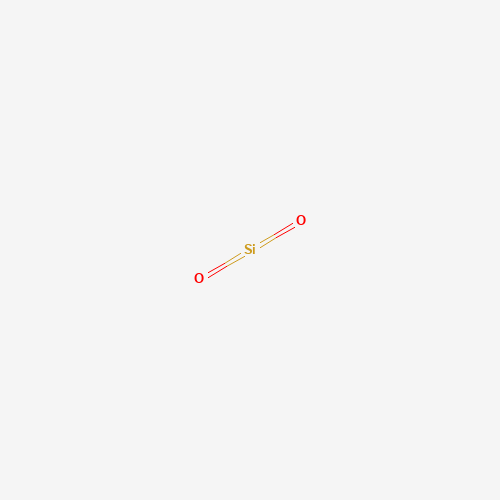
Silicon dioxide is an anticaking agent in powdered products such as spice blends, powdered drinks, grated cheese and salt, where it absorbs moisture and keeps particles separate.
Where it is and isn’t permitted
| Jurisdiction | Status | Scope and limits | Citation |
|---|---|---|---|
| Australia and New Zealand | Permitted, with conditions | 56 food categories highest permitted level 10 mg/L Show every food category
| Food Standards Code, Schedule 15, S15—5and 55 further provisionsretrieved 2026-10-17 |
| Canada | Permitted, with conditions | highest permitted level 5,000 % 10 permitted uses Show every permitted use
| Health Canadaand 9 further provisionsretrieved 2026-10-17 |
| European Union | Permitted, with conditions | 19 food categories highest permitted level 30,000 mg/kg Show every food category
| Regulation (EC) No 1333/2008and 18 further provisionsretrieved 2026-10-18 |
| Great Britain | Permitted, with conditions | 19 food categories highest permitted level 30,000 mg/kg or mg/l Show every food category
| Assimilated Regulation (EC) No 1333/2008and 18 further provisionsretrieved 2026-10-18 |
| Japan | Permitted, with conditions | Designated additive: Appended Table 1, item 293, 二酸化ケイ素(別名シリカゲル) (“Silicon Dioxide (Silica Gel)” in the unofficial English translation). …Designated additive: Appended Table 1, item 293, 二酸化ケイ素(別名シリカゲル) (“Silicon Dioxide (Silica Gel)” in the unofficial English translation). Standards for use — Specifications and Standards for Foods, Food Additives, etc. (MHW Notification No. 370 of 1959), Part II (Food Additives), F (Standards for use), entry 二酸化ケイ素: (1) [may be used only for the uses stated] “二酸化ケイ素(微粒二酸化ケイ素を除く。)は、ろ過助剤以外の用途に使用してはならない。” (2) [must be removed or broken down before the food is finished] “二酸化ケイ素(微粒二酸化ケイ素を除く。)は、最終食品の完成前に除去しなければならない。” (3) [must not be used in the foods stated] “微粒二酸化ケイ素は、母乳代替食品及び離乳食品に使用してはならない。” (4) [sets maximum levels of use for the foods stated; sets a combined limit where it is used together with the additives stated] “微粒二酸化ケイ素の使用量は、二酸化ケイ素として、食品の2.0%以下でなければならない。また、ケイ酸カルシウムと併用する場合は、それぞれの使用量の和が食品(特定保健用食品たるカプセル及び錠剤並びに栄養機能食品たるカプセル及び錠剤を除く。)の2.0%以下でなければならない。” The Japanese is the standard as published. There is no official English translation of the Notification; the English in square brackets is this site’s description of what each sentence does, not a translation of the foods or the levels. Compositional specifications for this additive, in the same Notification, are not imported and are not shown here; nor are the general rules in F 添加物一般, which apply to every additive. | Regulations for Enforcement of the Food Sanitation Act (MHW Ordinance No. 23 of 1948), Appended Table 1retrieved 2026-10-18 |
| South Korea | Permitted, with conditions | Designated food additive: Standards and Specifications for Food Additives, Part III, 1. …Designated food additive: Standards and Specifications for Food Additives, Part III, 1. 일반식품첨가물 (general food additives), 이산화규소 (“Silicon Dioxide”, the English the Code prints beside it); the Code marks it as also usable as a processing aid; 2. 가공보조제 (processing aids), 이산화규소 (“Silicon Dioxide”, the English the Code prints beside it); the Code marks it as also usable as a general food additive. Main use (주용도) of 이산화규소: 고결방지제, 거품제거제. Standard for use (사용기준) of 이산화규소: (1) [may be used only in the foods listed; sets a limit on the amount used] “이산화규소는 아래의 식품에 한하여 사용하여야 한다. 이산화규소의 사용량은 1. 가공유크림(자동판매기용 분말 제품에 한함):1% 이하(규산마그네슘 또는 규산칼슘과 병용할 때에는 각각의 사용량의 합계가 1% 이하) 2. 분유류(자동판매기용에 한함):1% 이하(규산마그네슘 또는 규산칼슘과 병용할 때에는 각각의 사용량의 합계가 1% 이하) 3. 식염:2% 이하(규산마그네슘 또는 규산칼슘과 병용할 때에는 각각의 사용량의 합계가 2% 이하) 4. 상기 식품을 제외한 식품과 건강기능식품 : 2% 이하” Main use (주용도) of 이산화규소: 여과보조제. Standard for use (사용기준) of 이산화규소: (1) [must be removed before the final food is complete] “이산화규소는 최종식품 완성 전에 제거하여야 한다.” The Korean is the standard as published. There is no official English translation of the current Code (the English version on MFDS’s website is the 2020 edition and has no legal effect); the English in square brackets is this site’s description of what each sentence does, not a translation of the foods or the levels. Compositional specifications (Part IV) are not imported, nor are the general standards in Part II, which apply to every additive. | Standards and Specifications for Food Additives (식품첨가물의 기준 및 규격), MFDS Notification, Part III (Standards for use, by item)retrieved 2026-10-18 |
| United States | Permitted, with conditions | 21 CFR 172.480retrieved 2026-10-17 | |
| Codex Alimentarius | Permitted, with conditions | 13 food categories highest permitted level 15,000 mg/kg Show every food category and its notes
| CXS 192-1995 Table Three, INS 551and 13 further provisionsretrieved 2026-09-07 |
How much is permitted
A listing usually limits the quantity as well as the food. Only one of the forms that takes is a figure: quantum satis and good manufacturing practice permit the amount the technological effect requires and no more, which is a limit rather than the absence of one. Figures below are the range across every food category this page is listed in, and categories differ between regulators — see how much is permitted.
| Australia and New Zealand | 10 mg/kg | 1 numeric limit, 55 GMP |
|---|---|---|
| Canada | 2,000 mg/kg – 20,000 mg/kg | 4 numeric limit, 3 GMP, 3 no quantity stated |
| European Union | 2,000 mg/kg – 30,000 mg/kg | 12 numeric limit, 6 quantum satis, 1 no quantity stated |
| Great Britain | 2,000 mg/kg – 30,000 mg/kg | 11 numeric limit, 2 several limits, 6 quantum satis |
| Japan | — | 1 no quantity stated |
| South Korea | — | 1 no quantity stated |
| United States | — | 1 no quantity stated |
| Codex Alimentarius | 10 mg/kg – 15,000 mg/kg | 6 numeric limit, 8 GMP |
GRAS notices to the FDA
A GRAS notice is a company’s conclusion that a substance is generally recognised as safe for the use it describes. FDA’s letter responds to that conclusion, for that notifier and that use. It is not a listing in 21 CFR, and it is not counted as a US permission above. The substance and use are as FDA’s inventory words them; this site matched the notice to this page by exact name.
GRN No. 298 · Silicon dioxide · Cabot Corporation
Intended use: Use in a variety of foods and food-packing materials
FDA’s response (2009-10-09): At the notifier's request, FDA ceased to evaluate this notice
What it is made from
Produced synthetically by precipitation or flame hydrolysis, giving a very fine amorphous powder. This is amorphous silica, which regulators treat separately from crystalline silica.
- Vegan
- Vegetarian
Compare other additives on the dietary indexes.
- CAS registry number
- 7631-86-9
- InChIKey
- VYPSYNLAJGMNEJ-UHFFFAOYSA-N
- PubChem
- CID 24261
The two specifications, compared
The European Union sets identity and purity by regulation; JECFA publishes its own through FAO, advisory until a country adopts it. Both documents are below in full. These are the parameters each puts a number on.
| Parameter | European Union | JECFA |
|---|---|---|
| Assay | no less than 99 % | stated in prose |
| Loss on drying | no more than 2.5 % | stated in prose |
| Lead | no more than 5 mg/kg | — |
| Arsenic | no more than 3 mg/kg | — |
| Mercury | no more than 1 mg/kg | — |
The two documents state the same figures for every parameter compared here.
How the EU defines it
The legal specification an additive must meet to be sold as this E number in the EU — what it is, how it may be made, and the purity it must reach. From Commission Regulation (EU) No 231/2012.
E 551 Silicon dioxide
Silicon dioxide is an amorphous substance, which is produced synthetically by either a vapour-phase hydrolysis process, yielding fumed silica, or by a wet process, yielding precipitated silica, silica gel, or hydrous silica. Fumed silica is produced in essentially an anhydrous state, whereas the wet-process products are obtained as hydrates or contain surface absorbed water
Synonyms: Silica; Silicium dioxide
Assay, identification and purity criteria
Description and assay
- Einecs
- 231-545-4
- Chemical name
- Silicon dioxide
- Chemical formula
- (SiO₂)ₙ
- Molecular weight
- 60,08 (SiO₂)
- Assay
- Content after ignition not less than 99,0 % (fumed silica) or 94,0 % (hydrated forms)
- Description
- White, fluffy powder or granules. Hygroscopic
Identification
- Test for silica
- Positive
Purity criteria
- Loss on drying
- Not more than 2,5 % (fumed silica, 105 °C, 2 hours) Not more than 8,0 % (precipitated silica and silica gel, 105 °C, 2 hours) Not more than 70 % (hydrous silica, 105 °C, 2 hours)
- Loss on ignition
- Not more than 2,5 % after drying (1 000 °C, fumed silica) Not more than 8,5 % after drying (1 000 °C, hydrated forms)
- Soluble ionisable salts
- Not more than 5,0 % (as Na₂SO₄)
- Arsenic
- Not more than 3 mg/kg
- Lead
- Not more than 5 mg/kg
- Mercury
- Not more than 1 mg/kg
How JECFA defines it
The international specification for identity and purity, prepared by the Joint FAO/WHO Expert Committee on Food Additives and published by FAO. It is a different document from any above, written by a different body and revised on its own cycle; it is advisory, and a country adopts it or does not.
INS 551 Silicon Dioxide, Amorphous
Silicon dioxide is an amorphous substance, which is produced synthetically by either a thermal process, yielding pyrogenic (fumed) silica, or by a wet process, yielding hydrated silica, precipitated silica and silica gel. Pyrogenic silica is produced in an essentially anhydrous state, whereas the wet process products are obtained as hydrates or contain surface a d sorbed water.
Synonyms: Silica; INS No. 551; Synthetic amorphous silica (SAS); Silicon dioxide
Assay, identification and purity criteria
Description and assay
- Specification history
- 1 out of 3 Prepared at the 84th JECFA and published in FAO JECFA Monographs 20 (2017), superseding tentative specifications prepared at the 80th JECFA (2015) and published in FAO JECFA Monographs 17 (2015). An ADI 'not specified' for silicon dioxide and certain silicates was established at the 29th JECFA (1985).
- Chemical names
- Silicon dioxide, chemically prepared
- C.A.S. number
- 7631-86-9 112945-52-5 (pyrogenic silica) 112696-00-8 (hydrated silica)
- Chemical formula
- (SiO 2 ) x
- Formula weight
- 60.08 (SiO 2 )
- Assay
- Pyrogenic (fumed) silica: Not less than 99% of SiO 2 on the ignited basis Hydrated silica (precipitated silica and silica gel): Not less than 94% of SiO 2 on the ignited basis
- DESCRIPTION
- Pyrogenic (fumed) silica: A pyrogenic silicon dioxide occurring as a fine, white amorphous powder or granules Hydrated silica (precipitated silica and silica gel): A precipitated, hydrated silicon dioxide occurring as a fine, white amorphous powder or granules 2 out of 3
- FUNCTIONAL USES
- Anticaking agent, carrier
- METHOD OF ASSAY
- Accurately weigh an appropriate quantity of the sample, (depending on the moisture content) equivalent to about 0.5 g of dried sample, in a platinum or nickel crucible, add 5 g potassium hydroxide and 2 g boric acid, mix and melt completely using a torch burner and allow to stand at room temperature. Place the reaction product along with crucible into 150 mL hot deionized water in a 250-mL PTFE beaker and dissolve residue by agitation. Wash the crucible with hot deionized water and remove it. Add 50 mL hydrochloric acid and transfer the contents into a 250-mL polypropylene volumetric flask. Wash the beaker three times with hot deionized water. Transfer the washings to the volumetric flask and make up to volume (Solution A). Prepare the test solution by diluting Solution A with 2% hydrochloric acid, to get the readings within the standard curve range. Analyse silica in the test solution by ICP-AES technique (Vol. 4). Set instrument parameters as specified by the instrument manufacturer, use the analytical line for Si (251.611 nm) and construct standard curve using standard solutions 0.1 – 5.0 μg/mL. Read the concentration of Si in test solution (as μg/mL) and calculate the silicon dioxide content of the sample using the formula: SiO2 (%) = (2.139 x C x 250 x DF) / (W x 106) x 100 Where: - C is concentration of Si in the test solution, μg/mL; - DF is dilution factor (dilution of solution A to get test solution); - W is weight of sample on the ignited basis, g
Identification
- Test for silicon
- Passes test See description under TESTS
- Solubility (Vol. 4)
- Insoluble in water and insoluble in ethanol
- pH (Vol. 4)
- Pyrogenic (fumed) silica: 3.0 – 5.0 (5% slurry, 20°) Hydrated silica (precipitated silica and silica gel): 4.0 - 9.0 (5% slurry, 20°)
- Test for silicon
- Prepare the test solution as shown under method of assay. Analyse silicon in the test solution by ICP-AES technique (Vol. 4). Set instrument parameters as specified by the instrument manufacturer, use the analytical lines for Si (251.611 nm). 3 out of 3
Purity criteria
- Loss on drying (Vol. 4)
- Pyrogenic (fumed) silica: Not more than 2.5% (105°, 2 h) Hydrated silica (precipitated silica and silica gel): Not more than 8% (105°, 2 h)
- Loss on ignition (Vol. 4)
- Pyrogenic (fumed) silica: Not more than 2.5% (1000°, 1h on dried sample) Hydrated silica (precipitated silica and silica gel): Not more than 8.5% (1000°, 1 h on dried sample)
- Impurities soluble in 0.5M hydrochloric acid
- Lead: Not more than 3 mg/kg Arsenic: Not more than 1 mg/kg Determine using a method appropriate to the specified level. See description under TESTS for sample preparation
- Test: Impurities soluble in 0.5 M hydrochloric acid
- Extract a known quantity of finely ground sample in a closed digestion system with 0.5 M hydrochloric acid (spectroscopic grade) for 30 min. Let solution cool, then filter through a 0.1 μm membrane filter. Wash the filter twice with hot 0.5 M hydrochloric acid and dilute to a known volume with 0.5 M hydrochloric acid.
Authorised in other additives, enzymes, flavourings and nutrients
These authorisations are not for use in food. They let this substance be used inside another additive, a food enzyme, a flavouring or a nutrient preparation — often as a carrier — and it reaches food only as part of that product. Annex III to Regulation (EC) No 1333/2008.
| Part | May be used in | Maximum level | Citation |
|---|---|---|---|
| Annex III, Part 1: Carriers in food additives | Emulsifiers and colours | quantum satis | Regulation (EC) No 1333/2008, Annex III, Part 1 |
| Annex III, Part 2: Food additives other than carriers in food additives | Dry powdered colour preparationsNote (1): Except enzymes authorised as food additives. | 50 000 mg/kg in the preparation | Regulation (EC) No 1333/2008, Annex III, Part 2 |
| Annex III, Part 2: Food additives other than carriers in food additives | Dry powdered extracts of rosemary (E 392)Note (1): Except enzymes authorised as food additives. | 30 000 mg/kg in the preparation | Regulation (EC) No 1333/2008, Annex III, Part 2 |
| Annex III, Part 2: Food additives other than carriers in food additives | Dry powdered preparations of emulsifiersNote (1): Except enzymes authorised as food additives. | 50 000 mg/kg in the preparation | Regulation (EC) No 1333/2008, Annex III, Part 2 |
| Annex III, Part 2: Food additives other than carriers in food additives | Dry powdered preparations of polyolsNote (1): Except enzymes authorised as food additives. | 10 000 mg/kg in the preparation | Regulation (EC) No 1333/2008, Annex III, Part 2 |
| Annex III, Part 2: Food additives other than carriers in food additives | E 1209 polyvinyl alcohol-polyethylene glycol-graft-co-polymerNote (1): Except enzymes authorised as food additives. | 5 000 mg/kg in the preparation | Regulation (EC) No 1333/2008, Annex III, Part 2 |
| Annex III, Part 2: Food additives other than carriers in food additives | E 252 Potassium nitrateNote (1): Except enzymes authorised as food additives. | 10 000 mg/kg in the preparation | Regulation (EC) No 1333/2008, Annex III, Part 2 |
| Annex III, Part 2: Food additives other than carriers in food additives | E 508 potassium chloride and E 412 guar gum preparationsNote (1): Except enzymes authorised as food additives. | 10 000 mg/kg in the preparation | Regulation (EC) No 1333/2008, Annex III, Part 2 |
| Annex III, Part 3: Food additives including carriers in food enzymes | Food enzymesCan be used as a carrier: Yes Note (1): Including enzymes authorised as food additives. | In enzyme preparation: 50 000 mg/kg in the dry powdered preparation In final food except beverages: quantum satis In beverages: quantum satis | Regulation (EC) No 1333/2008, Annex III, Part 3 |
| Annex III, Part 4: Food additives including carriers in food flavourings | All flavourings | 50 000 mg/kg in flavourings | Regulation (EC) No 1333/2008, Annex III, Part 4 |
| Annex III, Part 5, Section A: Food additives added in nutrients except in nutrients intended to be used in foodstuffs listed in Part E, point 01.10, of Annex II and foodstuffs for infants and young children listed in Part E, point 13.1, of Annex II | In dry powdered preparations of all nutrientsListed jointly as "E 551, E 552 Silicon dioxide Calcium silicate" | 50 000 mg/kg in the dry powdered preparation (singly or in combination) | Regulation (EC) No 1333/2008, Annex III, Part 5, Section A |
| Annex III, Part 5, Section A: Food additives added in nutrients except in nutrients intended to be used in foodstuffs listed in Part E, point 01.10, of Annex II and foodstuffs for infants and young children listed in Part E, point 13.1, of Annex II | In potassium chloride preparations used in salt substitutesListed jointly as "E 551, E 552 Silicon dioxide Calcium silicate" | 10 000 mg/kg in the preparation (E 551 only) | Regulation (EC) No 1333/2008, Annex III, Part 5, Section A |
| Annex III, Part 5, Section B: Food additives added in nutrients intended to be used in foodstuffs listed in Part E, point 01.10, of Annex II and foodstuffs for infants and young children listed in Part E, point 13.1, of Annex II | Dry powdered nutrient preparations (food category: Foods for infants and young children and foods mentioned in Part E, point 01.10, of Annex II) | 10 000 mg/kg in nutrient preparations | Regulation (EC) No 1333/2008, Annex III, Part 5, Section B |
Every name it appears under
89 recorded names. A label may use any of them.
E number
- E551
INS number
- 551
CAS registry number
- 7631-86-9
As it appears in regulation
- Silicon dioxide
Other names
- Acticel
- Aerogel 200
- Aerosil 200
- Aerosil 300
- Aerosil 380
- Aerosil A 300
- Aerosil E 300
- Aerosil K 7
- Amorphous silica dust
- Cab-o-sil M-5
- Carplex
- Carplex 30
- Carplex 80
- colloidal silica
- Corasil II
- Diatomaceous silica
- Dioxosilane
- Dri-Die
- E 551
- ETJ7Z6XBU4
- Extrusil
- INS NO.551
- Ludox hs 40
- Manosil vn 3
- Min-U-Sil
- Nalfloc N 1050
- Neosil
- Neosyl
- Porasil
- Positive sol 130M
- Positive sol 232
- Quartz (SiO2)
- Quso 51
- Quso G 30
- Santocel
- Silanox 101
- Silica
- Silica crystalline quartz
- Silica, amorphous
- Silica, colloidal
- Silicic anhydride
- Silicium dioxide
- Silicon dioxide
- Silicon dioxide (amorphous)
- Silicon dioxide, fumed
- Silicone dioxide
- Silikil
- Sillikolloid
- Siloxid
- Sipernat
- Snowtex 30
- Snowtex O
- Syton 2X
- Tokusil TPLM
- Ultrasil VH 3
- Ultrasil VN 3
- Vitasil 220
- Vulkasil S
- Wessalon
- White carbon
- Zeofree 80
- Zipax
- Zorbax sil
Systematic names
- dioxosilane
The EU re-evaluation programme
Every additive authorised in the EU before 20 January 2009 was put back through EFSA by Commission Regulation (EU) No 257/2010, and this one is named in it. What the Regulation required is below; whether the opinion has since been published is not something this site records.
- To be evaluated by 31 December 2016. Named in Annex II, Part II, point 3 as “Silicon dioxide”, among the additives given priority within its class.
Hazard reference values
EFSA and JECFA have both assessed Silicon dioxide and their conclusions are not two comparable figures — EFSA records not allocated, JECFA not specified. An acceptable daily intake is a reference value set by a committee, not a threshold above which harm begins. “Not specified”, “not limited” and “not allocated” are conclusions, not missing data, and they are shown in the words each body used rather than reduced to a number. See where the two committees differ.
| Type | Value | Population | Assessed by | Opinion |
|---|---|---|---|---|
| ADI | not allocated | consumers | EFSA FAF | 2024 |
| ADI | not specified | — | JECFA | 2015 |
Evidence and how bodies read it
What assessing bodies concluded
Each conclusion is paraphrased in the body's own framing, from the published opinion linked beneath it. Where bodies differ, both stand; this site does not adjudicate between them or add a view of its own.
EFSA 2024
In a follow-up that added nano-specific considerations, the FAF Panel considered it inappropriate to derive an ADI for silicon dioxide (E 551) and instead used a margin of exposure approach. It concluded that E 551 does not raise a safety concern for any population group, including infants below 16 weeks, at reported uses, while noting uncertainty about effects of nanosize aggregates.
EFSA 2018
The ANS Panel found no indication of toxicity of silicon dioxide (E 551) at reported uses and use levels and no genotoxicity concern, but was unable to confirm the ADI 'not specified' because of database limitations, including the absence of a long-term study covering nanoparticles. It concluded that the EU specifications were insufficient to characterise the additive and recommended adding particle size distribution.
Common questions
Assembled from what is above, in the words the questions are usually asked in. Each answer is the same statement the relevant section makes, with the same citations behind it.
- What is E 551?
- E 551 is Silicon dioxide. Silicon dioxide is an anticaking agent in powdered products such as spice blends, powdered drinks, grated cheese and salt, where it absorbs moisture and keeps particles separate.
- What is Silicon dioxide used for in food?
- It is listed as an anticaking agent — the role Canada, Codex and the US assign it. This page shows every function each regulator records, with the citation for each.
- Where is Silicon dioxide permitted?
- Of the seven regulators this site reads, Australia and New Zealand, Canada, the EU, Great Britain, Japan, South Korea, the US and the Codex standard permit it. Each permission is for named foods at named levels, not a blanket one; the table on this page gives them with citations.
- Is Silicon dioxide vegan?
- Yes. Silicon dioxide is not derived from animals, and is suitable for vegetarians. This page says what it is made from and how.
Sources for this page
- anz retrieved 2026-10-17
- ca retrieved 2026-10-17
- eu retrieved 2026-10-18
- gb retrieved 2026-10-18
- jp retrieved 2026-10-18
- kr retrieved 2026-10-18
- ecfr retrieved 2026-10-17
- gsfa retrieved 2026-09-07
- euspecs retrieved 2026-10-18
- jecfaspecs retrieved 2026-09-23
Full licence terms and publisher details on Sources. How this page is built and updated: Method.
Machine-readable: a JSON record of this additive is given on request —how to ask for access.
Follow changes to Silicon dioxide:Atom feed — regulatory events, and any change the weekly refresh detects in its provisions.