Sodium erythorbate (Sodium isoascorbate)
6381-77-7 · 2,3-Didehydro-3-O-sodio-D-erythro-hexono-1,4-lactone · Araboascorbic acid, monosodium salt, D- · Ascorbic Acid EP Impurity F Sodium Salt · BZ468R6XRD · C6H7NaO6 · CCRIS 2517 · D-Araboascorbic Acid Sodium Salt · D-Erythro-hex-2-enonic acid, gamma-lactone, monosodium salt · D-erythro-Hex-2-enonic acid, gamma-lactone, sodium salt (1:1) · D-isoascorbiate sodium · D-Isoascorbic acid Na salt · D-Sodiumisoascorbiate · E 316 · Eribate N · Erythorbate, sodium · Erythorbic Acid Sodium Salt · Hex-2-enonic acid gamma-lactone, D-erythro-, monosodium salt · HSDB 741 · INS NO.316 · INS-316- · Isoascorbic acid sodium salt · Isona · Mercate 20 · Monosodium D-erythro-hex-2-enonic acid gamma-lactone · Neo-cebitate · OZOBAN · Sodium (2R)-2-[(1R)-1,2-dihydroxyethyl]-4-hydroxy-5-oxo-2,5-dihydrofuran-3-olate · Sodium (R)-2-((R)-1,2-dihydroxyethyl)-4-hydroxy-5-oxo-2,5-dihydrofuran-3-olate · Sodium D-Araboascorbate · Sodium D-isoascorbate · Sodium D-Isoascorbiate · Sodium erythorbate · Sodium erythorbate (1:1) · SODIUM ERYTHORBATE (SODIUM ISOASCORBATE) · Sodium isoascorbate · Sodium isoascorbate monohydrate · SODIUM-ISOASCORBATE · sodium;(2R)-2-[(1R)-1,2-dihydroxyethyl]-4-hydroxy-5-oxo-2H-furan-3-olate · E316 · 316 · sodium;(2R)-2-[(1R)-1,2-dihydroxyethyl]-4-hydroxy-5-oxo-2H-furan-3-olate · Sodium erythorbate · Eritorbat de sodiu · Eritorbat tas-sodju · Eritorbato de sódio · Eritorbato di sodio · Eritorbato sódico · Erythorban sodný · ERYTORBAN SODNÝ (IZOASKORBAN SODNÝ) · Erytorban sodný · Izoaskorbinian sodu · NAATRIUMERÜTORBAAT · Naatriumisoaskorbaat · natrijev eritorbat · Natrijev izoaskorbat · Natrio eritorbatas · Natriumerythorbaat · Natriumerythorbat · Natriumerytorbaatti · Natriumisoascorbat · Natriumisoaskorbat · Nátrium-eritroaszkorbát · Nātrija eritorbāts · Sodium erythorbate · Érythorbate de sodium · Ερυθορβικό νάτριο · Натриев ериторбатE number E316INS 316CAS 6381-77-7
Listed as a preservative and an antioxidant by Canada, the US and Codex.
Listed as preservatives (CA, US) · antioxidants (US, Codex) · colours (US) · glazing and surface-finishing agents (US) · flour treatment agents (US) · dough strengtheners (US) · oxidising and reducing agents (US) · processing aids (US)
- Canada: Preservative — Health Canada, List of Permitted Preservatives (List 11)
- United States: Antimicrobial agent — FDA, Substances Added to Food: SODIUM ERYTHORBATE
- United States: Antioxidant — FDA, Substances Added to Food: SODIUM ERYTHORBATE
- Codex Alimentarius: Antioxidant — CXS 192-1995 Table One, INS 316
- United States: Color or coloring adjunct — FDA, Substances Added to Food: SODIUM ERYTHORBATE
- United States: Surface-finishing agent — FDA, Substances Added to Food: SODIUM ERYTHORBATE
- United States: Flour treating agent — FDA, Substances Added to Food: SODIUM ERYTHORBATE
- United States: Dough strengthener — FDA, Substances Added to Food: SODIUM ERYTHORBATE
- United States: Oxidizing or reducing agent — FDA, Substances Added to Food: SODIUM ERYTHORBATE
- United States: Processing aid — FDA, Substances Added to Food: SODIUM ERYTHORBATE
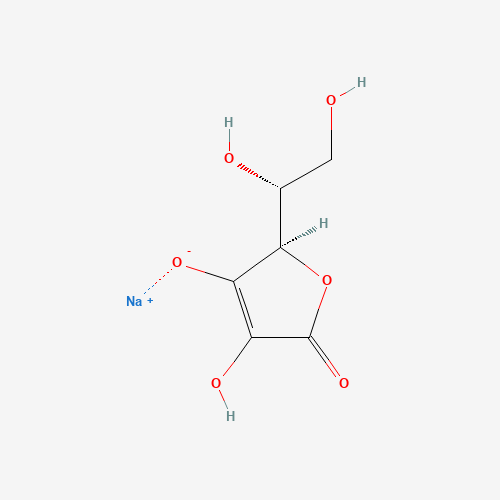
Sodium erythorbate is a cure accelerator and antioxidant used widely in cured meats, where it speeds colour fixing and limits nitrosamine formation.
Where it is and isn’t permitted
| Jurisdiction | Status | Scope and limits | Citation |
|---|---|---|---|
| Australia and New Zealand | Permitted, with conditions | 59 food categories highest permitted level 400 mg/kg Show every food category
| Food Standards Code, Schedule 15, S15—5and 58 further provisionsretrieved 2026-10-17 |
| Canada | Permitted, with conditions | highest permitted level 350 mg/kg 5 permitted uses Show every permitted use
| Health Canada, List of Permitted Preservatives (List 11)and 4 further provisionsretrieved 2026-10-17 |
| European Union | Permitted, with conditions | 5 food categories highest permitted level 1,500 mg/kg Show every food category
| Regulation (EC) No 1333/2008, Annex IIand 4 further provisionsretrieved 2026-10-18 |
| Great Britain | Permitted, with conditions | 5 food categories highest permitted level 1,500 mg/kg or mg/l Show every food category
| Assimilated Regulation (EC) No 1333/2008and 4 further provisionsretrieved 2026-10-18 |
| Japan | Permitted, with conditions | Designated additive: Appended Table 1, item 83, エリソルビン酸ナトリウム(別名イソアスコルビン酸ナトリウム) (“Sodium Erythorbate (Sodium Isoascorbate)” in the unofficial English translation). …Designated additive: Appended Table 1, item 83, エリソルビン酸ナトリウム(別名イソアスコルビン酸ナトリウム) (“Sodium Erythorbate (Sodium Isoascorbate)” in the unofficial English translation). Standards for use — Specifications and Standards for Foods, Food Additives, etc. (MHW Notification No. 370 of 1959), Part II (Food Additives), F (Standards for use), entry エリソルビン酸ナトリウム: (1) [must not be used in the foods stated; may be used only for the purposes stated] “エリソルビン酸ナトリウムは、魚肉ねり製品(魚肉すり身を除く。)及びパンにあっては、栄養の目的に使用してはならない。その他の食品にあっては、酸化防止の目的以外に使用してはならない。” The Japanese is the standard as published. There is no official English translation of the Notification; the English in square brackets is this site’s description of what each sentence does, not a translation of the foods or the levels. Compositional specifications for this additive, in the same Notification, are not imported and are not shown here; nor are the general rules in F 添加物一般, which apply to every additive. | Regulations for Enforcement of the Food Sanitation Act (MHW Ordinance No. 23 of 1948), Appended Table 1retrieved 2026-10-18 |
| South Korea | Permitted, with conditions | Designated food additive: Standards and Specifications for Food Additives, Part III, 1. …Designated food additive: Standards and Specifications for Food Additives, Part III, 1. 일반식품첨가물 (general food additives), 에리토브산나트륨 (“Sodium Erythorbate”, the English the Code prints beside it). Main use (주용도) of 에리토브산나트륨: 산화방지제. Standard for use (사용기준) of 에리토브산나트륨: (1) [may be used only for the purpose or in the food the sentence states] “에리토브산나트륨은 산화방지제 목적에 한하여 사용하여야 한다.” The Korean is the standard as published. There is no official English translation of the current Code (the English version on MFDS’s website is the 2020 edition and has no legal effect); the English in square brackets is this site’s description of what each sentence does, not a translation of the foods or the levels. Compositional specifications (Part IV) are not imported, nor are the general standards in Part II, which apply to every additive. | Standards and Specifications for Food Additives (식품첨가물의 기준 및 규격), MFDS Notification, Part III (Standards for use, by item)retrieved 2026-10-18 |
| United States | Not listedDoes not appear on this jurisdiction’s permitted list. That is not the same as being prohibited. | ||
| Codex Alimentarius | Permitted, with conditions | 4 food categories no numerical limit (good manufacturing practice) Show every food category and its notes
| CXS 192-1995 Table Three, INS 316and 4 further provisionsretrieved 2026-09-07 |
How much is permitted
A listing usually limits the quantity as well as the food. Only one of the forms that takes is a figure: quantum satis and good manufacturing practice permit the amount the technological effect requires and no more, which is a limit rather than the absence of one. Figures below are the range across every food category this page is listed in, and categories differ between regulators — see how much is permitted.
| Australia and New Zealand | 100 mg/kg – 400 mg/kg | 2 numeric limit, 57 GMP |
|---|---|---|
| Canada | 350 mg/kg | 1 numeric limit, 3 GMP, 1 no quantity stated |
| European Union | 500 mg/kg – 1,500 mg/kg | 5 numeric limit |
| Great Britain | 500 mg/kg – 1,500 mg/kg | 5 numeric limit |
| Japan | — | 1 no quantity stated |
| South Korea | — | 1 no quantity stated |
| Codex Alimentarius | — | 5 GMP |
What FDA’s inventory records
This page holds no listing for Sodium erythorbate (Sodium isoascorbate) in the parts of 21 CFR this site reads. FDA’s Substances Added to Food inventory does carry it, as SODIUM ERYTHORBATE, pointing at a standard of identity for a particular food: 21 CFR 155.2.
Technical effects FDA records: antimicrobial agent, antioxidant, color or coloring adjunct, dough strengthener, flour treating agent, oxidizing or reducing agent, processing aid, surface-finishing agent.
The inventory is an information resource: a row means FDA holds information about the substance’s use in food, not that the substance is listed for that use. It is shown apart from the permissions above and is not counted as a US permission anywhere on this site.
What it is made from
Made by neutralising fermentation-derived erythorbic acid with a sodium base.
- Vegan
- Vegetarian
Compare other additives on the dietary indexes.
- CAS registry number
- 6381-77-7
- InChIKey
- PPASLZSBLFJQEF-RKJRWTFHSA-M
- PubChem
- CID 23683938
The two specifications, compared
The European Union sets identity and purity by regulation; JECFA publishes its own through FAO, advisory until a country adopts it. Both documents are below in full. These are the parameters each puts a number on.
| Parameter | European Union | JECFA |
|---|---|---|
| Assay | no less than 98 % | no less than 98 % |
| Loss on drying | no more than 0.25 % | no more than 0.25 % |
| Lead | no more than 2 mg/kg | no more than 2 mg/kg |
| Arsenic | no more than 3 mg/kg | — |
| Mercury | no more than 1 mg/kg | — |
The two documents state the same figures for every parameter compared here.
How the EU defines it
The legal specification an additive must meet to be sold as this E number in the EU — what it is, how it may be made, and the purity it must reach. From Commission Regulation (EU) No 231/2012.
E 316 Sodium erythorbate
Synonyms: Sodium isoascorbate
Assay, identification and purity criteria
Description and assay
- Einecs
- 228-973-9
- Chemical name
- Sodium isoascorbate; Sodium D-isoascorbic acid; Sodium salt of 2,3-didehydro-D-erythro-hexono-1,4-lactone; 3-keto-D-gulofurano-lactone sodium enolate monohydrate
- Chemical formula
- C₆H₇O₆Na·H₂O
- Molecular weight
- 216,13
- Assay
- Content not less than 98 % after drying in a vacuum desiccator over sulphuric acid for 24 hours expressed on the monohydrate basis
- Description
- White crystalline solid
Identification
- Solubility
- Freely soluble in water, very slightly soluble in ethanol
- Test for ascorbic acid/colour reaction
- Passes test
- Test for sodium
- Passes test
- pH
- 5,5 to 8,0 (10 % aqueous solution)
- Specific rotation
- [α]D ²⁵ 10 % (w/v) aqueous solution between + 95° and + 98°
Purity criteria
- Loss on drying
- Not more than 0,25 % after drying (in vacuum over sulphuric acid, 24 hours)
- Oxalate
- To a solution of 1 g in 10 ml of water add 2 drops of glacial acetic acid and 5 ml of 10 % calcium acetate solution. The solution should remain clear.
- Arsenic
- Not more than 3 mg/kg
- Lead
- Not more than 2 mg/kg
- Mercury
- Not more than 1 mg/kg
How JECFA defines it
The international specification for identity and purity, prepared by the Joint FAO/WHO Expert Committee on Food Additives and published by FAO. It is a different document from any above, written by a different body and revised on its own cycle; it is advisory, and a country adopts it or does not.
INS 316 Sodium Erythorbate
Synonyms: Sodium isoascorbate
Assay, identification and purity criteria
Description and assay
- Specification history
- Prepared at the 17th JECFA (1973), published in FNP 4 (1978) and in FNP 52 (1992). Metals and arsenic specifications revised at the 61st JECFA (2003). An ADI 'not specified' was established at the 37th JECFA (1990)
- Chemical names
- Sodium isoascorbate, sodium D-isoascorbic acid, sodium salt of 2,3-didehydro-D-erythro-hexono-1,4-lactone, 3-keto-D-gulofurano-lactone sodium enolate monohydrate
- C.A.S. number
- 6381-77-7
- Chemical formula
- C 6 H 7 O 6 Na · H 2 O
- Formula weight
- 216.13
- Assay
- Not less than 98% after drying
- DESCRIPTION
- White, almost odourless crystalline powder
- FUNCTIONAL USES
- Antioxidant
- METHOD OF ASSAY
- Dissolve about 0.400 g of the dried sample in a mixture of 100 ml of carbon dioxide-free water and 25 ml of dilute sulfuric acid TS. Titrate the solution at once with 0.1 N iodine, adding a few drops of starch TS as indicator as the end point is approached. Each ml of 0.1 N iodine is equivalent to 10.807 mg of C 6 H 7 O 6 Na · H 2 O.
Identification
- Solubility (Vol. 4)
- Freely soluble in water, very slightly soluble in ethanol
- Reducing activity
- A solution of the sample will decolourize a solution of 2,6-dichloro-phenolindophenol TS
- Test for ascorbate (Vol. 4)
- Passes test
- Test for sodium (Vol. 4)
- Passes test Test a solution of previously ignited sample, acidified with dilute acetic acid TS, filtered if necessary
Purity criteria
- Loss on drying (Vol. 4)
- Not more than 0.25% (in vacuum over sulfuric acid, 24 h)
- Specific rotation (Vol. 4)
- [alpha] 25, D: Between +95.5 o and +98.0 o (10% (w/v) solution)
- pH (Vol. 4)
- 5.5 - 8.0 (1 in 10 soln)
- Oxalate
- To a solution of 1 g in 10 ml of water add 2 drops of glacial acetic acid and 5 ml of 10% calcium acetate solution. The solution should remain clear.
- Lead (Vol. 4)
- Not more than 2 mg/kg Determine using an atomic absorption technique appropriate to the specified level. The selection of sample size and method of sample preparation may be based on the principles of the method described in Volume 4, “Instrumental Methods.”
Every name it appears under
68 recorded names. A label may use any of them.
E number
- E316
INS number
- 316
CAS registry number
- 6381-77-7
As it appears in regulation
- Sodium erythorbate
Other names
- 2,3-Didehydro-3-O-sodio-D-erythro-hexono-1,4-lactone
- Araboascorbic acid, monosodium salt, D-
- Ascorbic Acid EP Impurity F Sodium Salt
- BZ468R6XRD
- C6H7NaO6
- CCRIS 2517
- D-Araboascorbic Acid Sodium Salt
- D-Erythro-hex-2-enonic acid, gamma-lactone, monosodium salt
- D-erythro-Hex-2-enonic acid, gamma-lactone, sodium salt (1:1)
- D-isoascorbiate sodium
- D-Isoascorbic acid Na salt
- D-Sodiumisoascorbiate
- E 316
- Eribate N
- Erythorbate, sodium
- Erythorbic Acid Sodium Salt
- Hex-2-enonic acid gamma-lactone, D-erythro-, monosodium salt
- HSDB 741
- INS NO.316
- INS-316-
- Isoascorbic acid sodium salt
- Isona
- Mercate 20
- Monosodium D-erythro-hex-2-enonic acid gamma-lactone
- Neo-cebitate
- OZOBAN
- Sodium (2R)-2-[(1R)-1,2-dihydroxyethyl]-4-hydroxy-5-oxo-2,5-dihydrofuran-3-olate
- Sodium (R)-2-((R)-1,2-dihydroxyethyl)-4-hydroxy-5-oxo-2,5-dihydrofuran-3-olate
- Sodium D-Araboascorbate
- Sodium D-isoascorbate
- Sodium D-Isoascorbiate
- Sodium erythorbate
- Sodium erythorbate (1:1)
- SODIUM ERYTHORBATE (SODIUM ISOASCORBATE)
- Sodium isoascorbate
- Sodium isoascorbate monohydrate
- SODIUM-ISOASCORBATE
- sodium;(2R)-2-[(1R)-1,2-dihydroxyethyl]-4-hydroxy-5-oxo-2H-furan-3-olate
Systematic names
- sodium;(2R)-2-[(1R)-1,2-dihydroxyethyl]-4-hydroxy-5-oxo-2H-furan-3-olate
Hazard reference values
EFSA and JECFA have both assessed Sodium erythorbate (Sodium isoascorbate) and their conclusions are not two comparable figures — EFSA records 6 mg/kg bw/day, JECFA not specified. An acceptable daily intake is a reference value set by a committee, not a threshold above which harm begins. “Not specified”, “not limited” and “not allocated” are conclusions, not missing data, and they are shown in the words each body used rather than reduced to a number. See where the two committees differ.
Evidence and how bodies read it
What assessing bodies concluded
Each conclusion is paraphrased in the body's own framing, from the published opinion linked beneath it. Where bodies differ, both stand; this site does not adjudicate between them or add a view of its own.
EFSA 2016
The ANS Panel found no concern for genotoxicity or carcinogenicity for erythorbic acid (E 315) and sodium erythorbate (E 316), and saw no reason to revise the ADI of 6 mg/kg bw/day. As no population group exceeded the ADI, it concluded that use at permitted or reported levels would not be of safety concern.
Common questions
Assembled from what is above, in the words the questions are usually asked in. Each answer is the same statement the relevant section makes, with the same citations behind it.
- What is E 316?
- E 316 is Sodium erythorbate (Sodium isoascorbate). Sodium erythorbate is a cure accelerator and antioxidant used widely in cured meats, where it speeds colour fixing and limits nitrosamine formation.
- What is Sodium erythorbate (Sodium isoascorbate) used for in food?
- It is listed as a preservative and an antioxidant — the role Canada, the US and Codex assign it. This page shows every function each regulator records, with the citation for each.
- Where is Sodium erythorbate (Sodium isoascorbate) permitted?
- Of the seven regulators this site reads, Australia and New Zealand, Canada, the EU, Great Britain, Japan, South Korea and the Codex standard permit it. Each permission is for named foods at named levels, not a blanket one; the table on this page gives them with citations.
- Is Sodium erythorbate (Sodium isoascorbate) vegan?
- Yes. Sodium erythorbate (Sodium isoascorbate) is not derived from animals, and is suitable for vegetarians. This page says what it is made from and how.
Sources for this page
- anz retrieved 2026-10-17
- ca retrieved 2026-10-17
- eu retrieved 2026-10-18
- gb retrieved 2026-10-18
- jp retrieved 2026-10-18
- kr retrieved 2026-10-18
- gsfa retrieved 2026-09-07
- euspecs retrieved 2026-10-18
- jecfaspecs retrieved 2026-09-23
Full licence terms and publisher details on Sources. How this page is built and updated: Method.
Machine-readable: a JSON record of this additive is given on request —how to ask for access.
Follow changes to Sodium erythorbate (Sodium isoascorbate):Atom feed — regulatory events, and any change the weekly refresh detects in its provisions.