Sodium lauryl sulfate
151-21-3 · Anticerumen · Aquarex methyl · Avirol 118 conc · Dodecyl sodium sulfate · Dodecyl sulfate, sodium salt · Dreft · Dupanol WAQ · Duponal · Duponol · Duponol C · Duponol methyl · Duponol QC · Duponol qx · Duponol WA dry · Duponol waqa · Duponol WAQE · Empicol LX 28 · Finasol osr(sub 2) · Finasol osr2 · Gardinol · Hexamol SLS · Incronol SLS · Irium · Lauryl sulfate sodium salt · Lauyl sodium sulfate · Maprobix NEU · Melanol CL · Melanol CL 30 · NALS · Natriumlaurylsulfat · Neutrazyme · Perklankrol ESD 60 · Perlandrol L · Perlankrol L · Richonol af · Sintapon L · Sipex SP · Sipex UB · Sodium dodecyl sulfate · Sodium dodecyl sulphate · Sodium dodecylsulfate · SODIUM LAURYL SULFATE · Sodium lauryl sulphate · Sodium monododecyl sulfate · Sodium n-dodecyl sulfate · Solsol needles · Standapol 112 conc · Standapol WAQ · Standapol waq special · Standapol was 100 · Steinapol NLS 90 · Stepanol me dry · Stepanol ME Dry AW · Stepanol methyl · Stepanol T 28 · Stepanol WA · Stepanol WA Paste · Stepanol wac · Stepanol waq · Sterling WAQ-CH · Sodium lauryl sulfateCAS 151-21-3
Listed as an emulsifier, a foaming agent and a surface-active agent by the US and Canada.
Listed as emulsifiers (US) · foaming and whipping agents (CA) · surface-active agents (US)
- United States: Emulsifier or emulsifier salt — FDA, Substances Added to Food: SODIUM LAURYL SULFATE
- Canada: Whipping agent — Health Canada, List of Permitted Food Additives with Other Purposes of Use (List 8)
- United States: Surface-active agent — FDA, Substances Added to Food: SODIUM LAURYL SULFATE
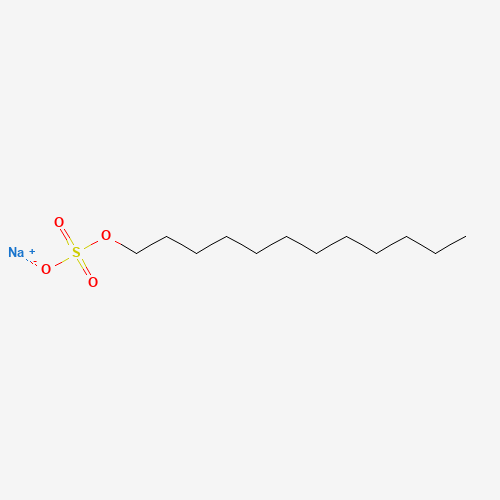
Sodium lauryl sulfate is a whipping agent and surfactant, used to help egg white and other proteins foam, and as a wetting agent. It is better known as the foaming agent in toothpaste and shampoo.
Where it is and isn’t permitted
| Jurisdiction | Status | Scope and limits | Citation |
|---|---|---|---|
| Australia and New Zealand | No listed food uses foundThis site has not matched this substance to any food use on this jurisdiction’s list of authorised food additives. A food additive may be used only in foods that list names. Flavourings, enzymes, processing aids and added nutrients are regulated separately and do not appear on it. | ||
| Canada | Permitted, with conditions | highest permitted level 5,000 mg/kg 3 permitted uses Show every permitted use
| Health Canada, List of Permitted Food Additives with Other Purposes of Use (List 8)and 2 further provisionsretrieved 2026-10-17 |
| European Union | No listed food uses foundThis site has not matched this substance to any food use on this jurisdiction’s list of authorised food additives. A food additive may be used only in foods that list names. Flavourings, enzymes, processing aids and added nutrients are regulated separately and do not appear on it. | ||
| Great Britain | No listed food uses foundThis site has not matched this substance to any food use on this jurisdiction’s list of authorised food additives. A food additive may be used only in foods that list names. Flavourings, enzymes, processing aids and added nutrients are regulated separately and do not appear on it. | ||
| Japan | No listing matchedThis site imports only Japan’s list of designated additives (Appended Table 1 to the Regulations for Enforcement of the Food Sanitation Act), matched by English name. Existing additives, natural flavouring agents and ordinary foods used as additives are permitted outside that list and are not imported, so an empty row does not show that Japan does not permit the substance. | ||
| South Korea | Permitted, with conditions | Designated food additive: Standards and Specifications for Food Additives, Part III, 1. …Designated food additive: Standards and Specifications for Food Additives, Part III, 1. 일반식품첨가물 (general food additives), 라우릴황산나트륨 (“Sodium Lauryl Sulfate”, the English the Code prints beside it). Main use (주용도) of 라우릴황산나트륨: 유화제. Standard for use (사용기준) of 라우릴황산나트륨: (1) [may be used only in the foods listed] “라우릴황산나트륨은 아래의 식품에 한하여 사용하여야 한다. 1. 건강기능식품, 캡슐류” The Korean is the standard as published. There is no official English translation of the current Code (the English version on MFDS’s website is the 2020 edition and has no legal effect); the English in square brackets is this site’s description of what each sentence does, not a translation of the foods or the levels. Compositional specifications (Part IV) are not imported, nor are the general standards in Part II, which apply to every additive. | Standards and Specifications for Food Additives (식품첨가물의 기준 및 규격), MFDS Notification, Part III (Standards for use, by item)retrieved 2026-10-18 |
| United States | Permitted, with conditions | 21 CFR 172.822retrieved 2026-10-17 | |
| Codex Alimentarius | Not listedDoes not appear on this jurisdiction’s permitted list. That is not the same as being prohibited. |
How much is permitted
A listing usually limits the quantity as well as the food. Only one of the forms that takes is a figure: quantum satis and good manufacturing practice permit the amount the technological effect requires and no more, which is a limit rather than the absence of one. Figures below are the range across every food category this page is listed in, and categories differ between regulators — see how much is permitted.
| Canada | 125 mg/kg – 5,000 mg/kg | 3 numeric limit |
|---|---|---|
| South Korea | — | 1 no quantity stated |
| United States | — | 1 no quantity stated |
What it is made from
Made by sulfating lauryl alcohol, usually from coconut or palm kernel oil, and neutralising with sodium.
- Vegan
- Vegetarian
Compare other additives on the dietary indexes.
- CAS registry number
- 151-21-3
- InChIKey
- DBMJMQXJHONAFJ-UHFFFAOYSA-M
- PubChem
- CID 3423265
Every name it appears under
62 recorded names. A label may use any of them.
CAS registry number
- 151-21-3
As it appears in regulation
- Sodium lauryl sulfate
Other names
- Anticerumen
- Aquarex methyl
- Avirol 118 conc
- Dodecyl sodium sulfate
- Dodecyl sulfate, sodium salt
- Dreft
- Dupanol WAQ
- Duponal
- Duponol
- Duponol C
- Duponol methyl
- Duponol QC
- Duponol qx
- Duponol WA dry
- Duponol waqa
- Duponol WAQE
- Empicol LX 28
- Finasol osr(sub 2)
- Finasol osr2
- Gardinol
- Hexamol SLS
- Incronol SLS
- Irium
- Lauryl sulfate sodium salt
- Lauyl sodium sulfate
- Maprobix NEU
- Melanol CL
- Melanol CL 30
- NALS
- Natriumlaurylsulfat
- Neutrazyme
- Perklankrol ESD 60
- Perlandrol L
- Perlankrol L
- Richonol af
- Sintapon L
- Sipex SP
- Sipex UB
- Sodium dodecyl sulfate
- Sodium dodecyl sulphate
- Sodium dodecylsulfate
- SODIUM LAURYL SULFATE
- Sodium lauryl sulphate
- Sodium monododecyl sulfate
- Sodium n-dodecyl sulfate
- Solsol needles
- Standapol 112 conc
- Standapol WAQ
- Standapol waq special
- Standapol was 100
- Steinapol NLS 90
- Stepanol me dry
- Stepanol ME Dry AW
- Stepanol methyl
- Stepanol T 28
- Stepanol WA
- Stepanol WA Paste
- Stepanol wac
- Stepanol waq
- Sterling WAQ-CH
Hazard reference values
No reference value for this substance in the sources we hold.
Evidence and how bodies read it
Studies, and the differing conclusions regulators drew from them, are curated rather than machine-read, and none has been written for this substance yet.
Common questions
Assembled from what is above, in the words the questions are usually asked in. Each answer is the same statement the relevant section makes, with the same citations behind it.
- What is Sodium lauryl sulfate?
- Sodium lauryl sulfate is a whipping agent and surfactant, used to help egg white and other proteins foam, and as a wetting agent. It is better known as the foaming agent in toothpaste and shampoo.
- What is Sodium lauryl sulfate used for in food?
- It is listed as an emulsifier, a foaming agent and a surface-active agent — the role the US and Canada assign it. This page shows every function each regulator records, with the citation for each.
- Is Sodium lauryl sulfate banned in Europe?
- No. Sodium lauryl sulfate does not appear on the EU's list of authorised food additives, which is not the same as being banned: the EU permits an additive only where it has authorised it, and usually the reason for an absence is that no one applied. The EU has made no finding against this substance. It does mean it may not be used as a food additive in the EU today.
- Where is Sodium lauryl sulfate permitted?
- Of the seven regulators this site reads, Canada, South Korea and the US permit it. Each permission is for named foods at named levels, not a blanket one; the table on this page gives them with citations.
- Is Sodium lauryl sulfate vegan?
- Yes. Sodium lauryl sulfate is not derived from animals, and is suitable for vegetarians. This page says what it is made from and how.
Sources for this page
- ca retrieved 2026-10-17
- kr retrieved 2026-10-18
- ecfr retrieved 2026-10-17
Full licence terms and publisher details on Sources. How this page is built and updated: Method.
Machine-readable: a JSON record of this additive is given on request —how to ask for access.
Follow changes to Sodium lauryl sulfate:Atom feed — regulatory events, and any change the weekly refresh detects in its provisions.