Sodium thiosulfate

INS 539CAS 7772-98-7

Listed as an antioxidant and a sequestrant by Codex and the US.

Listed as antioxidants (US, Codex) · sequestrants (US, Codex) · preservatives (Codex) · thickeners (US) · stabilisers (US) · formulation aids (US) · oxidising and reducing agents (US)
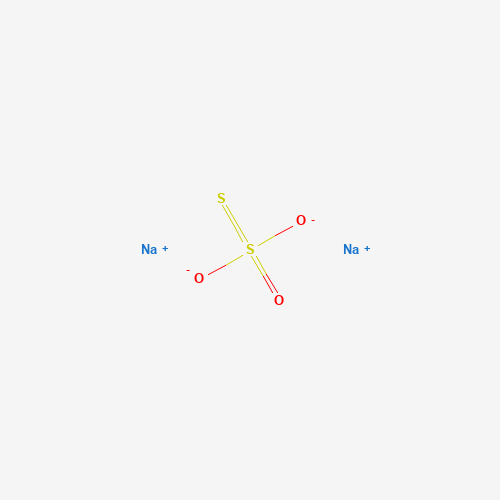
Chemical structure of Sodium thiosulfate, from PubChem compound 24477
Structure from PubChem CID 24477 (National Library of Medicine, public domain). A depiction of one compound: where a listing covers a family, or a substance has no single structure, this page shows none.

Sodium thiosulfate is an antioxidant and sequestrant, and is used to remove residual chlorine and iodine from processing water.

Where it is and isn’t permitted

Status of Sodium thiosulfate by jurisdiction. Every jurisdiction this site covers is listed, including those where the substance does not appear.
JurisdictionStatusScope and limitsCitation
Australia and New ZealandFood Standards Australia New ZealandNo listed food uses foundThis site has not matched this substance to any food use on this jurisdiction’s list of authorised food additives. A food additive may be used only in foods that list names. Flavourings, enzymes, processing aids and added nutrients are regulated separately and do not appear on it.
CanadaHealth CanadaPermitted

no numerical limit (good manufacturing practice)

In: Salt. Purpose: To stabilize potassium iodide added to salt for table or general household use. Limit: Good Manufacturing Practice.

Health Canada, List of Permitted Food Additives with Other Purposes of Use (List 8), item S.29retrieved 2026-10-17
European UnionEuropean Commission / EFSANo listed food uses foundThis site has not matched this substance to any food use on this jurisdiction’s list of authorised food additives. A food additive may be used only in foods that list names. Flavourings, enzymes, processing aids and added nutrients are regulated separately and do not appear on it.
Great BritainFood Standards Agency / Food Standards ScotlandNo listed food uses foundThis site has not matched this substance to any food use on this jurisdiction’s list of authorised food additives. A food additive may be used only in foods that list names. Flavourings, enzymes, processing aids and added nutrients are regulated separately and do not appear on it.
JapanConsumer Affairs AgencyNo listing matchedThis site imports only Japan’s list of designated additives (Appended Table 1 to the Regulations for Enforcement of the Food Sanitation Act), matched by English name. Existing additives, natural flavouring agents and ordinary foods used as additives are permitted outside that list and are not imported, so an empty row does not show that Japan does not permit the substance.
South KoreaMinistry of Food and Drug SafetyNo listing matchedThis site imports Part III of South Korea’s Standards and Specifications for Food Additives, matched by CAS number, then INS number, then exact name. Mixed preparations and sanitisers are not imported, and an entry whose identifiers disagreed with a page’s is held for review, so an empty row does not show that South Korea does not permit the substance.
United StatesFood and Drug AdministrationPermitted21 CFR 184.1807retrieved 2026-10-17
Codex AlimentariusCodex Alimentarius Commission / JECFAPermitted, with conditions

59 food categories

highest permitted level 1,000 mg/kg

Show every food category and its notes
  • 04.1.1.2 Surface-treated fresh fruit — 30 mg/kg
    • Note 44 As residual SO2.
    • Note 204 Except for use in longan and lichee at 50 mg/kg.
  • 04.1.2.1 Frozen fruit — 500 mg/kg
    • Note 44 As residual SO2.
    • Note 155 For use in frozen, sliced apples only.
  • 04.1.2.10 Fermented fruit products — 100 mg/kg
    • Note 44 As residual SO2.
  • 04.1.2.11 Fruit fillings for pastries — 100 mg/kg
    • Note 44 As residual SO2.
  • 04.1.2.2 Dried fruit — 1,000 mg/kg
    • Note 44 As residual SO2.
    • Note 135 Except for use in dried apricots at 2 000 mg/kg, bleached raisins at 1 500 mg/kg, desiccated coconut at 200 mg/kg and coconut from which oil has been partially extracted at 50 mg/kg.
    • Note 218 Only sulfites can be used as preservatives and antioxidants in the products covered by the Standard for Desiccated Coconut (CODEX STAN 177-1991).
  • 04.1.2.3 Fruit in vinegar, oil, or brine — 100 mg/kg
    • Note 44 As residual SO2.
  • 04.1.2.5 — 100 mg/kg
    • Note 44 As residual SO2.
  • 04.1.2.6 Fruit-based spreads (e.g. chutney) excluding products of food category — 100 mg/kg
    • Note 44 As residual SO2.
    • Note 567 For use only in products conforming to the Standard for Mango Chutney (CXS 160-1987): Sodium metabisulfite (INS 223) and Potassium metabisulfite (INS 224), singly or in combination.
  • 04.1.2.7 Candied fruit — 100 mg/kg
    • Note 44 As residual SO2.
  • 04.1.2.8 Fruit preparations, including pulp, purees, fruit toppings and coconut milk — 100 mg/kg
    • Note 44 As residual SO2.
    • Note 206 Except for use as a bleaching agent in products conforming to the Standard for Aqueous Coconut Products (CODEX STAN 240-2003) at 30 mg/kg.
    • Note XS314R Excluding products conforming to the Standard for Date Paste (CODEX STAN 314R-2013).
  • 04.1.2.9 Fruit-based desserts, incl. fruit-flavoured water-based desserts — 100 mg/kg
    • Note 44 As residual SO2.
  • 04.2.1.3 Peeled, cut or shredded fresh vegetables, (including mushrooms and fungi, roots and tubers, pulses and legumes, and aloe vera), seaweeds and nuts and seeds — 50 mg/kg
    • Note 44 As residual SO2.
    • Note 76 For use in potatoes.
    • Note 136 For use to prevent browning of certain light coloured vegetables only.
  • 04.2.2.1 Frozen vegetables (including mushrooms and fungi, roots and tubers, pulses and legumes, and aloe vera), seaweeds and nuts and seeds — 50 mg/kg
    • Note 44 As residual SO2.
    • Note 76 For use in potatoes.
    • Note 136 For use to prevent browning of certain light coloured vegetables only.
    • Note 137 Except for use in frozen avocado at 300 mg/kg.
    • Note 612 Except for use in French fried potatoes conforming to the Standard for Quick Frozen Vegetables (CXS 320-2015): sodium thiosulfate (INS 539) as a sequestrant.
  • 04.2.2.2 Dried vegetables (including mushrooms and fungi, roots and tubers, pulses and legumes, and aloe vera), seaweeds, and nuts and seeds — 500 mg/kg
    • Note 44 As residual SO2.
    • Note 105 Except for use in dried gourd strips (Kampyo) at 5 000 mg/kg.
    • Note 613 Except for products conforming to the Regional Standard for Laver Products (CXS 323R-2017), only for use in Seasoned Laver Products.
    • Note XS336R Excluding products conforming to the Regional Standard for kava products for use as a beverage when mixed with water (North America and South West Pacific) (CXS 336R-2020).
  • 04.2.2.3 Vegetables (including mushrooms and fungi, roots and tubers, pulses and legumes, and aloe vera), and seaweeds in vinegar, oil, brine, or soybean sauce — 100 mg/kg
    • Note 44 As residual SO2.
  • 04.2.2.4 Canned or bottled (pasteurized) or retort pouch vegetables (including mushrooms and fungi, roots and tubers, pulses and legumes, and aloe vera), and seaweeds — 50 mg/kg
    • Note 44 As residual SO2.
    • Note XS57 Excluding products conforming to the Standard for Processed Tomato Concentrates (CODEX STAN 57-1981).
    • Note XS257R Excluding products conforming to the Codex Regional Standard for Canned Humus with Tehena (CODEX STAN 257R-2007).
    • Note XS258R Excluding products conforming to the Regional Standard for Canned Foul Medames (CXS 258R-2007).
  • 04.2.2.5 Vegetable (including mushrooms and fungi, roots and tubers, pulses and legumes, and aloe vera), seaweed, and nut and seed purees and spreads (e.g. peanut butter) — 500 mg/kg
    • Note 44 As residual SO2.
    • Note 138 For use in energy-reduced products only.
    • Note XS57 Excluding products conforming to the Standard for Processed Tomato Concentrates (CODEX STAN 57-1981).
  • 04.2.2.6 Vegetable (including mushrooms and fungi, roots and tubers, pulses and legumes, and aloe vera), seaweed, and nut and seed pulps and preparations (e.g. vegetable desserts and sauces, candied vegetables) other than food category 04.2.2.5 — 300 mg/kg
    • Note 44 As residual SO2.
    • Note 205 Except for use to prevent browning of certain light colored vegetables at 50 mg/kg.
    • Note XS57 Excluding products conforming to the Standard for Processed Tomato Concentrates (CODEX STAN 57-1981).
    • Note XS259R Excluding products conforming to the Codex Regional Standard for Tehena (CODEX STAN 259R-2007).
    • Note XS308R Excluding products conforming to the Regional Standard for Harissa (Red Hot Pepper Paste) (CXS 308R-2011).
  • 04.2.2.7 Fermented vegetable (including mushrooms and fungi, roots and tubers, pulses and legumes, and aloe vera) and seaweed products, excluding fermented soybean products of food categories 06.8.6, 06.8.7, 12.9.1, — 500 mg/kg
    • Note 44 As residual SO2.
    • Note XS294 Excluding products conforming to the Standard for Gochujang (CXS 294-2009).
  • 06.2.1 Flours — 200 mg/kg
    • Note 44 As residual SO2.
    • Note 470 In products conforming to the Standard for Wheat Flour (CXS 152-1985), only for use as a flour treatment agent in flours for biscuit and pastry manufacture: sulfur dioxide (INS 220), sodium sulfite (INS 221), sodium metabisulfite (INS 223) and potassium metabisulfite (INS 224) only.
    • Note 236 Except for use in products conforming to the Regional Standard for Edible Sago Flour (Asia) (CXS 301R-2011): Sulfur dioxide (INS 220), sodium sulfite (INS221), sodium metabisulfite (INS223) and Potassium metabisulfite (INS 224), as flour treatment agents.
  • 06.2.2 Starches — 50 mg/kg
    • Note 44 As residual SO2.
  • 06.4.3 Pre-cooked pastas and noodles and like products — 20 mg/kg
    • Note 44 As residual SO2.
    • Note 476 For products conforming to the Standard for Instant Noodles (CXS 249-2006): sulfur dioxide (INS 220), sodium sulfite (INS 221), sodium metabisulfite (INS 223) and potassium metabisulfite (INS 224) for use as flour treatment agents only.
    • Note 49 For use in products conforming to the Regional standard for quick-frozen dumplings (CXS 364R-2026) as preservatives.
  • 06.8.2 Soybean-based beverage film — 200 mg/kg
    • Note 44 As residual SO2.
    • Note 648 For use only in dehydrated soybean curd film conforming to the Regional Standard for Non-Fermented Soybean Products (Asia) (CXS 322R-2015): sulfur dioxide (INS 220), sodium sulfite (INS221), sodium hydrogen sulfite (INS 222), sodium metabisulfite (INS223), potassium metabisulfite (INS 224) and potassium sulfite (INS 225), as preservatives.
  • 07.2 Fine bakery wares (sweet, salty, savoury) and mixes — 50 mg/kg
    • Note 44 As residual SO2.
  • 09.1.2 Fresh molluscs, crustaceans, and echinoderms — 100 mg/kg
    • Note 44 As residual SO2.
    • Note 390 For use as an antioxidant for non-standardized food and for raw chilled shucked mollusks conforming to the Standard for Live and Raw Bivalve Molluscs (CODEX STAN 292-2008).
    • Note XS312 Excluding products conforming to the Standard for Live Abalone and for Raw Fresh Chilled or Frozen Abalone for Direct Consumption or for Further Processing (CODEX STAN 312-2013).
    • Note XS315 Excluding products conforming to the Standard for Fresh and Quick Frozen Raw Scallop Products (CODEX STAN 315-2014).
  • 09.2.1 Frozen fish, fish fillets, and fish products, including molluscs, crustaceans, and echinoderms — 100 mg/kg
    • Note 19 For use in products conforming to the Standard for Quick Frozen Shrimps and Prawns (CODEX STAN 92-1981) and the Standard for Quick Frozen Lobsters (CODEX STAN 95-1981): sulfur dioxide (INS 220), sodium sulfite (INS221), sodium hydrogen sulfite (INS 222), sodium metabisulfite (INS 223), Potassium metabisulfite (INS 224), potassium sulfite (INS 225) as preservatives at 100 mg/kg in the edible part of the raw product, or 30 mg/kg in the edible part of the cooked product.
    • Note 44 As residual SO2.
    • Note 139 For use in mollusks, crustaceans, and echinoderms only.
    • Note 392 For non-standardized food and for products conforming to the Standard for Live and Raw Bivalve Molluscs (CODEX STAN 292-2008): for use as an antioxidant for raw frozen molluscs.
    • Note XS36 Excluding products conforming to the Standard for Quick Frozen Finfish, Uneviscerated and Eviscerated (CODEX STAN 36-1981).
    • Note XS165 Excluding products conforming to the Standard for Quick Frozen Blocks of Fish Fillet, Minced Fish Flesh and Mixtures of Fillets and Minced Fish Flesh (CODEX STAN 165-1989).
    • Note XS190 Excluding products conforming to the Standard for Quick Frozen Fish Fillets (CODEX STAN 190-1995).
    • Note XS191 Excluding products conforming to the Standard for Quick Frozen Raw Squid (CODEX STAN 191-1995).
    • Note XS312 Excluding products conforming to the Standard for Live Abalone and for Raw Fresh Chilled or Frozen Abalone for Direct Consumption or for Further Processing (CODEX STAN 312-2013).
    • Note XS315 Excluding products conforming to the Standard for Fresh and Quick Frozen Raw Scallop Products (CODEX STAN 315-2014).
  • 09.2.4.2 Cooked molluscs, crustaceans, and echinoderms — 150 mg/kg
    • Note 44 As residual SO2.
  • 09.2.5 Smoked, dried, fermented, and/or salted fish and fish products, including molluscs, crustaceans, and echinoderms — 30 mg/kg
    • Note 44 As residual SO2.
    • Note XS167 Excluding products conforming to the Standard for Salted Fish and Dried Salted Fish of the Gadidae Family of Fishes (CODEX STAN 167-1989).
    • Note XS189 Excluding products conforming to the Standard for Dried Shark Fins (CODEX STAN 189-1993).
    • Note XS222 Excluding products conforming to the Standard for Crackers from Marine and Freshwater Fish, Crustaceans and Molluscan Shellfish (CODEX STAN 222-2001).
    • Note XS236 Excluding products conforming to the Standard for Boiled Dried Salted Anchovies (CODEX STAN 236-2003).
    • Note XS244 Excluding products conforming to the Standard for Salted Atlantic Herring and Salted Sprat (CODEX STAN 244-2004).
    • Note XS311 Excluding products conforming to the Standard for Smoked Fish, Smoked-flavoured Fish and Smoke-dried Fish (CODEX STAN 311-2013).
  • 09.4 Fully preserved, including canned or fermented fish and fish products, including molluscs, crustaceans, and echinoderms — 150 mg/kg
    • Note 44 As residual SO2.
    • Note 140 Except for use in canned abalone (PAUA) at 1 000 mg/kg.
    • Note XS3 Excluding products conforming to the Standard for Canned Salmon (CODEX STAN 3-1981).
    • Note XS37 Excluding products conforming to the Standard for Canned Shrimps or Prawns (CODEX STAN 37-1991).
    • Note XS70 Excluding products conforming to the Standard for Canned Tuna and Bonito (70-1981).
    • Note XS90 Excluding products conforming to the Standard for Canned Crab Meat (CODEX STAN 90-1981).
    • Note XS94 Excluding products conforming to the Standard for Canned Sardines and Sardine-Type Products (CODEX STAN 94-1981).
    • Note XS119 Excluding products conforming to the Standard for Canned Finfish (CODEX STAN 119-1981).
  • 11.1.1 White sugar, dextrose anhydrous, dextrose monohydrate, fructose — 15 mg/kg
    • Note 44 As residual SO2.
  • 11.1.2 Powdered sugar, powdered dextrose — 15 mg/kg
    • Note 44 As residual SO2.
  • 11.1.3 Soft white sugar, soft brown sugar, glucose syrup, dried glucose syrup, raw cane sugar — 20 mg/kg
    • Note 44 As residual SO2.
    • Note 111 Except for use in dried glucose syrup used in the manufacture of sugar confectionery at 150 mg/kg and glucose syrup used in the manufacture of sugar confectionery at 400 mg/kg.
  • 11.1.5 Plantation or mill white sugar — 70 mg/kg
    • Note 44 As residual SO2.
  • 11.2 Brown sugar excluding products of food category 11.1.3 — 40 mg/kg
    • Note 44 As residual SO2.
  • 11.3 Sugar solutions and syrups, also (partially) inverted, including treacle and molasses, excluding products of food category 1.1.1.3 — 70 mg/kg
    • Note 44 As residual SO2.
  • 11.4 Other sugars and syrups (e.g. xylose, maple syrup, sugar toppings) — 40 mg/kg
    • Note 44 As residual SO2.
  • 12.2.1 Herbs and spices — 150 mg/kg
    • Note 44 As residual SO2.
    • Note 532 For products conforming to the Standard for Black, White and Green Peppers (CXS 326-2017), only sulfur dioxide (INS 220) may be used and only in green peppers as a preservative.
    • Note 652 Except for use in products conforming to the Standard for Dried Roots, Rhizomes and Bulbs:Dried or Dehydrated Ginger (CXS 343-2021): sulfur dioxide (INS 220) as a bleaching agent.
    • Note XS327 Excluding products conforming to the Standard for Cumin (CODEX STAN 327-2017).
    • Note XS328 Excluding products conforming to the Standard for Dried Thyme (CODEX STAN 328-2017).
    • Note XS342 Excluding products conforming to the Standard for Dried Oregano (CXS 342-2021).
    • Note XS343 Excluding products conforming to the Standard for dried roots, rhizomes and bulbs: Dried or dehydrated ginger (CXS 343-2021).
    • Note XS344 Excluding products conforming to the Standard for dried floral parts: Cloves (CXS 344-2021).
    • Note XS345 Excluding products conforming to the Standard for Dried Basil (CXS 345-2021).
    • Note XS347 Excluding products conforming to the Standard for dried or dehydrated garlic (CXS 347-2019).
    • Note XS351 Excluding products conforming to the Standard for Dried Floral Parts - Saffron (CXS 351-2022).
    • Note XS352 Excluding products conforming to the Standard for Dried Seeds – Nutmeg (CXS 352-2022).
    • Note XS353 Excluding products conforming to the Standard for Dried or Dehydrated Chilli Pepper and Paprika (CXS 353-2022).
  • 12.2.2 Seasonings and condiments — 200 mg/kg
    • Note 44 As residual SO2.
  • 12.3 Vinegars — 100 mg/kg
    • Note 44 As residual SO2.
  • 12.4 Mustards — 250 mg/kg
    • Note 44 As residual SO2.
    • Note 106 Except for use in Dijon mustard at 500 mg/kg.
  • 12.6 Sauces and like products — 300 mg/kg
    • Note 44 As residual SO2.
    • Note XS302 Excluding products conforming to the Standard for Fish Sauce (CODEX STAN 302-2011).
  • 12.9.1 Fermented soybean paste (e.g. miso) — 30 mg/kg
    • Note 44 As residual SO2.
    • Note 214 Except for use in products conforming to the Regional Standard for Fermented soybean paste (CXS 298R-2009): Sodium thiosulfate (INS 539) as an antioxidant.
  • 14.1.2.1 Fruit juice — 50 mg/kg
    • Note 44 As residual SO2.
    • Note 122 Subject to national legislation of the importing country.
    • Note XS356R Excluding products conforming to the Regional Standard for Fermented Noni Fruit Juice (CXS 356R-2023).
  • 14.1.2.2 Vegetable juice — 50 mg/kg
    • Note 44 As residual SO2.
    • Note 122 Subject to national legislation of the importing country.
  • 14.1.2.3 Concentrates for fruit juice — 50 mg/kg
    • Note 44 As residual SO2.
    • Note 122 Subject to national legislation of the importing country.
    • Note 127 On the served to the consumer basis.
  • 14.1.2.4 Concentrates for vegetable juice — 50 mg/kg
    • Note 44 As residual SO2.
    • Note 122 Subject to national legislation of the importing country.
    • Note 127 On the served to the consumer basis.
  • 14.1.3.1 Fruit nectar — 50 mg/kg
    • Note 44 As residual SO2.
    • Note 122 Subject to national legislation of the importing country.
  • 14.1.3.2 Vegetable nectar — 50 mg/kg
    • Note 44 As residual SO2.
    • Note 122 Subject to national legislation of the importing country.
  • 14.1.3.3 Concentrates for fruit nectar — 50 mg/kg
    • Note 44 As residual SO2.
    • Note 122 Subject to national legislation of the importing country.
    • Note 127 On the served to the consumer basis.
  • 14.1.3.4 Concentrates for vegetable nectar — 50 mg/kg
    • Note 44 As residual SO2.
    • Note 122 Subject to national legislation of the importing country.
    • Note 127 On the served to the consumer basis.
  • 14.1.4 Water-based flavoured drinks, including "sport," “energy,” or "electrolyte" drinks and particulated drinks — 70 mg/kg
    • Note 44 As residual SO2.
    • Note 127 On the served to the consumer basis.
    • Note 143 For use in fruit juice-based drinks and dry ginger ale only.
  • 14.2.1 Beer and malt beverages — 50 mg/kg
    • Note 44 As residual SO2.
  • 14.2.2 Cider and perry — 200 mg/kg
    • Note 44 As residual SO2.
  • 14.2.3 Grape wines — 350 mg/kg
    • Note 44 As residual SO2.
    • Note 103 Except for use in special white wines at 400 mg/kg.
  • 14.2.4 Wines (other than grape) — 200 mg/kg
    • Note 44 As residual SO2.
  • 14.2.5 Mead — 200 mg/kg
    • Note 44 As residual SO2.
  • 14.2.6 Distilled spirituous beverages containing more than 15% alcohol — 200 mg/kg
    • Note 44 As residual SO2.
  • 14.2.7 Aromatized alcoholic beverages (e.g. beer, wine and spirituous cooler-type beverages, low-alcoholic refreshers) — 250 mg/kg
    • Note 44 As residual SO2.
  • 15.1 Snacks - potato, cereal, flour or starch based (from roots and tubers, pulses and legumes) — 50 mg/kg
    • Note 44 As residual SO2.
CXS 192-1995 Table One, INS 539and 58 further provisionsretrieved 2026-09-07

How much is permitted

A listing usually limits the quantity as well as the food. Only one of the forms that takes is a figure: quantum satis and good manufacturing practice permit the amount the technological effect requires and no more, which is a limit rather than the absence of one. Figures below are the range across every food category this page is listed in, and categories differ between regulators — see how much is permitted.

Canada—1 GMP
United States—1 no quantity stated
Codex Alimentarius15 mg/kg – 1,000 mg/kg59 numeric limit

What it is made from

Produced by reacting sodium sulfite with sulfur. It is the same compound photographers used as fixer.

  • Vegan
  • Vegetarian

Compare other additives on the dietary indexes.

CAS registry number
7772-98-7
InChIKey
AKHNMLFCWUSKQB-UHFFFAOYSA-L
PubChem
CID 24477

How JECFA defines it

The international specification for identity and purity, prepared by the Joint FAO/WHO Expert Committee on Food Additives and published by FAO. It is a different document from any above, written by a different body and revised on its own cycle; it is advisory, and a country adopts it or does not.

INS 539 Sodium Thiosulfate

Synonyms: Sodium hyposulfite; INS No. 539

Assay, identification and purity criteria

Description and assay

Specification history
Prepared at the 53rd JECFA (1999) and published in FNP 52 Add 7 (1999), superseding tentative specifications prepared at the 51st JECFA (1998), published in FNP 52 Add 6 (1998). Group ADI 0-0.7 mg/kg bw as SO2 for sulfites established at the 51st JECFA in 1998.
Chemical names
Sodium thiosulfate
C.A.S. number
7772-98-7
Chemical formula
Na 2 S 2 O 3 · 5H 2 O
Formula weight
248.17
Assay
Not less than 99.0% on the dried basis
DESCRIPTION
Colourless crystals or coarse crystalline powder; deliquesces in moist air and effloresces in dry air above 33 o
FUNCTIONAL USES
Antibrowning agent, antioxidant, sequestrant
METHOD OF ASSAY
Dissolve about 0.5 g of the dried sample, accurately weighed, in 30 ml of water and titrate with 0.1 N iodine solution using starch TS as the indicator. Each ml of 0.1 N iodine is equivalent to 15.81 mg of Na 2 S 2 O 3 .

Identification

Solubility (Vol. 4)
Very soluble in water; insoluble in ethanol
Reducing activity
To a 1 in 10 solution of the sample add a few drops of iodine TS; the colour is discharged
Test for sodium (Vol. 4)
Passes test
Test for thiosulfate (Vol. 4)
Passes test

Purity criteria

Loss on drying (Vol. 4)
32-37% (40-45 o , 16 h, under vacuum)
Lead (Vol. 4)
Not more than 2 mg/kg Determine using an atomic absorption technique appropriate to the specified level. The selection of sample size and method of sample preparation may be based on the principles of the method described in Volume 4, “Instrumental Methods.”
Iron (Vol. 4)
Not more than 10 mg/kg Proceed as directed in the Limit Test using 0.5 ml of Iron Standard Solution (5 μg Fe) in the control
Selenium
Not more than 5 mg/kg See description under TESTS
Test: Selenium
Reagents: Hydrochloric acid, hydrazinium sulfate, standard selenium solution (100 μg Se/ml) Procedure Weigh 2.0 ± 0.1 g of sample and transfer to a 50-ml beaker. Add 10 ml water, 5 ml hydrochloric acid and boil to remove SO 2 . Into a second beaker, weigh 1.0 ± 0.1 g of sample, add 0.05 ml standard selenium solution and proceed as above. To each beaker add 2 g hydrazinium sulfate and warm to dissolve. Let stand for 5 min. Dilute the contents of each beaker to 50 ml in a Nessler tube and compare the colour of the two solutions. The sample should be less pink than the sample with the added standard.

FAO JECFA Monograph 1 (2006)

Every name it appears under

62 recorded names. A label may use any of them.

INS number

  • 539

CAS registry number

  • 7772-98-7

As it appears in regulation

  • Sodium thiosulfate

Other names

  • Ametox
  • Analytical Volumetric Solution Sodium Thiosulfate Solution 0.1M
  • anhydrous sodium thiosulfate
  • Chlorine Control
  • Chlorine Cure
  • Cyanide Antidote Package
  • Declor-It
  • disodium sulfurothioate
  • Disodium thiosulfate
  • DISODIUM THIOSULPHATE
  • disodium;dioxido-oxo-sulfanylidene-lambda6-sulfane
  • European Pharmacopoeia Reagent 0.1M Sodium Thiosulphate-Naturally short expiry
  • HSDB 592
  • Hypo
  • Hypo (VAN)
  • Hypo alcohol, in ethanol
  • Ins no.539
  • Ins-539
  • L0IYT1O31N
  • Natrii thiosulfas
  • PEDMARK
  • Reagecon Sodium Thiosulfate 0.05M Solution according to Chinese Pharmacopoeia (ChP)
  • Reagecon Sodium Thiosulfate 0.1M according to Japanese Pharmacopoeia
  • S-Hydril
  • Sodium hyposulfite
  • Sodium Nitrite and Sodium Thiosulfate
  • Sodium oxide sulfide
  • Sodium oxide sulfide (Na2S2O3)
  • Sodium subsulfite
  • sodium thio-sulfate
  • sodium thiosulfat
  • Sodium thiosulfate
  • Sodium thiosulfate (Na2S2O3)
  • Sodium thiosulfate solution (2 g/dL in deionized water)
  • Sodium thiosulfate solution 0.1mol/L (N/10)
  • Sodium thiosulfate, >=99.99% trace metals basis
  • Sodium thiosulfate, anhydrous
  • Sodium thiosulfate, anhydrous, Trace metals grade 99.99%
  • Sodium thiosulfate, AR, >=98%
  • Sodium thiosulfate, LR, >=97%
  • Sodium thiosulfate, p.a., 98.0%
  • Sodium thiosulfate, purum p.a., anhydrous, >=98.0% (RT)
  • Sodium thiosulfate, ReagentPlus(R), 99%
  • Sodium thiosulfate, SAJ first grade, >=90.0%
  • Sodium thiosulfate, Vetec(TM) reagent grade, 99%
  • Sodium thiosulphate
  • Sodium thiosulphate (Na2S2O3)
  • Sodium thiosulphate, anhydrous
  • sodiumthiosulfate
  • Sodothiol
  • Sodothiol; Sulfactol; Sulfothiorine
  • sulfothiorine
  • Thiosulfate, Sodium, Pentahydrate
  • Thiosulfuric acid (H2S2O3), disodium salt
  • Thiosulfuric acid (H2S2O3), sodium salt (1:2)
  • Thiosulfuric acid, disodium salt
  • Thiosulfuric acid, disodium salt, pentahydrate
  • USP Solution Sodium Thiosulfate 0.100 Normal (N/10) Conforms to USP

Systematic names

  • Disodium;dioxido-oxo-sulfanylidene-lambda6-sulfane

Hazard reference values

Values set by assessing bodies. A body that has not set a value is not listed here.
TypeValuePopulationAssessed byOpinion
ADI0.7 mg/kg bw/day—JECFA1998

Evidence and how bodies read it

Studies, and the differing conclusions regulators drew from them, are curated rather than machine-read, and none has been written for this substance yet.

Common questions

Assembled from what is above, in the words the questions are usually asked in. Each answer is the same statement the relevant section makes, with the same citations behind it.

What is INS 539?
INS 539 is Sodium thiosulfate. Sodium thiosulfate is an antioxidant and sequestrant, and is used to remove residual chlorine and iodine from processing water.
What is Sodium thiosulfate used for in food?
It is listed as an antioxidant and a sequestrant — the role Codex and the US assign it. This page shows every function each regulator records, with the citation for each.
Is Sodium thiosulfate banned in Europe?
No. Sodium thiosulfate does not appear on the EU's list of authorised food additives, which is not the same as being banned: the EU permits an additive only where it has authorised it, and usually the reason for an absence is that no one applied. The EU has made no finding against this substance. It does mean it may not be used as a food additive in the EU today.
Where is Sodium thiosulfate permitted?
Of the seven regulators this site reads, Canada, the US and the Codex standard permit it. Each permission is for named foods at named levels, not a blanket one; the table on this page gives them with citations.
Is Sodium thiosulfate vegan?
Yes. Sodium thiosulfate is not derived from animals, and is suitable for vegetarians. This page says what it is made from and how.

Sources for this page

  • ca retrieved 2026-10-17
  • ecfr retrieved 2026-10-17
  • gsfa retrieved 2026-09-07
  • jecfaspecs retrieved 2026-09-23

Full licence terms and publisher details on Sources. How this page is built and updated: Method.

Machine-readable: a JSON record of this additive is given on request —how to ask for access.

Follow changes to Sodium thiosulfate:Atom feed — regulatory events, and any change the weekly refresh detects in its provisions.