Titanium dioxide
13463-67-7 · A-Fil Cream · Austiox R-CR 3 · Bayertitan A · Bayertitan R-U-F · Bayertitan T · Cab-O-Ti · Calcotone White T · CI Pigment White 6 · E 171 · Flamenco · Hombitan · Hombitan R 101D · Hombitan R 610K · Horse head a-410 · Horse head a-420 · Horse head r-710 · Kronos · Kronos RN 40P · Kronos RN 56 · Levanox White RKB · Rayox · Runa rh20 · Rutiox CR · Sagenite · Tichlor · Tiofine · Tiona td · Tioxide · Tioxide AD-M · Tioxide R-CR · Tioxide R-SM · Tioxide R.XL · Tioxide RHD · Tioxide RSM · Tipaque · Tipaque R 820 · Titafrance · Titan White · Titandioxid · Titania · Titanic anhydride · Titanic oxide · Titanium (IV) oxide · Titanium dioxide · Titanium White · Titanox · Titanox RANC · Tronox · Unitane · Unitane o-110 · Unitane o-220 · Unitane OR 450 · Unitane OR 650 · Unitane or-150 · Unitane or-340 · Unitane or-342 · Unitane or-350 · Unitane or-540 · Unitane or-640 · Zopaque · Zopaque LDC · E171 · 171 · dioxotitanium · Titanium dioxide · Biossido di titanio · Diossidu tat-titanju · Dioxid de titan · Dioxyde de titane · Ditlenek tytanu · Dióxido de titanio · DWUTLENEK TYTANU · Oxid titaničitý · Titaandioksiid · Titaandioxide · Titaanidioksidi · Titandioxid · Titanium dioxide · Titano dioksidas · Titanov dioksid · Titán-dioxid · Titāna dioksīds · Διοξείδιο του τιτανίου · Титанов диоксидE number E171INS 171CAS 13463-67-7
Listed as a colour by Canada, Codex, the EU and the US.
Listed as colours (CA, EU, US, Codex) · humectants (US) · anticaking agents (US) · glazing and surface-finishing agents (US) · processing aids (US)
- Canada: Food colour — Health Canada, List of Permitted Food Colours (List 3)
- European Union: Colours — Regulation (EC) No 1333/2008, Annex II, Part B, 1. Colours (consolidated text 02008R1333-20260818)
- United States: Color additive (21 CFR part 73) — 21 CFR 73.575
- United States: Color or coloring adjunct — FDA, Substances Added to Food: TITANIUM DIOXIDE
- Codex Alimentarius: Colour — CXS 192-1995 Table One, INS 171
- United States: Humectant — FDA, Substances Added to Food: TITANIUM DIOXIDE
- United States: Anticaking agent or free-flow agent — FDA, Substances Added to Food: TITANIUM DIOXIDE
- United States: Surface-finishing agent — FDA, Substances Added to Food: TITANIUM DIOXIDE
- United States: Processing aid — FDA, Substances Added to Food: TITANIUM DIOXIDE
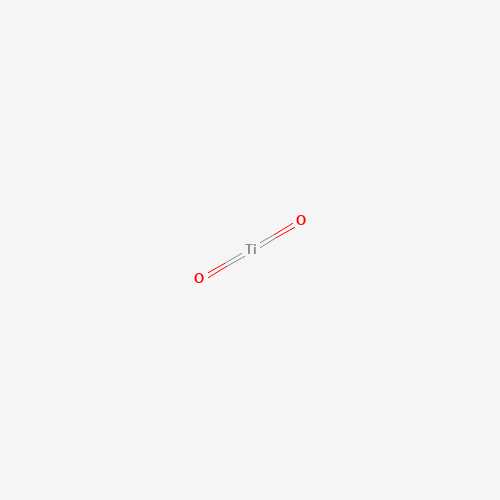
Titanium dioxide is a bright white mineral pigment used to whiten and opacify confectionery coatings, icings, sauces and chewing gum. The EU withdrew its authorisation as a food additive in 2022; it remains permitted in the United States and several other jurisdictions.
Where it is and isn’t permitted
| Jurisdiction | Status | Scope and limits | Citation |
|---|---|---|---|
| Australia and New Zealand | Permitted, with conditions | 47 food categories no numerical limit (good manufacturing practice) Show every food category
| Food Standards Code, Schedule 15, S15—5and 46 further provisionsretrieved 2026-10-17 |
| Canada | Permitted | no numerical limit (good manufacturing practice) 4 permitted uses Show every permitted use
| Health Canada, List of Permitted Food Colours (List 3)and 3 further provisionsretrieved 2026-10-17 |
| European Union | DelistedRemoved from this jurisdiction’s permitted list with effect from 7 February 2022. The regulatory changes below cite the instrument. | Removing instrument | |
| Great Britain | Permitted, with conditions | 46 food categories Show every food category
| Assimilated Regulation (EC) No 1333/2008and 45 further provisionsretrieved 2026-10-18 |
| Japan | Permitted, with conditions | Designated additive: Appended Table 1, item 295, 二酸化チタン (“Titanium Dioxide” in the unofficial English translation). …Designated additive: Appended Table 1, item 295, 二酸化チタン (“Titanium Dioxide” in the unofficial English translation). Standards for use — Specifications and Standards for Foods, Food Additives, etc. (MHW Notification No. 370 of 1959), Part II (Food Additives), F (Standards for use), entry 二酸化チタン: (1) [may be used only for the purposes stated; must not be used in the foods stated] “二酸化チタンは、着色の目的以外に使用してはならない。また、カステラ、きなこ、魚肉漬物、鯨肉漬物、こんぶ類、しょう油、食肉、食肉漬物、スポンジケーキ、鮮魚介類(鯨肉を含む。)、茶、のり類、マーマレード、豆類、みそ、めん類(ワンタンを含む。)、野菜及びわかめ類に使用してはならない。” The Japanese is the standard as published. There is no official English translation of the Notification; the English in square brackets is this site’s description of what each sentence does, not a translation of the foods or the levels. Compositional specifications for this additive, in the same Notification, are not imported and are not shown here; nor are the general rules in F 添加物一般, which apply to every additive. | Regulations for Enforcement of the Food Sanitation Act (MHW Ordinance No. 23 of 1948), Appended Table 1retrieved 2026-10-18 |
| South Korea | Permitted, with conditions | Designated food additive: Standards and Specifications for Food Additives, Part III, 1. …Designated food additive: Standards and Specifications for Food Additives, Part III, 1. 일반식품첨가물 (general food additives), 이산화티타늄 (“Titanium Dioxide”, the English the Code prints beside it). Main use (주용도) of 이산화티타늄: 착색료. Standard for use (사용기준) of 이산화티타늄: (1) [must not be used in the foods listed] “이산화티타늄은 아래의 식품에 사용하여서는 아니 된다. 1. 천연식품[식육류, 어패류, 채소류, 과일류, 해조류, 콩류 등 및 그 단순가공품(탈피, 절단 등)] 2. 식빵, 카스텔라 3. 코코아매스, 코코아버터, 코코아분말 4. 잼류 5. 유가공품 6. 식육가공품(소시지류, 식육추출가공품 제외) 7. 알가공품 8. 어육가공품류(어육소시지 제외) 9. 두부류, 묵류 10. 식용유지류(모조치즈, 식물성크림, 기타 식용유지가공품 제외) 11. 면류 12. 다류 13. 커피 14. 과일·채소류음료(과·채음료 제외) 15. 두유류 16. 발효음료류 17. 인삼․홍삼음료 18. 장류 19. 식초 20. 토마토케첩 21. 카레 22. 고춧가루, 실고추 23. 천연향신료 24. 복합조미식품 25. 마요네즈 26. 김치류 27. 젓갈류 28. 절임류(밀봉 및 가열살균 또는 멸균처리한 절임제품은 제외) 29. 단무지 30. 조림류 31. 땅콩 또는 견과류가공품류 32. 조미김 33. 벌꿀류 34. 즉석조리식품 35. 레토르트식품 36. 특수영양식품, 특수의료용도식품 37. 건강기능식품(정제의 제피 또는 캡슐은 제외)” The Korean is the standard as published. There is no official English translation of the current Code (the English version on MFDS’s website is the 2020 edition and has no legal effect); the English in square brackets is this site’s description of what each sentence does, not a translation of the foods or the levels. Compositional specifications (Part IV) are not imported, nor are the general standards in Part II, which apply to every additive. | Standards and Specifications for Food Additives (식품첨가물의 기준 및 규격), MFDS Notification, Part III (Standards for use, by item)retrieved 2026-10-18 |
| United States | Permitted | 21 CFR 73.575retrieved 2026-10-17 | |
| Codex Alimentarius | Permitted, with conditions | 2 food categories no numerical limit (good manufacturing practice) Show every food category and its notes
| CXS 192-1995 Table Three, INS 171and 2 further provisionsretrieved 2026-09-07 |
How much is permitted
A listing usually limits the quantity as well as the food. Only one of the forms that takes is a figure: quantum satis and good manufacturing practice permit the amount the technological effect requires and no more, which is a limit rather than the absence of one. Figures below are the range across every food category this page is listed in, and categories differ between regulators — see how much is permitted.
| Australia and New Zealand | — | 47 GMP |
|---|---|---|
| Canada | — | 4 GMP |
| Great Britain | — | 2 several limits, 44 quantum satis |
| Japan | — | 1 no quantity stated |
| South Korea | — | 1 no quantity stated |
| United States | — | 1 no quantity stated |
| Codex Alimentarius | — | 3 GMP |
No regulator sets a figure for Titanium dioxide. That is not an absence of control: where the listing says quantum satis or good manufacturing practice, the quantity is limited to what the effect requires.
Regulatory changes
Dated acts affecting this additive, then anything the weekly comparison of the imported lists has seen move. The status panel above shows where the rules stand now; these are the decisions that got them there.
· European Union
Transition period for titanium dioxide (E 171) ended in the EU
Article 2 of Commission Regulation (EU) 2022/63: until 7 August 2022, foods produced in accordance with the rules applicable before 7 February 2022 could continue to be placed on the market. After that date they may remain on the market until their date of minimum durability or 'use by' date.
· European Union
Titanium dioxide (E 171) removed from the EU list of authorised food additives
Commission Regulation (EU) 2022/63 of 14 January 2022 deleted titanium dioxide from Annex II to Regulation (EC) No 1333/2008, and entered into force on 7 February 2022. It followed EFSA's opinion of 6 May 2021, which said a concern for genotoxicity could not be ruled out and concluded that titanium dioxide can no longer be considered safe when used as a food additive. The regulation leaves the substance authorised for the time being as a colour in medicinal products under Directive 2009/35/EC, and directs the Commission to delete that use within three years. Titanium dioxide remains permitted as a colour in food in the United States under 21 CFR 73.575. The regulation does not apply in Great Britain, where the Food Standards Agency and Food Standards Scotland register of food additive authorisations records titanium dioxide as authorised in England, Scotland and Wales, with a status date of 31 December 2020 (data.food.gov.uk/regulated-products/food_authorisations/e-171).
What it is made from
Refined from the titanium ores ilmenite and rutile by either the sulfate or the chloride process, then milled to pigment-grade particles. It is a mineral product with no animal or plant material involved.
- Vegan
- Vegetarian
Compare other additives on the dietary indexes.
- CAS registry number
- 13463-67-7
- InChIKey
- GWEVSGVZZGPLCZ-UHFFFAOYSA-N
- PubChem
- CID 26042
The two specifications, compared
The European Union sets identity and purity by regulation; JECFA publishes its own through FAO, advisory until a country adopts it. Both documents are below in full. These are the parameters each puts a number on.
| Parameter | European Union | JECFA |
|---|---|---|
| Assay | no less than 99 % | no less than 99 % |
| Loss on drying | no more than 0.5 % | no more than 0.5 % |
| Lead | no more than 10 mg/kg | — |
| Arsenic | no more than 1 mg/kg | — |
| Mercury | no more than 1 mg/kg | no more than 1 mg/kg |
| Cadmium | no more than 1 mg/kg | — |
The two documents state the same figures for every parameter compared here.
How the EU defines it
The legal specification an additive must meet to be sold as this E number in the EU — what it is, how it may be made, and the purity it must reach. From Commission Regulation (EU) No 231/2012.
A specification does not authorise use. This site holds no EU permission for Titanium dioxide in food; see the EU row in the status panel above.
E 171 Titanium dioxide
Titanium dioxide consists essentially of pure anatase and/or rutile titanium dioxide which may be coated with small amounts of alumina and/or silica to improve the technological properties of the product. The anatase grades of pigmentary titanium dioxide can only be made by the sulphate process which creates a large amount of sulphuric acid as a by-product. The rutile grades of titanium dioxide are typically made by the chloride process. Certain rutile grades of titanium dioxide are produced using mica (also known as potassium aluminum silicate) as a template to form the basic platelet structure. The surface of the mica is coated with titanium dioxide using a specialised patented process. Rutile titanium dioxide, platelet form is manufactured by subjecting titanium dioxide (rutile) coated mica nacreous pigment to an extractive dissolution in acid followed by an extractive dissolution in alkali. All of the mica is removed during this process and the resulting product is a platelet form of rutile titanium dioxide.
Synonyms: CI Pigment White 6
Assay, identification and purity criteria
Description and assay
- Colour Index No
- 77891
- Einecs
- 236-675-5
- Chemical name
- Titanium dioxide
- Chemical formula
- TiO₂
- Molecular weight
- 79,88
- Assay
- Content not less than 99 % on an alumina and silica-free basis
- Description
- White to slightly coloured powder
Identification
- Solubility
- Insoluble in water and organic solvents. Dissolves slowly in hydrofluoric acid and in hot concentrated sulphuric acid.
Purity criteria
- Loss on drying
- Not more than 0,5 % (105 °C, 3 hours)
- Loss on ignition
- Not more than 1,0 % on a volatile matter free basis (800 °C)
- Aluminium oxide and/or silicon dioxide
- Total not more than 2,0 %
- Matter soluble in 0,5 N HCl
- Not more than 0,5 % on an alumina and silica-free basis and, in addition, for products containing alumina and/or silica, not more than 1,5 % on the basis of the product as sold.
- Water soluble matter
- Not more than 0,5 %
- Cadmium
- Not more than 1 mg/kg after an extraction with 0,5 N HCl.
- Antimony
- Not more than 2 mg/kg after an extraction with 0,5 N HCl.
- Arsenic
- Not more than 1 mg/kg after an extraction with 0,5 N HCl.
- Lead
- Not more than 10 mg/kg after an extraction with 0,5 N HCl.
- Mercury
- Not more than 1 mg/kg after an extraction with 0,5 N HCl.
How JECFA defines it
The international specification for identity and purity, prepared by the Joint FAO/WHO Expert Committee on Food Additives and published by FAO. It is a different document from any above, written by a different body and revised on its own cycle; it is advisory, and a country adopts it or does not.
INS 171 Titanium Dioxide
Titanium dioxide is produced by either the sulfate or the chloride process. Processing conditions determine the form (anatase or rutile structure) of the final product. In the sulfate process, sulfuric acid is used to digest ilmenite (FeTiO 3 ) or ilmenite and titanium slag. After a series of purification steps, the isolated titanium dioxide is finally washed with water, calcined, and micronized. In the chloride processes, (a) titanium-containing mineral is reacted with chlorine gas under reducing conditions to form anhydrous titanium tetrachloride, which is subsequently purified and converted to titanium dioxide either by direct thermal oxidation or by reaction with steam in the vapour phase; (b) titanium-containing mineral is reacted with concentrated hydrochloric acid to form a solution of titanium tetrachloride, which is further purified and hydrolysed to get titanium dioxide. The compound is filtered, washed and calcined. Commercial titanium dioxide may be coated with small amounts of alumina and/or silica to improve the technological properties of the product.
Synonyms: Titania; CI Pigment white 6; CI (1975) No. 77891; INS No. 171
Assay, identification and purity criteria
Description and assay
- Specification history
- Prepared at the 76 th JECFA (2012) and published in FAO JECFA Monographs 13 (2012), superseding specifications prepared at the 73 rd JECFA (2010) and published in FAO JECFA Monographs 10 (2010). An ADI “not limited” was established at the 13 th JECFA (1969).
- C.A.S. number
- 13463-67-7
- Chemical formula
- TiO 2
- Formula weight
- 79.88
- Assay
- Not less than 99.0% on the dried basis and on an aluminium oxide and silicon dioxide free basis.
- DESCRIPTION
- White to slightly coloured amorphous powder
- FUNCTIONAL USES
- Colour
- METHOD OF ASSAY
- Prepare the test solution by 1000 times dilution of Solution A (prepared in the PURITY TEST for Aluminium oxide and Silicon dioxide) with 2% hydrochloric acid, taking care that dilution factor in each dilution step shall not be more than 20. Analyze Titanium in the test solution by ICP-AES technique (Vol. 4). Set instrument parameters as specified by the instrument manufacturer. Use the analytical line for Ti (334.941 nm) and construct standard curve using Ti standard solutions: 0.5 - 1.5 μg/ml. Read the concentration in the sample solution(as μg/ml) and calculate the titanium dioxide content of the sample using the formula: %TiO 2 (on the dri ed basis) 1.668 x C x 250 x 1000 = ------------------------------------------------------------- x 100 W x 10 6 x (100-%LOD-%Al O -%SiO )/100 2 3 2 Where: C is concentration of T i in the test solution, μg/ml W is weight of sample, g %LOD is % loss on drying %Al 2 O 3 and %SiO 2 are content (%) of Aluminium oxide and silicon oxide
Identification
- Solubility (Vol. 4)
- Insoluble in water, hydrochloric acid, dilute sulfuric acid, and organic solvents. Dissolves slowly in hydrofluoric acid and hot concentrated sulfuric acid.
- Colour reaction
- Add 5 ml sulfuric acid to 0.5 g of the sample, heat gently until fumes of sulfuric acid appear, then cool. Cautiously dilute to about 100 ml with water and filter. To 5 ml of this clear filtrate, add a few drops of hydrogen peroxide; an orange-red colour appears immediately.
Purity criteria
- Loss on drying (Vol. 4)
- Not more than 0.5% (105°, 3 h)
- Loss on ignition (Vol. 4)
- Not more than 1.0% (800°) on the dried basis
- Aluminium oxide and/or silicon dioxide
- Not more than 2%, either singly or combined See descriptions under TESTS
- Acid-soluble subst ances
- Not more than 0.5%; Not more than 1.5% for products containing alumina or silica. Suspend 5 g of the sample in 100 ml 0.5 N hydrochloric acid and place on a steam bath for 30 min with occasional stirring. Filter through a Gooch crucible fitted with a glass fibre filter paper. Wash with three 10-ml portions of 0.5 N hydrochloric acid, evaporate the combined filtrate and washings to dryness, and ignite at a dull red heat to constant weight.
- Water-soluble matter (Vol. 4)
- Not more than 0.5% Proceed as directed under acid-soluble substances (above), using water in place of 0.5 N hydrochloric acid.
- Impurities soluble in 0.5 N hydrochloric acid
- Antimony: Not more than 2 mg/kg Arsenic: Not more than 1 mg/kg Cadmium: Not more than 1 mg/kg Lead: Not more than 10 mg/kg See description under TESTS
- Mercury (Vol. 4)
- Not more than 1 mg/kg Determine using AAS (Cold vapour generation technique). The selection of sample size and method of sample preparation may be based on principles of methods described in Volume 4 (under “General Methods, Metallic Impurities”).
- Test: Impurities soluble in 0.5 N hydrochloric acid
- Antimony, arsenic, cadmium and lead (Vol.4) Transfer 10.0 g of sample into a 250-ml beaker, add 50 ml of 0.5 N hydrochloric acid, cover with a watch glass, and heat to boiling on a hot plate. Boil gently for 15 min, pour the slurry into a 100- to 150-ml centrifuge bottle, and centrifuge for 10 to 15 min, or until undissolved material settles. Decant the supernatant through Whatman No. 4 filter paper, or equivalent, collecting the filtrate in a 100-ml volumetric flask and retaining as much as possible of the undissolved material in the centrifuge bottle. Add 10 ml of hot water to the original beaker, washing off the watch glass with the water, and pour the contents into the centrifuge bottle. Form a slurry, using a glass stirring rod, and centrifuge. Decant through the same filter paper, and collect the washings in the volumetric flask containing the initial extract. Repeat the entire washing process two more times. Finally, wash the filter paper with 10 to 15 ml of hot water. Cool the contents of the flask to room temperature, dilute to volume with water, and mix. Determine cadmium, and lead using an AA-Electrothermal atomization technique, antimony by ICP-AES technique and arsenic using atomic absorption hydride technique.
- Test: Aluminium oxide and/or Silicon dioxide
- Weigh about 0.5 g of the sample to the nearest 0.1 mg, in a platinum or nickel crucible, add 5 g potassium hydroxide and 2 g boric acid, mix and melt completely using a torch burner and allow to stand at room temperature. Place the reaction product along with crucible into 150 ml hot deionized water in a 250-ml PTFE beaker and dissolve residue by agitation. Wash the crucible with hot deionized water and remove it. Add 50 ml hydrochloric acid and transfer the contents into a 250-ml polypropylene volumetric flask. Wash the beaker three times with hot deionized water, transfer the washings to the volumetric flask and make up to volume (Solution A). Prepare the test solution by 5 times dilution of Solution A with 2% hydrochloric acid. Analyze aluminium and silica in the test solution by ICP-AES technique (Vol. 4). Set instrument parameters as specified by the instrument manufacturer. Use analytical lines for Al (396.152 nm) and Si (251.611 nm) and construct standard curve using standard solutions 0.2 – 5.0 μg/ml each. Read the concentration of Al and Si in sample solution (as μg/ml) and calculate the aluminium oxide and silicon dioxide content of the sample using the formula: 1.889 x C x 250 x 5 %Al 2 O 3 = ------------------------------- x 100 W x 10 6 2.139 x C x 250 x 5 %SiO 2 = -------------------------------- x 100 W x 10 6 Where: C is concentration of Al or Si in the test solution, μg/ml W is weight of sample, g
Every name it appears under
85 recorded names. A label may use any of them.
E number
- E171
INS number
- 171
CAS registry number
- 13463-67-7
As it appears in regulation
- Titanium dioxide
Other names
- A-Fil Cream
- Austiox R-CR 3
- Bayertitan A
- Bayertitan R-U-F
- Bayertitan T
- Cab-O-Ti
- Calcotone White T
- CI Pigment White 6
- E 171
- Flamenco
- Hombitan
- Hombitan R 101D
- Hombitan R 610K
- Horse head a-410
- Horse head a-420
- Horse head r-710
- Kronos
- Kronos RN 40P
- Kronos RN 56
- Levanox White RKB
- Rayox
- Runa rh20
- Rutiox CR
- Sagenite
- Tichlor
- Tiofine
- Tiona td
- Tioxide
- Tioxide AD-M
- Tioxide R-CR
- Tioxide R-SM
- Tioxide R.XL
- Tioxide RHD
- Tioxide RSM
- Tipaque
- Tipaque R 820
- Titafrance
- Titan White
- Titandioxid
- Titania
- Titanic anhydride
- Titanic oxide
- Titanium (IV) oxide
- Titanium dioxide
- Titanium White
- Titanox
- Titanox RANC
- Tronox
- Unitane
- Unitane o-110
- Unitane o-220
- Unitane OR 450
- Unitane OR 650
- Unitane or-150
- Unitane or-340
- Unitane or-342
- Unitane or-350
- Unitane or-540
- Unitane or-640
- Zopaque
- Zopaque LDC
Systematic names
- dioxotitanium
The EU re-evaluation programme
Every additive authorised in the EU before 20 January 2009 was put back through EFSA by Commission Regulation (EU) No 257/2010, and this one is named in it. What the Regulation required is below; whether the opinion has since been published is not something this site records.
- To be evaluated by 31 December 2015. Named in Annex II, Part I, point 3 as “Titanium dioxide”, among the additives given priority within its class.
Hazard reference values
| Type | Value | Population | Assessed by | Opinion |
|---|---|---|---|---|
| ADI | not limited | — | JECFA | 2023 |
Evidence and how bodies read it
What assessing bodies concluded
Each conclusion is paraphrased in the body's own framing, from the published opinion linked beneath it. Where bodies differ, both stand; this site does not adjudicate between them or add a view of its own.
FDA 2026
Continues to list titanium dioxide as a colour additive exempt from certification, permitted for colouring foods generally at up to 1 percent by weight, and has not adopted the European conclusion.
Action taken: Listing retained
European Union (legislature) 2022
Acted on the EFSA opinion by removing titanium dioxide from the list of food additives authorised in the Union, with a transition period for existing products.
Action taken: Revoked authorisation
EFSA 2021
Concluded that titanium dioxide could no longer be considered safe as a food additive, on the basis that a concern for genotoxicity could not be ruled out and that no acceptable daily intake could therefore be established.
Action taken: Withdrew the safety conclusion; no ADI established
EFSA 2019
Reviewing an April 2019 opinion by the French agency ANSES, EFSA concluded that it did not identify major new findings that would overrule the conclusions of EFSA's 2016 and 2018 opinions on titanium dioxide (E 171), while noting that it reiterated uncertainties and data gaps already being addressed through follow-up work.
EFSA 2019
Assessing data on the particle size of titanium dioxide (E 171), the FAF Panel concluded that a specification requiring a median minimal external dimension above 100 nm (fewer than 50% of constituent particles below 100 nm) should be added to the EU specifications. It considered that the conclusions and uncertainties of its previous assessments remained valid and reiterated the need for further research.
EFSA 2018
Asked to review four newer studies on titanium dioxide (E 171), the ANS Panel considered that they highlighted some concerns but with uncertainties and limited relevance to risk assessment, and concluded that they did not merit re-opening EFSA's 2016 opinion on the additive; it said further research was needed to reduce uncertainty.
EFSA 2016
Completing its re-evaluation of food colours, the ANS Panel concluded that the available data on titanium dioxide (E 171) did not indicate health concerns for consumers. It was unable to set an ADI because of data limitations, used a margin of safety approach instead, and recommended new studies to fill data gaps on possible effects on the reproductive system.
Common questions
Assembled from what is above, in the words the questions are usually asked in. Each answer is the same statement the relevant section makes, with the same citations behind it.
- What is E 171?
- E 171 is Titanium dioxide. Titanium dioxide is a bright white mineral pigment used to whiten and opacify confectionery coatings, icings, sauces and chewing gum. The EU withdrew its authorisation as a food additive in 2022; it remains permitted in the United States and several other jurisdictions.
- What is Titanium dioxide used for in food?
- It is listed as a colour — the role Canada, Codex, the EU and the US assign it. This page shows every function each regulator records, with the citation for each.
- Is Titanium dioxide banned in Europe?
- Close to it, and the distinction matters. The EU once authorised Titanium dioxide and removed it with effect from 7 February 2022, so it may no longer be used as a food additive there. That is a decision about this substance, unlike most of the cases people describe this way. It remains permitted in the United States.
- Where is Titanium dioxide permitted?
- Of the seven regulators this site reads, Australia and New Zealand, Canada, Great Britain, Japan, South Korea, the US and the Codex standard permit it. Each permission is for named foods at named levels, not a blanket one; the table on this page gives them with citations.
- Is Titanium dioxide vegan?
- Yes. Titanium dioxide is not derived from animals, and is suitable for vegetarians. This page says what it is made from and how.
Sources for this page
- anz retrieved 2026-10-17
- ca retrieved 2026-10-17
- gb retrieved 2026-10-18
- jp retrieved 2026-10-18
- kr retrieved 2026-10-18
- ecfr retrieved 2026-10-17
- gsfa retrieved 2026-09-07
- euspecs retrieved 2026-10-18
- jecfaspecs retrieved 2026-09-23
Full licence terms and publisher details on Sources. How this page is built and updated: Method.
Machine-readable: a JSON record of this additive is given on request —how to ask for access.
Follow changes to Titanium dioxide:Atom feed — regulatory events, and any change the weekly refresh detects in its provisions.