Aluminium ammonium sulfate
7784-25-0 · Alum, ammonium · Alum, ammonium anhydrous · ALUM, AMMONIUM, EXSICCATED · Aluminium ammonium bis(sulphate) · ALUMINIUM AMMONIUM SULFATE · Aluminium ammonium sulfate (1/1/2) · ALUMINIUM AMMONIUM SULFATE ANHYDROUS · Aluminium ammonium sulphate · aluminium(3+) ion ammonium disulfate · Aluminum ammonium alum · Aluminum ammonium bis(sulfate) · Aluminum ammonium disulfate (Al(NH4)(SO4)2) · ALUMINUM AMMONIUM SULFATE · Aluminum ammonium sulphate · aluminum sulfate ammonium salt · aluminum;azanium;disulfate · Ammonium alum · AMMONIUM ALUM ANHYDROUS · Ammonium alum; Ammonium aluminum alum; Ammonium aluminum sulfate · AMMONIUM ALUMINIUM SULFATE [WHO-DD] · Ammonium aluminum alum · Ammonium aluminum sulfate · AMMONIUM-ALUM · Caswell No. 041B · Curb · DPU64XYB1D · E 523 · EPA Pesticide Chemical Code 098501 · Exsiccated ammonium alum · HSDB 611 · INS NO.523 · INS-523 · Monoammonium monoaluminum sulfate · SULFURIC ACID, ALUMINIUM AMMONIUM SALT (2:1:1) · E523 · 523 · aluminum azanium disulfate · Aluminium ammonium sulphate · Aluminum ammonium sulfate · Aliuminio amonio sulfatas · Alumiiniammoniumsulfaatti · Alumiiniumammooniumsulfaat · Aluminij amonijev sulfat · ALUMINIJEV AMONIJEV SULFAT · Aluminium ammonium sulphate · Aluminiumammoniumsulfaat · Aluminiumammoniumsulfat · Alumínium-ammónium-szulfát · Alumīnija amonija sulfāts · amonijev aluminijev sulfat · Siarczan amonowo-glinowy · SIARCZAN GLINOWO-AMONOWY · Solfato di alluminio e ammonio · Sulfat de aluminiu și amoniu · SULFAT TAL-ALUMINJU U TAL-AMMONJU · Sulfat tal-ammonju tal-aluminju · Sulfate d’aluminium ammonique · SULFATO DE ALUMINIO Y AMONIO · Sulfato de alumínio e amónio · Sulfato doble de aluminio y amonio · Síran hlinito-amonný · Síran hlinitoamónny · Θειϊκό αργιλιοαμμώνιο · Алуминиевоамониев сулфатE number E523INS 523CAS 7784-25-0
Listed as a raising agent by Canada, Codex and the US.
Listed as raising agents (CA, US, Codex) · acidity regulators (US, Codex) · stabilisers (Codex) · glazing and surface-finishing agents (US) · firming agents (Codex) · colour retention agents (Codex) · processing aids (US)
- Canada: Acid-reacting material — Health Canada, List of Permitted Acidity Regulators and Acid-Reacting Materials (List 10)
- United States: Leavening agent — FDA, Substances Added to Food: ALUMINUM AMMONIUM SULFATE
- Codex Alimentarius: Raising agent — CXS 192-1995 Table One, INS 523
- United States: pH control agent — FDA, Substances Added to Food: ALUMINUM AMMONIUM SULFATE
- Codex Alimentarius: Acidity regulator — CXS 192-1995 Table One, INS 523
- Codex Alimentarius: Stabilizer — CXS 192-1995 Table One, INS 523
- United States: Surface-finishing agent — FDA, Substances Added to Food: ALUMINUM AMMONIUM SULFATE
- Codex Alimentarius: Firming agent — CXS 192-1995 Table One, INS 523
- Codex Alimentarius: Colour retention agent — CXS 192-1995 Table One, INS 523
- United States: Processing aid — FDA, Substances Added to Food: ALUMINUM AMMONIUM SULFATE
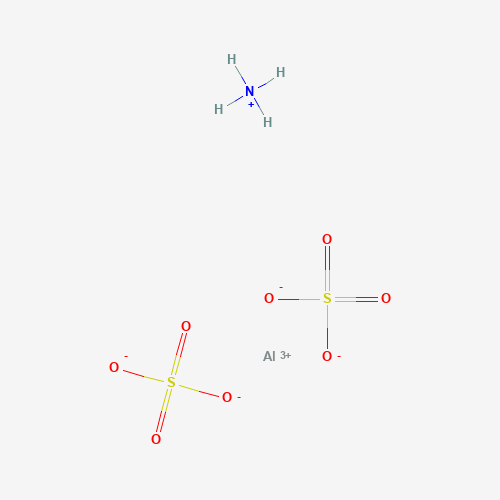
Aluminium ammonium sulfate, a form of alum, is a firming agent and a component of some raising agents. It is a source of dietary aluminium.
Where it is and isn’t permitted
| Jurisdiction | Status | Scope and limits | Citation |
|---|---|---|---|
| Australia and New Zealand | No listed food uses foundThis site has not matched this substance to any food use on this jurisdiction’s list of authorised food additives. A food additive may be used only in foods that list names. Flavourings, enzymes, processing aids and added nutrients are regulated separately and do not appear on it. | ||
| Canada | Permitted, with conditions | highest permitted level 3.5 % In: Baking powder. Purpose: Acid-reacting material. Limit: 3.5%, calculated as aluminum. Amendment notices: M-FAA-25-03. | Health Canada, List of Permitted Acidity Regulators and Acid-Reacting Materials (List 10), item A.3retrieved 2026-10-17 |
| European Union | Permitted, with conditions | 1 food category Permitted as a member of Aluminium sulphates. Note 1: The additives may be added individually or in combination. | Regulation (EC) No 1333/2008, Annex II, as amended by (EU) No 380/2012, via Aluminium sulphatesretrieved 2026-10-18 |
| Great Britain | Permitted, with conditions | 1 food category highest permitted level 200 mg/kg or mg/l Permitted as a member of E 520–523: Aluminium sulphates. ML = 200. only candied cherries Period of application: from 1 February 2014. Note (1): The additives may be added individually or in combination. Note (38): Expressed as aluminium. | Assimilated Regulation (EC) No 1333/2008, Annex II (as at 28 June 2024), via E 520–523: Aluminium sulphatesretrieved 2026-10-18 |
| Japan | Permitted, with conditions | Designated additive: Appended Table 1, item 450, 硫酸アルミニウムアンモニウム(結晶物の場合にあつては別名アンモニウムミョウバン、乾燥物の場合にあつては別名焼アンモニウムミョウバン) (“Aluminum Ammonium Sulfate (Crystal: Ammonium Alum, Dried: Burn …Designated additive: Appended Table 1, item 450, 硫酸アルミニウムアンモニウム(結晶物の場合にあつては別名アンモニウムミョウバン、乾燥物の場合にあつては別名焼アンモニウムミョウバン) (“Aluminum Ammonium Sulfate (Crystal: Ammonium Alum, Dried: Burnt Ammonium Alum)” in the unofficial English translation). Standards for use — Specifications and Standards for Foods, Food Additives, etc. (MHW Notification No. 370 of 1959), Part II (Food Additives), F (Standards for use), entry 硫酸アルミニウムアンモニウム: (1) [must not be used in the foods stated] “硫酸アルミニウムアンモニウムは、みそに使用してはならない。” (2) [sets maximum levels of use for the foods stated] “硫酸アルミニウムアンモニウムの使用量は、アルミニウムとして、菓子、生菓子又はパンにあっては、その1kgにつき0.1g以下でなければならない。” The Japanese is the standard as published. There is no official English translation of the Notification; the English in square brackets is this site’s description of what each sentence does, not a translation of the foods or the levels. Compositional specifications for this additive, in the same Notification, are not imported and are not shown here; nor are the general rules in F 添加物一般, which apply to every additive. | Regulations for Enforcement of the Food Sanitation Act (MHW Ordinance No. 23 of 1948), Appended Table 1retrieved 2026-10-18 |
| South Korea | Permitted, with conditions | Designated food additive: Standards and Specifications for Food Additives, Part III, 1. …Designated food additive: Standards and Specifications for Food Additives, Part III, 1. 일반식품첨가물 (general food additives), 황산알루미늄암모늄 (“Aluminium Ammonium Sulfate”, the English the Code prints beside it). Main use (주용도) of 황산알루미늄암모늄: 산도조절제, 팽창제, 안정제. Standard for use (사용기준) of 황산알루미늄암모늄: (1) [may be used only in the foods listed; sets a limit on the amount used] “황산알루미늄암모늄은 아래의 식품에 한하여 사용하여야 한다. 황산알루미늄암모늄의 사용량은 알루미늄으로서 1. 과자 및 이의 제조용 믹스, 빵류 및 이의 제조용 믹스, 튀김 제조용 믹스 : 0.1g/kg 이하(황산알루미늄칼륨, 산성알루미늄인산나트륨, 염기성알루미늄인산나트륨과 병용할 때에는 알루미늄의 합계가 0.1g/kg 이하) 2. 땅콩 또는 견과류 가공품(밤에 한함), 서류가공품(고구마에 한함), 기타 어육가공품, 과·채가공품 : 0.1g/kg 이하(황산알루미늄칼륨과 병용할 때에는 알루미늄의 합계가 0.1g/kg 이하) 3. 면류 및 이의 제조용 믹스, 기타 수산물가공품, 전분가공품, 만두피 : 0.2g/kg 이하(황산알루미늄칼륨과 병용할 때에는 알루미늄의 합계가 0.2g/kg 이하) 4. 절임식품 : 0.5g/kg 이하(황산알루미늄칼륨과 병용할 때에는 알루미늄의 합계가 0.5g/kg 이하)” The Korean is the standard as published. There is no official English translation of the current Code (the English version on MFDS’s website is the 2020 edition and has no legal effect); the English in square brackets is this site’s description of what each sentence does, not a translation of the foods or the levels. Compositional specifications (Part IV) are not imported, nor are the general standards in Part II, which apply to every additive. | Standards and Specifications for Food Additives (식품첨가물의 기준 및 규격), MFDS Notification, Part III (Standards for use, by item)retrieved 2026-10-18 |
| United States | Permitted | 21 CFR 182.1127retrieved 2026-10-17 | |
| Codex Alimentarius | Permitted, with conditions | 7 food categories highest permitted level 520 mg/kg Show every food category and its notes
| CXS 192-1995 Table One, INS 523and 6 further provisionsretrieved 2026-09-07 |
How much is permitted
A listing usually limits the quantity as well as the food. Only one of the forms that takes is a figure: quantum satis and good manufacturing practice permit the amount the technological effect requires and no more, which is a limit rather than the absence of one. Figures below are the range across every food category this page is listed in, and categories differ between regulators — see how much is permitted.
| Canada | 35,000 mg/kg | 1 numeric limit |
|---|---|---|
| European Union | — | 1 no quantity stated |
| Great Britain | 200 mg/kg | 1 numeric limit |
| Japan | — | 1 no quantity stated |
| South Korea | — | 1 no quantity stated |
| United States | — | 1 no quantity stated |
| Codex Alimentarius | 40 mg/kg – 520 mg/kg | 7 numeric limit |
What it is made from
Produced by crystallising aluminium sulfate with ammonium sulfate.
- Vegan
- Vegetarian
Compare other additives on the dietary indexes.
- CAS registry number
- 7784-25-0
- InChIKey
- LCQXXBOSCBRNNT-UHFFFAOYSA-K
- PubChem
- CID 3032540
The two specifications, compared
The European Union sets identity and purity by regulation; JECFA publishes its own through FAO, advisory until a country adopts it. Both documents are below in full. These are the parameters each puts a number on.
| Parameter | European Union | JECFA |
|---|---|---|
| Assay | no less than 99.5 % | no less than 99.5 % |
| Lead | no more than 3 mg/kg | no more than 3 mg/kg |
| Arsenic | no more than 3 mg/kg | — |
| Mercury | no more than 1 mg/kg | — |
The two documents state the same figures for every parameter compared here.
How the EU defines it
The legal specification an additive must meet to be sold as this E number in the EU — what it is, how it may be made, and the purity it must reach. From Commission Regulation (EU) No 231/2012.
E 523 Aluminium ammonium sulphate
Synonyms: Ammonium alum
Assay, identification and purity criteria
Description and assay
- Einecs
- 232-055-3
- Chemical name
- Aluminium ammonium sulphate
- Chemical formula
- AlNH₄(SO₄)₂ · 12 H₂O
- Molecular weight
- 453,32
- Assay
- Content not less than 99,5 %
- Description
- Large, colourless crystals or white powder
Identification
- Test for aluminium
- Passes test
- Test for ammonium
- Passes test
- Test for sulphate
- Passes test
- Solubility
- Freely soluble in water, soluble in ethanol
Purity criteria
- Alkali metals and alkaline earths
- Not more than 0,5 %
- Selenium
- Not more than 30 mg/kg
- Fluoride
- Not more than 30 mg/kg
- Arsenic
- Not more than 3 mg/kg
- Lead
- Not more than 3 mg/kg
- Mercury
- Not more than 1 mg/kg
How JECFA defines it
The international specification for identity and purity, prepared by the Joint FAO/WHO Expert Committee on Food Additives and published by FAO. It is a different document from any above, written by a different body and revised on its own cycle; it is advisory, and a country adopts it or does not.
INS 523 Aluminium Ammonium Sulfate
Synonyms: Ammonium alum; INS No. 523
Assay, identification and purity criteria
Description and assay
- Specification history
- Prepared at the 63 rd JECFA (2004) and published in the Combined Compendium of Food Additive Specifications, FAO JECFA Monographs 1 (2005). A PTWI of 2 mg/kg bw for aluminium was established at the 74 th JECFA (2011).
- Chemical names
- Aluminium ammonium sulfate
- C.A.S. number
- 7784-25-0
- Chemical formula
- AlNH4(SO4)2 · 12H2O
- Formula weight
- 453.32
- Assay
- Not less than 99.5% of AlNH4(SO4)2 · 12H2O
- DESCRIPTION
- Large, colourless crystals, white granules, or a powder; odourless
- FUNCTIONAL USES
- Buffer, neutralizing agent, colour fixative
- METHOD OF ASSAY
- Weigh accurately about 1 g of the sample, dissolve in 50 ml of water, add 50 ml of 0.05 M disodium EDTA and 20 ml of pH 4.5 buffer solution (77.1 g of ammonium acetate and 57 ml of glacial acetic acid in 1000 ml of solution), and boil gently for 5 min. Cool, and add 50 ml of ethanol and 2 ml of dithizone TS. Titrate with 0.05 M zinc sulfate to a bright rose-pink colour, and perform a blank determination. Each ml of 0.05 M disodium EDTA is equivalent to 22.67 mg of AlNH4(SO4)2 · 12H2O.
Identification
- Solubility
- Freely soluble in water; insoluble in ethanol
- Test for aluminium (Vol. 4)
- Passes test
- Test for ammonium (Vol. 4)
- Passes test
- Test for sulfate (Vol. 4)
- Passes test
Purity criteria
- Alkalis and alkaline earths (Vol. 4 for TS solutions)
- Completely precipitate the aluminium from a boiling solution of 1 g of the sample in 100 ml of water by the addition of enough ammonia TS to render the solution distinctly alkaline to methyl red TS, and filter. Evaporate the filtrate to dryness, and ignite. The weight of the residue does not exceed 5 mg.
- Fluoride
- Not more than 30 mg/kg See description under TESTS
- Selenium (Vol. 4)
- Not more than 30 mg/kg Test 0.2 g of the sample as directed in the Limit Test (Method II)
- Lead (Vol. 4)
- Not more than 3 mg/kg Determine using an AAS/ICP-AES technique appropriate to the specified level. The selection of sample size and method of sample preparation may be based on the principles of the methods described in Volume 4 (under “General Methods, Metallic Impurities”).
- Fluoride
- Lime suspension Carefully slake about 56 g of low fluoride calcium oxide (about 2 mg/kg F) with 250 ml of water, and add 250 ml of 60% perchloric acid slowly and with stirring. Add a few glass beads and boil until copious fumes of perchloric acid are evolved. Cool, add 200 ml of water, and boil again. Repeat the dilution and boiling once more. Cool, dilute considerably, and filter through a fritted-glass filter if precipitated silicon dioxide appears. Pour the clear solution, with stirring into 1000 ml of sodium hydroxide solution (1 in 10), allow the precipitate to settle, and siphon off the supernatant liquid. Remove the sodium salts from the precipitate by washing five times in large centrifuge bottles, shaking the mass thoroughly each time. Finally shake the precipitate into a suspension and dilute to 2000 ml. Store in paraffin-lined bottles and shake well before use. (Note: 100 ml of this suspension should give no appreciable fluoride blank when evaporated, distilled, and titrated as directed in the Limit Test, Method I Thorium Nitrate Colorimetric Method ). Procedure Assemble the distilling apparatus as directed in the Limit Test (Method I ) , and add to the distilling flask about 1.67 g of the sample, accurately weighed, and 25 ml of dilute sulfuric acid (1 in 2). Distil until the temperature reaches 160°, then maintain at 160° to 165° by adding water from the funnel, collecting 300 ml of distillate. Oxidize the distillate by the cautious addition of 2 or 3 ml of fluorine-free 30% hydrogen peroxide (to remove sulfites), allow to stand for a few min, and evaporate in a platinum dish with an excess of Lime suspension. Ignite briefly at 600°, then cool and wet the ash with about 10 ml of water. Cover the dish with a watch glass, and cautiously introduce under the cover just sufficient 60% perchloric acid to dissolve the ash. Add the contents of the dish through the dropping funnel of a freshly prepared distilling apparatus (the distilling flask should contain a few glass beads), using a total of 20 ml of the perchloric acid for dissolving the ash and transferring the solution. Add 10 ml of water and a few drops of silver perchlorate solution (1 in 2) through the dropping funnel, and continue as directed in the Limit Test Method I Thorium Nitrate Colorimetric Method beginning with "Distil until the temperature reaches 135°." (See Volume 4)
Every name it appears under
65 recorded names. A label may use any of them.
E number
- E523
INS number
- 523
CAS registry number
- 7784-25-0
As it appears in regulation
- Aluminium ammonium sulphate
- Aluminum ammonium sulfate
Other names
- Alum, ammonium
- Alum, ammonium anhydrous
- ALUM, AMMONIUM, EXSICCATED
- Aluminium ammonium bis(sulphate)
- ALUMINIUM AMMONIUM SULFATE
- Aluminium ammonium sulfate (1/1/2)
- ALUMINIUM AMMONIUM SULFATE ANHYDROUS
- Aluminium ammonium sulphate
- aluminium(3+) ion ammonium disulfate
- Aluminum ammonium alum
- Aluminum ammonium bis(sulfate)
- Aluminum ammonium disulfate (Al(NH4)(SO4)2)
- ALUMINUM AMMONIUM SULFATE
- Aluminum ammonium sulphate
- aluminum sulfate ammonium salt
- aluminum;azanium;disulfate
- Ammonium alum
- AMMONIUM ALUM ANHYDROUS
- Ammonium alum; Ammonium aluminum alum; Ammonium aluminum sulfate
- AMMONIUM ALUMINIUM SULFATE [WHO-DD]
- Ammonium aluminum alum
- Ammonium aluminum sulfate
- AMMONIUM-ALUM
- Caswell No. 041B
- Curb
- DPU64XYB1D
- E 523
- EPA Pesticide Chemical Code 098501
- Exsiccated ammonium alum
- HSDB 611
- INS NO.523
- INS-523
- Monoammonium monoaluminum sulfate
- SULFURIC ACID, ALUMINIUM AMMONIUM SALT (2:1:1)
Systematic names
- aluminum azanium disulfate
Hazard reference values
No reference value for this substance in the sources we hold.
Evidence and how bodies read it
What assessing bodies concluded
Each conclusion is paraphrased in the body's own framing, from the published opinion linked beneath it. Where bodies differ, both stand; this site does not adjudicate between them or add a view of its own.
EFSA 2018
The ANS Panel concluded that aluminium sulphates (E 520–E 523) and acidic sodium aluminium phosphate (E 541), which are permitted in only a few specific products with exposure probably near zero, are of no safety concern at current authorised uses and use levels.
Common questions
Assembled from what is above, in the words the questions are usually asked in. Each answer is the same statement the relevant section makes, with the same citations behind it.
- What is E 523?
- E 523 is Aluminium ammonium sulfate. Aluminium ammonium sulfate, a form of alum, is a firming agent and a component of some raising agents. It is a source of dietary aluminium.
- What is Aluminium ammonium sulfate used for in food?
- It is listed as a raising agent — the role Canada, Codex and the US assign it. This page shows every function each regulator records, with the citation for each.
- Where is Aluminium ammonium sulfate permitted?
- Of the seven regulators this site reads, Canada, the EU, Great Britain, Japan, South Korea, the US and the Codex standard permit it. Each permission is for named foods at named levels, not a blanket one; the table on this page gives them with citations.
- Is Aluminium ammonium sulfate vegan?
- Yes. Aluminium ammonium sulfate is not derived from animals, and is suitable for vegetarians. This page says what it is made from and how.
Sources for this page
- ca retrieved 2026-10-17
- eu retrieved 2026-10-18
- gb retrieved 2026-10-18
- jp retrieved 2026-10-18
- kr retrieved 2026-10-18
- ecfr retrieved 2026-10-17
- gsfa retrieved 2026-09-07
- euspecs retrieved 2026-10-18
- jecfaspecs retrieved 2026-09-23
Full licence terms and publisher details on Sources. How this page is built and updated: Method.
Machine-readable: a JSON record of this additive is given on request —how to ask for access.
Follow changes to Aluminium ammonium sulfate:Atom feed — regulatory events, and any change the weekly refresh detects in its provisions.