Calcium gluconate
299-28-5 · 2,3,4,5,6-Pentahydroxycaproic Acid hemicalcium salt · 23% Calcium Gluconate · C12H22CaO14 · Calcarea gluconica · Calcicol · Calcii gluconas · Calciofon · Calcipur · calcium (2R,3S,4R,5R)-2,3,4,5,6-pentahydroxyhexanoate · Calcium D-gluconate · Calcium D-gluconate (1:2) · Calcium D-gluconate;Gluconic acid hemicalcium salt · calcium di(D-gluconate) · Calcium di-gluconate · CALCIUM GLUCONATE · Calcium gluconate (USP) · Calcium Gluconate 1.5% · Calcium Gluconate 23% Solution · Calcium gluconate anhydrous · Calcium gluconate hydrate · CALCIUM GLUCONATE IN SODIUM CHLORIDE · Calcium hexagluconate · Calglucol · Calglucon · CCRIS 1336 · D-Gluconic acid calcium salt · D-GLUCONIC ACID HEMICALCIUM SALT · D-Gluconic acid, calcium salt (2:1) · Dragocal · Ebucin · Glucal · Glucobiogen · Gluconate de calcium · Gluconate, Calcium · Gluconato di calcio · Gluconic Acid Calcium Salt · Gluconic acid hemicalcium salt · Gluconic acid, calcium salt (2:1), D- · GZE CUTICLE REMOVER · H-f antidote · HSDB 994 · INS NO.578 · INS-578 · Kalpren · Novocal · SQE6VB453K · Sykes Calcium Gluconate 23% · E578 · 578 · Calcium gluconate · Calcium gluconate · Calciumgluconaat · Calciumgluconat · Gluconat de calciu · Gluconate de calcium · Gluconato cálcico · Gluconato de cálcio · Gluconato di calcio · Glukonan vápenatý · Glukonat tal-kalċju · Glukonian wapnia · Kalcija glikonāts · Kalcijev glukonat · Kalcio gliukonatas · Kalcium-glükonát · Kalciumglukonat · Kalsiumglukonaatti · Kaltsiumglükonaat · Γλυκονικό ασβέστιο · Калциев глюконатE number E578INS 578CAS 299-28-5
Listed as a firming agent by Canada, Codex and the US.
Listed as firming agents (CA, US, Codex) · thickeners (CA, US) · acidity regulators (CA, Codex) · stabilisers (CA, US) · sequestrants (US, Codex) · emulsifiers (CA) · flavour enhancers (US) · nutrient supplements (US) · flavouring agents and adjuvants (US) · texturisers (US) · formulation aids (US)
- Canada: Firming agent — Health Canada, List of Permitted Firming Agents (List 6)
- United States: Firming agent — FDA, Substances Added to Food: CALCIUM GLUCONATE
- United States: Firming agents — 21 CFR 184.1199, citing 21 CFR 170.3(o)(10)
- Codex Alimentarius: Firming agent — CXS 192-1995 Table One, INS 578
- Canada: Emulsifying, stabilizing or thickening agent — Health Canada, List of Permitted Emulsifying, Gelling, Stabilizing or Thickening Agents (List 4)
- United States: Stabilizer or thickener — FDA, Substances Added to Food: CALCIUM GLUCONATE
- United States: Stabilizers and thickeners — 21 CFR 184.1199, citing 21 CFR 170.3(o)(28)
- Canada: Acidity regulator — Health Canada, List of Permitted Acidity Regulators and Acid-Reacting Materials (List 10)
- Codex Alimentarius: Acidity regulator — CXS 192-1995 Table One, INS 578
- Canada: Emulsifying, stabilizing or thickening agent — Health Canada, List of Permitted Emulsifying, Gelling, Stabilizing or Thickening Agents (List 4)
- United States: Stabilizer or thickener — FDA, Substances Added to Food: CALCIUM GLUCONATE
- United States: Stabilizers and thickeners — 21 CFR 184.1199, citing 21 CFR 170.3(o)(28)
- United States: Sequestrant — FDA, Substances Added to Food: CALCIUM GLUCONATE
- United States: Sequestrants — 21 CFR 184.1199, citing 21 CFR 170.3(o)(26)
- Codex Alimentarius: Sequestrant — CXS 192-1995 Table One, INS 578
- Canada: Emulsifying, stabilizing or thickening agent — Health Canada, List of Permitted Emulsifying, Gelling, Stabilizing or Thickening Agents (List 4)
- United States: Flavor enhancer — FDA, Substances Added to Food: CALCIUM GLUCONATE
- United States: Nutrient supplement — FDA, Substances Added to Food: CALCIUM GLUCONATE
- United States: Flavoring agent or adjuvant — FDA, Substances Added to Food: CALCIUM GLUCONATE
- United States: Texturizer — FDA, Substances Added to Food: CALCIUM GLUCONATE
- United States: Texturizers — 21 CFR 184.1199, citing 21 CFR 170.3(o)(32)
- United States: Formulation aid — FDA, Substances Added to Food: CALCIUM GLUCONATE
- United States: Formulation aids — 21 CFR 184.1199, citing 21 CFR 170.3(o)(14)
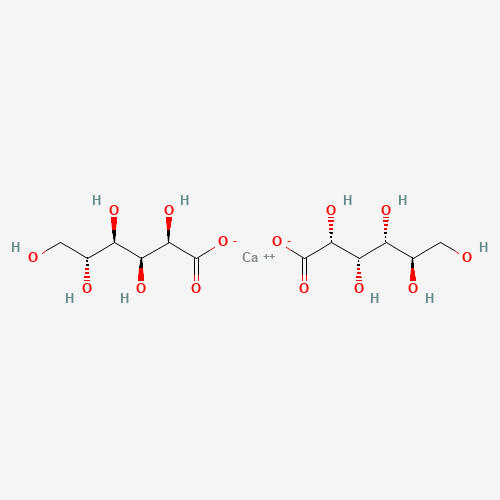
Calcium gluconate is a firming agent and calcium fortificant, used in canned fruit and vegetables and in supplements.
Where it is and isn’t permitted
| Jurisdiction | Status | Scope and limits | Citation |
|---|---|---|---|
| Australia and New Zealand | Permitted, with conditions | 54 food categories no numerical limit (good manufacturing practice) Show every food category
| Food Standards Code, Schedule 15, S15—5and 53 further provisionsretrieved 2026-10-17 |
| Canada | Permitted | no numerical limit (good manufacturing practice) 3 permitted uses Show every permitted use
| Health Canadaand 2 further provisionsretrieved 2026-10-17 |
| European Union | Permitted, with conditions | 70 food categories Show every food category
| Regulation (EC) No 1333/2008, Annex IIand 69 further provisionsretrieved 2026-10-18 |
| Great Britain | Permitted, with conditions | 68 food categories Show every food category
| Assimilated Regulation (EC) No 1333/2008and 67 further provisionsretrieved 2026-10-18 |
| Japan | Permitted, with conditions | Designated additive: Appended Table 1, item 130, グルコン酸カルシウム (“Calcium Gluconate” in the unofficial English translation). …Designated additive: Appended Table 1, item 130, グルコン酸カルシウム (“Calcium Gluconate” in the unofficial English translation). Standards for use — Specifications and Standards for Foods, Food Additives, etc. (MHW Notification No. 370 of 1959), Part II (Food Additives), F (Standards for use), entry グルコン酸カルシウム: (1) [may be used only in the circumstances stated] “グルコン酸カルシウムは、栄養の目的で使用する場合以外は食品に使用してはならない。” (2) [sets maximum levels of use for the foods stated; states an exception to the preceding sentence] “グルコン酸カルシウムの使用量は、カルシウムとして、食品の1.0%以下でなければならない。ただし、特別用途表示の許可又は承認を受けた場合は、この限りでない。” The Japanese is the standard as published. There is no official English translation of the Notification; the English in square brackets is this site’s description of what each sentence does, not a translation of the foods or the levels. Compositional specifications for this additive, in the same Notification, are not imported and are not shown here; nor are the general rules in F 添加物一般, which apply to every additive. | Regulations for Enforcement of the Food Sanitation Act (MHW Ordinance No. 23 of 1948), Appended Table 1retrieved 2026-10-18 |
| South Korea | Permitted, with conditions | Designated food additive: Standards and Specifications for Food Additives, Part III, 1. …Designated food additive: Standards and Specifications for Food Additives, Part III, 1. 일반식품첨가물 (general food additives), 글루콘산칼슘 (“Calcium Gluconate”, the English the Code prints beside it); the Code marks it as also usable as a nutrient fortifier; 3. 영양강화제 (nutrient fortifiers), 글루콘산칼슘; nutrient: 칼슘(Ca); the Code marks it as also usable as a general food additive. Main use (주용도) of 글루콘산칼슘: 산도조절제. Standard for use (사용기준) of 글루콘산칼슘: (1) [sets a limit on the amount used] “글루콘산칼슘의 사용량은 칼슘으로서 1. 빵류∶ 1.75% 이하 2. 상기 식품을 제외한 식품과 건강기능식품∶ 1% 이하(다만, 특수영양식품, 특수의료용도식품 및 건강기능식품의 경우는 해당 기준 및 규격에 따른다)” Standard for use (사용기준) of 글루콘산칼슘: (1) [follows the standard for use of another entry in the Code] “III. 1. 일반식품첨가물의 글루콘산칼슘의 사용기준을 따른다.” The Korean is the standard as published. There is no official English translation of the current Code (the English version on MFDS’s website is the 2020 edition and has no legal effect); the English in square brackets is this site’s description of what each sentence does, not a translation of the foods or the levels. Compositional specifications (Part IV) are not imported, nor are the general standards in Part II, which apply to every additive. | Standards and Specifications for Food Additives (식품첨가물의 기준 및 규격), MFDS Notification, Part III (Standards for use, by item)retrieved 2026-10-18 |
| United States | Permitted | 21 CFR 184.1199retrieved 2026-10-17 | |
| Codex Alimentarius | Permitted, with conditions | 1 food category no numerical limit (good manufacturing practice) Note 630 For use in products conforming to the Standard for Fermented Milks (CXS 243-2003) only, as an acidity regulator in flavoured fermented milks and flavoured drinks based on fermented milks that are not heat treated after fermentation, and in plain and flavoured milks and drinks based on fermented milks that are heat treated after fermentation. | CXS 192-1995 Table Three, INS 578and 1 further provisionretrieved 2026-09-07 |
How much is permitted
A listing usually limits the quantity as well as the food. Only one of the forms that takes is a figure: quantum satis and good manufacturing practice permit the amount the technological effect requires and no more, which is a limit rather than the absence of one. Figures below are the range across every food category this page is listed in, and categories differ between regulators — see how much is permitted.
| Australia and New Zealand | — | 54 GMP |
|---|---|---|
| Canada | — | 3 GMP |
| European Union | — | 46 several limits, 2 quantum satis, 22 no quantity stated |
| Great Britain | — | 68 quantum satis |
| Japan | — | 1 no quantity stated |
| South Korea | — | 1 no quantity stated |
| United States | — | 1 no quantity stated |
| Codex Alimentarius | — | 2 GMP |
No regulator sets a figure for Calcium gluconate. That is not an absence of control: where the listing says quantum satis or good manufacturing practice, the quantity is limited to what the effect requires.
GRAS notices to the FDA
A GRAS notice is a company’s conclusion that a substance is generally recognised as safe for the use it describes. FDA’s letter responds to that conclusion, for that notifier and that use. It is not a listing in 21 CFR, and it is not counted as a US permission above. The substance and use are as FDA’s inventory words them; this site matched the notice to this page by exact name.
GRN No. 136 · Calcium gluconate · Purac Biochem b.v.
Intended use: Use in food in general as a source of calcium
FDA’s response (2004-02-05): FDA has no questions
What it is made from
Made by fermenting glucose to gluconic acid and neutralising it with a calcium base.
- Vegan
- Vegetarian
Compare other additives on the dietary indexes.
- CAS registry number
- 299-28-5
- InChIKey
- NEEHYRZPVYRGPP-IYEMJOQQSA-L
- PubChem
- CID 9290
The two specifications, compared
The European Union sets identity and purity by regulation; JECFA publishes its own through FAO, advisory until a country adopts it. Both documents are below in full. These are the parameters each puts a number on.
| Parameter | European Union | JECFA |
|---|---|---|
| Assay | no less than 98 % | — |
| Loss on drying | no more than 3 % | — |
| Lead | no more than 2 mg/kg | — |
The two documents state the same figures for every parameter compared here.
How the EU defines it
The legal specification an additive must meet to be sold as this E number in the EU — what it is, how it may be made, and the purity it must reach. From Commission Regulation (EU) No 231/2012.
E 578 Calcium gluconate
Synonyms: Calcium salt of D-gluconic acid
Assay, identification and purity criteria
Description and assay
- Einecs
- 206-075-8
- Chemical name
- Calcium di-D-gluconate
- Chemical formula
- C₁₂H₂₂CaO₁₄ (anhydrous) C₁₂H₂₂CaO₁₄ · H₂O (monohydrate)
- Molecular weight
- 430,38 (anhydrous form) 448,39 (monohydrate)
- Assay
- anhydrous: Content not less than 98 % and not more than 102 % on the dried basis monohydrate: not less than 98 % and not more than 102 % on the ‘as is’ basis.
- Description
- Odourless, white crystalline granules or powder, stable in air
Identification
- Test for calcium
- Passes test
- Test for gluconate
- Passes test
- Solubility
- Soluble in water, insoluble in ethanol
- pH
- Between 6,0 and 8,0 (5 % solution)
Purity criteria
- Loss on drying
- Not more than 3,0 % (105 °C, 16 hours) (anhydrous) Not more than 2,0 % (105 °C, 16 hours) (monohydrate)
- Reducing substances
- Not more than 1,0 % (as D-glucose)
- Lead
- Not more than 2 mg/kg
How JECFA defines it
The international specification for identity and purity, prepared by the Joint FAO/WHO Expert Committee on Food Additives and published by FAO. It is a different document from any above, written by a different body and revised on its own cycle; it is advisory, and a country adopts it or does not.
INS 578 Calcium Gluconate
Assay, identification and purity criteria
Description and assay
- Specification history
- Prepared at the 51st JECFA (1998), published in FNP 52 Add 6 (1998) superseding specifications prepared at the 18th JECFA (1974), published in NMRS 54B (1975) and republished in FNP 52 (1992). Group ADI "not specified" for glucono-delta-lactone and gluconates, excluding ferrous gluconate, established at the 51st JECFA in 1998.
- SYNONYMS DEFINITION Chemical names C.A.S. number Chemical formula Structural formula
- INS No. 578 Calcium di-D-gluconate monohydrate 299-28-5 C 12 H 22 CaO 14 · H 2 O
- Formula weight Assay DESCRIPTION FUNCTIONAL USES Solubility (Vol. 4) Test for calcium (Vol. 4) Test for gluconate (Vol. 4) Loss on drying (Vol. 4)
- 448.39 Not less than 98% and not more than 102% on the dried basis Odourless, white, crystalline granules or powder, stable in air Acidity regulator, firming agent, sequestrant, nutrient supplement Soluble in water; insoluble in ethanol Passes test Passes test Not more than 2.0% (105 o , 16 h)
- METHOD OF ASSAY
- Weigh accurately about 0.5 g of the dried sample and dissolve in 5 ml of dilute hydrochloric acid. Add 50 ml of water, 25 ml of sodium hydroxide TS and about 0.1 g of 2-hydroxy-1-(2'-hydroxy-4'-sulfo-1'-naphthylazo)-3-naphthoic acid. Titrate with 0.05 M EDTA immediately. At the end-point, the red colour changes completely to blue. Each ml of 0.05 M EDTA is equivalent to 22.42 mg of C 12 H 22 CaO 14 · H 2 O.
Purity criteria
- Reducing substances (Vol. 4) Lead (Vol. 4)
- Not more than 1.0% calculated as D-glucose (Method I) Not more than 2 mg/kg Determine using an atomic absorption technique appropriate to the specified level. The selection of sample size and method of sample preparation may be based on the principles of the method described in Volume 4, “Instrumental Methods.”
Authorised in other additives, enzymes, flavourings and nutrients
These authorisations are not for use in food. They let this substance be used inside another additive, a food enzyme, a flavouring or a nutrient preparation — often as a carrier — and it reaches food only as part of that product. Annex III to Regulation (EC) No 1333/2008.
| Part | May be used in | Maximum level | Citation |
|---|---|---|---|
| Annex III, Part 2: Food additives other than carriers in food additives | All food additive preparationsAuthorised as a member of Table 1 of Part 6, listed as "Table 1" Note (1): Except enzymes authorised as food additives. | quantum satis | Regulation (EC) No 1333/2008, Annex III, Part 2, via Table 1 of Part 6 |
| Annex III, Part 3: Food additives including carriers in food enzymes | Food enzymesCan be used as a carrier: Yes Note (1): Including enzymes authorised as food additives. | In enzyme preparation: quantum satis In final food except beverages: quantum satis In beverages: quantum satis | Regulation (EC) No 1333/2008, Annex III, Part 3 |
| Annex III, Part 4: Food additives including carriers in food flavourings | All flavouringsAuthorised as a member of Table 1 of Part 6, listed as "Table 1" | quantum satis | Regulation (EC) No 1333/2008, Annex III, Part 4, via Table 1 of Part 6 |
| Annex III, Part 5, Section A: Food additives added in nutrients except in nutrients intended to be used in foodstuffs listed in Part E, point 01.10, of Annex II and foodstuffs for infants and young children listed in Part E, point 13.1, of Annex II | All nutrients | quantum satis | Regulation (EC) No 1333/2008, Annex III, Part 5, Section A |
Every name it appears under
71 recorded names. A label may use any of them.
E number
- E578
INS number
- 578
CAS registry number
- 299-28-5
As it appears in regulation
- Calcium gluconate
Other names
- 2,3,4,5,6-Pentahydroxycaproic Acid hemicalcium salt
- 23% Calcium Gluconate
- C12H22CaO14
- Calcarea gluconica
- Calcicol
- Calcii gluconas
- Calciofon
- Calcipur
- calcium (2R,3S,4R,5R)-2,3,4,5,6-pentahydroxyhexanoate
- Calcium D-gluconate
- Calcium D-gluconate (1:2)
- Calcium D-gluconate;Gluconic acid hemicalcium salt
- calcium di(D-gluconate)
- Calcium di-gluconate
- CALCIUM GLUCONATE
- Calcium gluconate (USP)
- Calcium Gluconate 1.5%
- Calcium Gluconate 23% Solution
- Calcium gluconate anhydrous
- Calcium gluconate hydrate
- CALCIUM GLUCONATE IN SODIUM CHLORIDE
- Calcium hexagluconate
- Calglucol
- Calglucon
- CCRIS 1336
- D-Gluconic acid calcium salt
- D-GLUCONIC ACID HEMICALCIUM SALT
- D-Gluconic acid, calcium salt (2:1)
- Dragocal
- Ebucin
- Glucal
- Glucobiogen
- Gluconate de calcium
- Gluconate, Calcium
- Gluconato di calcio
- Gluconic Acid Calcium Salt
- Gluconic acid hemicalcium salt
- Gluconic acid, calcium salt (2:1), D-
- GZE CUTICLE REMOVER
- H-f antidote
- HSDB 994
- INS NO.578
- INS-578
- Kalpren
- Novocal
- SQE6VB453K
- Sykes Calcium Gluconate 23%
Hazard reference values
| Type | Value | Population | Assessed by | Opinion |
|---|---|---|---|---|
| ADI | not specified | — | JECFA | 1998 |
Evidence and how bodies read it
Studies, and the differing conclusions regulators drew from them, are curated rather than machine-read, and none has been written for this substance yet.
Common questions
Assembled from what is above, in the words the questions are usually asked in. Each answer is the same statement the relevant section makes, with the same citations behind it.
- What is E 578?
- E 578 is Calcium gluconate. Calcium gluconate is a firming agent and calcium fortificant, used in canned fruit and vegetables and in supplements.
- What is Calcium gluconate used for in food?
- It is listed as a firming agent — the role Canada, Codex and the US assign it. This page shows every function each regulator records, with the citation for each.
- Where is Calcium gluconate permitted?
- Of the seven regulators this site reads, Australia and New Zealand, Canada, the EU, Great Britain, Japan, South Korea, the US and the Codex standard permit it. Each permission is for named foods at named levels, not a blanket one; the table on this page gives them with citations.
- Is Calcium gluconate vegan?
- Yes. Calcium gluconate is not derived from animals, and is suitable for vegetarians. This page says what it is made from and how.
Sources for this page
- anz retrieved 2026-10-17
- ca retrieved 2026-10-17
- eu retrieved 2026-10-18
- gb retrieved 2026-10-18
- jp retrieved 2026-10-18
- kr retrieved 2026-10-18
- ecfr retrieved 2026-10-17
- gsfa retrieved 2026-09-07
- euspecs retrieved 2026-10-18
- jecfaspecs retrieved 2026-09-23
Full licence terms and publisher details on Sources. How this page is built and updated: Method.
Machine-readable: a JSON record of this additive is given on request —how to ask for access.
Follow changes to Calcium gluconate:Atom feed — regulatory events, and any change the weekly refresh detects in its provisions.