Calcium tartrate

E number E354

Listed as an emulsifier, a thickener and a stabiliser by Canada.

Listed as emulsifiers (CA) · thickeners (CA) · stabilisers (CA)
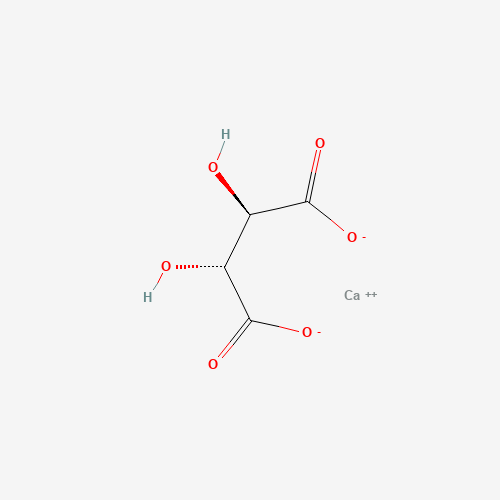
Chemical structure of Calcium tartrate, from PubChem compound 9815471
Structure from PubChem CID 9815471 (National Library of Medicine, public domain). A depiction of one compound: where a listing covers a family, or a substance has no single structure, this page shows none.

The calcium salt of tartaric acid, used as an acidity regulator and firming agent. It is also what precipitates out of wine as part of the crystalline deposit winemakers call tartrates.

Where it is and isn’t permitted

Status of Calcium tartrate by jurisdiction. Every jurisdiction this site covers is listed, including those where the substance does not appear.
JurisdictionStatusScope and limitsCitation
Australia and New ZealandFood Standards Australia New ZealandPermitted, with conditions

55 food categories

no numerical limit (good manufacturing practice)

Show every food category
  • 0 Preparations of food additives — GMP
  • 1.1.1 Liquid milk (including buttermilk) — GMPOnly UHT goats milk.
  • 1.1.2 Liquid milk products and flavoured liquid milk — GMP
  • 1.2.2 Fermented milk products and rennetted milk products — GMP
  • 1.3 Condensed milk and evaporated milk — GMP
  • 1.4.1 Cream, reduced cream and light cream — GMPOnly UHT creams and creams receiving equivalent or greater heat treatments.
  • 1.4.2 Cream products (flavoured, whipped, thickened, sour cream etc) — GMP
  • 1.5 Dried milk, milk powder, cream powder — GMP
  • 1.6 Cheese and cheese products — GMP
  • 10.2 Liquid egg products — GMP
  • 10.3 Frozen egg products — GMP
  • 10.4 Dried or heat coagulated egg products — GMP
  • 11.1.1 Rainbow sugar — GMP
  • 11.3.1 Dried honey — GMP
  • 11.4 Tabletop sweeteners — GMP
  • 12.1.2 Reduced sodium salt mixture — GMP
  • 12.1.3 Salt substitute — GMP
  • 12.5 Yeast and yeast products — GMP
  • 12.6 Vegetable protein products — GMP
  • 13.3 Formulated meal replacements and formulated supplementary foods — GMP
  • 13.4 Formulated supplementary sports foods — GMP
  • 13.5 Food for special medical purposes — GMP
  • 14.1.1.2 Carbonated, mineralised and soda waters — GMP
  • 14.1.2.1 Fruit and vegetable juices — GMPFor juice separated by other than mechanical means only.
  • 14.1.2.1 Fruit and vegetable juices — GMP
  • 14.1.2.2 Fruit and vegetable juice products — GMP
  • 14.1.3 Water based flavoured drinks — GMP
  • 14.1.4 Formulated Beverages — GMP
  • 14.1.5 Coffee, coffee substitutes, tea, herbal infusions and similar products — GMP
  • 14.2.3 Wine based drinks and reduced alcohol wines — GMP
  • 14.2.4.1 Fruit wine products and vegetable wine products — GMP
  • 14.2.5 Spirits and liqueurs — GMP
  • 14.3 Alcoholic beverages not included in item 14.2 — GMP
  • 2.1 Edible oils essentially free of water — GMP
  • 2.2.1.2 Butter products — GMP
  • 2.2.1.3 Margarine and similar products — GMP
  • 2.2.2 Oil emulsions (<80% oil) — GMP
  • 20 Foods not included in items 0 to 14 — GMP
  • 3 Ice cream and edible ices — GMP
  • 4.1.3 Fruits and vegetables that are peeled, cut, or both peeled and cut — GMP
  • 4.3 Processed fruits and vegetables — GMP
  • 5.1 Chocolate and cocoa products — GMP
  • 5.2 Sugar confectionery — GMP
  • 5.4 Icings and frostings — GMP
  • 6.3 Processed cereal and meal products — GMP
  • 6.4 Flour products (including noodles and pasta) — GMP
  • 7 Breads and bakery products — GMP
  • 8.2 Processed meat, poultry and game products in whole cuts or pieces — GMP
  • 8.3 Processed comminuted meat, poultry and game products, other than products listed in item 8.3.2 — GMP
  • 8.3.2 Sausage and sausage meat containing raw, unprocessed meat — GMP
  • 8.4 Edible casings — GMP
  • 8.5 Animal protein products — GMP
  • 9.2 Processed fish and fish products — GMP
  • 9.3 Semi preserved fish and fish products — GMP
  • 9.4 Fully preserved fish including canned fish products — GMP
Food Standards Code, Schedule 15, S15—5and 54 further provisionsretrieved 2026-10-17
CanadaHealth CanadaPermitted

no numerical limit (good manufacturing practice)

In: Unstandardized foods. Purpose: Emulsifying, stabilizing or thickening agent. Limit: Good Manufacturing Practice.

Health Canada, List of Permitted Emulsifying, Gelling, Stabilizing or Thickening Agents (List 4), item C.12retrieved 2026-10-17
European UnionEuropean Commission / EFSAPermitted, with conditions

29 food categories

highest permitted level 100,000 mg/l

Show every food category
  • 1.3 unflavoured fermented milk products heat-treated after fermentation — 750 mg/lAuthorised under Tartaric acid – tartrates E 334 – 337 and E 354. ML = 750 mg/l.
  • 1.8 Dairy analogues, including beverage whiteners — 240 mg/kgAuthorised under Tartaric acid – tartrates E 334 – 337 and E 354. ML = 240 mg/kg.
  • 12.2.2 Seasonings and condiments — 17,000 mg/lAuthorised under Tartaric acid – tartrates E 334 – 337 and E 354. ML = 17000 mg/l.
  • 12.4 Mustard — 12,000 mg/lAuthorised under Tartaric acid – tartrates E 334 – 337 and E 354. ML = 12000 mg/l.
  • 12.5 Soups and broths — 240 mg/lAuthorised under Tartaric acid – tartrates E 334 – 337 and E 354. ML = 240 mg/l.
  • 12.6 Sauces — 4,000 mg/lAuthorised under Tartaric acid – tartrates E 334 – 337 and E 354. ML = 4000 mg/l.
  • 12.7 Salads and savoury-based sandwich spreads — 1,800 mg/lAuthorised under Tartaric acid – tartrates E 334 – 337 and E 354. ML = 1800 mg/l.
  • 12.9 Protein products excluding products covered in category 1 8 — 240 mg/lAuthorised under Tartaric acid – tartrates E 334 – 337 and E 354. ML = 240 mg/l.
  • 14.1.4 Flavoured_drinks — 4,000 mg/lAuthorised under Tartaric acid – tartrates E 334 – 337 and E 354. ML = 4000 mg/l.
  • 14.2.6 Spirit drinks as defined in Regulation (EU) 2019/787 — 1,000 mg/lAuthorised under Tartaric acid – tartrates E 334 – 337 and E 354. ML = 1000 mg/l.
  • 14.2.7.1 Aromatised wines — 8,000 mg/lAuthorised under Tartaric acid – tartrates E 334 – 337 and E 354. ML = 8000 mg/l.
  • 14.2.7.2 Aromatised wine-based drinks — 8,000 mg/lAuthorised under Tartaric acid – tartrates E 334 – 337 and E 354. ML = 8000 mg/l.
  • 14.2.7.3 Aromatised wine-product cocktails — 8,000 mg/lAuthorised under Tartaric acid – tartrates E 334 – 337 and E 354. ML = 8000 mg/l.
  • 14.2.8 Other alcoholic beverages including mixtures of alcoholic beverages with non-alcoholic beverages and other alcoholic beverages based on distilled alcohol with alcoholic strength by volume less than 15 % — 8,000 mg/lAuthorised under Tartaric acid – tartrates E 334 – 337 and E 354. ML = 8000 mg/l.
  • 15.1 Potato- cereal- flour- or starch-based snacks — 60,000 mg/kgAuthorised under Tartaric acid – tartrates E 334 – 337 and E 354. ML = 60000 mg/kg.
  • 16 Desserts excluding products covered in category 1 3 and 4 — 3,000 mg/kgAuthorised under Tartaric acid – tartrates E 334 – 337 and E 354. ML = 3000 mg/kg.
  • 17.1 food supplements supplied in a solid form excluding food supplements for infants and young children’, — 100,000 mg/kgAuthorised under Tartaric acid – tartrates E 334 – 337 and E 354. ML = 100000 mg/kg. except food supplements in chewable form.
  • 17.2 food supplements supplied in a liquid form excluding food supplements for Infants and young children — 6,000 mg/lAuthorised under Tartaric acid – tartrates E 334 – 337 and E 354. ML = 6000 mg/l.
  • 2.2.2 Other fat and oil emulsions including spreads as defined by Regulation (EC) No 1234/2007 and liquid emulsions — 1,300 mg/lAuthorised under Tartaric acid – tartrates E 334 – 337 and E 354. ML = 1300 mg/l.
  • 4.2.4.1 fruit and vegetable preparations excluding compote — 3,000 mg/kgAuthorised under Tartaric acid – tartrates E 334 – 337 and E 354. ML = 3000 mg/kg.
  • 4.2.6 processed potato products — 240 mg/lAuthorised under Tartaric acid – tartrates E 334 – 337 and E 354. ML = 240 mg/l.
  • 5.2 Other confectionery including breath freshening micro-sweets — 25,000 mg/lAuthorised under Tartaric acid – tartrates E 334 – 337 and E 354. ML = 25000 mg/l.
  • 5.3 chewing gum — 25,000 mg/lAuthorised under Tartaric acid – tartrates E 334 – 337 and E 354. ML = 25000 mg/l.
  • 5.4 Decorations, coatings and fillings, except fruit-based fillings covered by category 4.2.4 — 11,000 mg/lAuthorised under Tartaric acid – tartrates E 334 – 337 and E 354. ML = 11000 mg/l.
  • 6.7 pre-cooked or processed cereals — 740 mg/lAuthorised under Tartaric acid – tartrates E 334 – 337 and E 354. ML = 740 mg/l.
  • 7.1 Bread and rolls — 15,000 mg/lAuthorised under Tartaric acid – tartrates E 334 – 337 and E 354. ML = 15000 mg/l. except products in 7.1.1 and 7.1.2.
  • 7.2 Fine bakery wares — 18,000 mg/lAuthorised under Tartaric acid – tartrates E 334 – 337 and E 354. ML = 18000 mg/l.
  • 8.3.2 Heat-treated meat products — 3,000 mg/lAuthorised under Tartaric acid – tartrates E 334 – 337 and E 354. ML = 3000 mg/l. except foie gras, foie gras entier, blocs de foie gras, Libamáj, libamáj egészben, libamáj tömbben’;.
  • 9.2 Processed fish and fishery products including molluscs and crustaceans — 2,300 mg/lAuthorised under Tartaric acid – tartrates E 334 – 337 and E 354. ML = 2300 mg/l.
Regulation (EC) No 1333/2008, Annex IIand 28 further provisionsretrieved 2026-10-18
Great BritainFood Standards Agency / Food Standards ScotlandPermitted, with conditions

67 food categories

highest permitted level 5,000 mg/kg or mg/l

Show every food category
  • 1.3 Unflavoured fermented milk products, heat-treated after fermentation — quantum satisPermitted as a member of Group I. quantum satis.
  • 1.4 Flavoured fermented milk products including heat-treated products — quantum satisPermitted as a member of Group I. quantum satis.
  • 1.6.3 Other creams — quantum satisPermitted as a member of Group I. quantum satis.
  • 1.7.1 Unripened cheese excluding products falling in category 16 — quantum satisPermitted as a member of Group I. quantum satis. except mozzarella.
  • 1.7.5 Processed cheese — quantum satisPermitted as a member of Group I. quantum satis.
  • 1.7.6 Cheese products (excluding products falling in category 16) — quantum satisPermitted as a member of Group I. quantum satis.
  • 1.8 Dairy analogues, including beverage whiteners — quantum satisPermitted as a member of Group I. quantum satis.
  • 10.2 Processed eggs and egg products — quantum satisPermitted as a member of Group I. quantum satis.
  • 11.2 Other sugars and syrups — quantum satisPermitted as a member of Group I. quantum satis.
  • 12.1.2 Salt substitutes — quantum satisPermitted as a member of Group I. quantum satis.
  • 12.2.2 Seasonings and condiments — quantum satisPermitted as a member of Group I. quantum satis.
  • 12.3 Vinegars and diluted acetic acid (diluted with water to 4-30 % by volume) — quantum satisPermitted as a member of Group I. quantum satis.
  • 12.4 Mustard — quantum satisPermitted as a member of Group I. quantum satis.
  • 12.5 Soups and broths — quantum satisPermitted as a member of Group I. quantum satis.
  • 12.6 Sauces — quantum satisPermitted as a member of Group I. quantum satis.
  • 12.7 Salads and savoury based sandwich spreads — quantum satisPermitted as a member of Group I. quantum satis.
  • 12.8 Yeast and yeast products — quantum satisPermitted as a member of Group I. quantum satis.
  • 12.9 Protein products, excluding products covered in category 1.8 — quantum satisPermitted as a member of Group I. quantum satis.
  • 13.1.3 Processed cereal-based foods and baby foods for infants and young children as defined by Commission Directive 2006/125/EC — 5,000 mg/kg or mg/lML = 5000. only L(+)-form; only biscuits and rusks. Note (42): As a residue.
  • 13.2 Dietary foods for special medical purposes defined in Directive 1999/21/EC (excluding products from food category 13.1.5) — quantum satisPermitted as a member of Group I. quantum satis.
  • 13.3 Dietary foods for weight control diets intended to replace total daily food intake or an individual meal (the whole or part of the total daily diet) — quantum satisPermitted as a member of Group I. quantum satis.
  • 13.4 Foods suitable for people intolerant to gluten as defined by Commission Regulation (EC) No 41/2009 — quantum satisPermitted as a member of Group I. quantum satis. including dry pasta.
  • 14.1.2 Fruit juices as defined by Directive 2001/112/EC and vegetable juices — quantum satisPermitted as a member of Group I. quantum satis. only vegetable juices.
  • 14.1.3 Fruit nectars as defined by Directive 2001/112/EC and vegetable nectars and similar products — quantum satisPermitted as a member of Group I. quantum satis. only vegetable nectars, E 420, E421, E 953, E965, E 966, E 967 and E 968 may not be used.
  • 14.1.4 Flavoured drinks — quantum satisPermitted as a member of Group I. quantum satis. E 420, E 421, E 953, E 965, E 966 and E 967 may not be used E 968 may not be used except where specifically provided for in this food category.
  • 14.1.5.2 Other — quantum satisPermitted as a member of Group I. quantum satis. excluding unflavoured leaf tea; including flavoured instant coffee; E 420, E421, E 953, E965, E 966, E 967 and E 968 may not be used in drinks.
  • 14.2.3 Cider and perry — quantum satisPermitted as a member of Group I. quantum satis. E 420, E421, E 953, E965, E 966, E 967 and E 968 may not be used.
  • 14.2.4 Fruit wine and made wine — quantum satisPermitted as a member of Group I. quantum satis. E 420, E421, E 953, E965, E 966, E 967 and E 968 may not be used.
  • 14.2.5 Mead — quantum satisPermitted as a member of Group I. quantum satis. E 420, E421, E 953, E965, E 966, E 967 and E 968 may not be used.
  • 14.2.6 Spirit drinks as defined in Regulation (EC) No 110/2008 — quantum satisPermitted as a member of Group I. quantum satis. except whisky or whiskey; E 420, E421, E 953, E965, E 966, E 967 and E 968 may not be used except in liqueurs.
  • 14.2.7.1 Aromatised wines — quantum satisPermitted as a member of Group I. quantum satis. E 420, E421, E 953, E965, E 966, E 967 and E 968 may not be used.
  • 14.2.7.2 Aromatised wine-based drinks — quantum satisPermitted as a member of Group I. quantum satis. E 420, E421, E 953, E965, E 966, E 967 and E 968 may not be used.
  • 14.2.7.3 Aromatised wine-product cocktails — quantum satisPermitted as a member of Group I. quantum satis. E 420, E421, E 953, E965, E 966, E 967 and E 968 may not be used.
  • 14.2.8 Other alcoholic drinks including mixtures of alcoholic drinks with non-alcoholic drinks and spirits with less than 15 % of alcohol — quantum satisPermitted as a member of Group I. quantum satis. E 420, E421, E 953, E965, E 966, E 967 and E 968 may not be used.
  • 15.1 Potato-, cereal-, flour- or starch-based snacks — quantum satisPermitted as a member of Group I. quantum satis.
  • 15.2 Processed nuts — quantum satisPermitted as a member of Group I. quantum satis.
  • 16 Desserts excluding products covered in categories 1, 3 and 4 — quantum satisPermitted as a member of Group I. quantum satis.
  • 17.1 Food supplements supplied in a solid form, excluding food supplements for infants and young children — quantum satisPermitted as a member of Group I. quantum satis. E 410, E 412, E 415, E 417 and E 425 may not be used to produce dehydrated food supplements intended to rehydrate on ingestion.
  • 17.2 Food supplements supplied in a liquid form, excluding food supplements for infants and young children — quantum satisPermitted as a member of Group I. quantum satis.
  • 18 Processed foods not covered by categories 1 to 17, excluding foods for infants and young children — quantum satisPermitted as a member of Group I. quantum satis.
  • 2.2.2 Other fat and oil emulsions including spreads as defined by Regulation (EC) No 1234/2007 and liquid emulsions — quantum satisPermitted as a member of Group I. quantum satis.
  • 2.3 Vegetable oil pan spray — quantum satisPermitted as a member of Group I. quantum satis.
  • 3 Edible ices — quantum satisPermitted as a member of Group I. quantum satis.
  • 4.2.1 Dried fruit and vegetables — quantum satisPermitted as a member of Group I. quantum satis. E 410, E 412, E 415 E 417 may not be used to produce dehydrated foods intended to rehydrate on ingestion.
  • 4.2.2 Fruit and vegetables in vinegar, oil, or brine — quantum satisPermitted as a member of Group I. quantum satis.
  • 4.2.4.1 Fruit and vegetable preparations excluding compote — quantum satisPermitted as a member of Group I. quantum satis.
  • 4.2.5.4 Nut butters and nut spreads — quantum satisPermitted as a member of Group I. quantum satis.
  • 4.2.6 Processed potato products — quantum satisPermitted as a member of Group I. quantum satis.
  • 5.1 Cocoa and chocolate products as covered by Directive 2000/36/EC — quantum satisPermitted as a member of Group I. quantum satis. only energy-reduced or with no added sugar.
  • 5.2 Other confectionery including breath refreshening microsweets — quantum satisPermitted as a member of Group I. quantum satis. The substances listed under numbers E 400, E 401, E 402, E 403, E 404, E 406, E 407, 407a, E 410, E 412, E 413, E 414, E 415, E 417, E 418, E 425 and E 440 may not be used in jelly mini-cups, defined, for the purpose of this Regulation, as jelly confectionery of a firm consistence, contained in semi rigid mini-cups or mini-capsules, intended to be ingested in a single bite by exerting pressure on the mini-cups or mini-capsule to project the confectionery into the mouth; E 410, E 412, E 415 E 417 may not be used to produce dehydrated foods intended to rehydrate on ingestion. E425 may not be used in jelly confectionery.
  • 5.3 Chewing gum — quantum satisPermitted as a member of Group I. quantum satis.
  • 5.4 Decorations, coatings and fillings, except fruit based fillings covered by category 4.2.4 — quantum satisPermitted as a member of Group I. quantum satis.
  • 6.2.2 Starches — quantum satisPermitted as a member of Group I. quantum satis.
  • 6.3 Breakfast cereals — quantum satisPermitted as a member of Group I. quantum satis.
  • 6.4.2 Dry pasta — quantum satisPermitted as a member of Group I. quantum satis. only gluten free and/or pasta intended for hypoproteic diets in accordance with Directive 2009/39/EC.
  • 6.4.4 Potato gnocchi — quantum satisPermitted as a member of Group I. quantum satis. except fresh refrigerated potato gnocchi.
  • 6.4.5 Fillings of stuffed pasta (ravioli and similar) — quantum satisPermitted as a member of Group I. quantum satis.
  • 6.5 Noodles — quantum satisPermitted as a member of Group I. quantum satis.
  • 6.6 Batters — quantum satisPermitted as a member of Group I. quantum satis.
  • 6.7 Pre-cooked or processed cereals — quantum satisPermitted as a member of Group I. quantum satis.
  • 7.1 Bread and rolls — quantum satisPermitted as a member of Group I. quantum satis. except products in 7.1.1 and 7.1.2.
  • 7.2 Fine bakery wares — quantum satisPermitted as a member of Group I. quantum satis.
  • 8.3.1 Non-heat-treated meat products — quantum satisPermitted as a member of Group I. quantum satis.
  • 8.3.2 Heat-treated meat products — quantum satisPermitted as a member of Group I. quantum satis. except foie gras, foie gras entier, blocs de foie gras, Libamáj, libamáj egészben, libamáj tömbben.
  • 8.3.3 Casings and coatings and decorations for meat — quantum satisPermitted as a member of Group I. quantum satis.
  • 9.2 Processed fish and fishery products including mollusks and crustaceans — quantum satisPermitted as a member of Group I. quantum satis.
  • 9.3 Fish roe — quantum satisPermitted as a member of Group I. quantum satis. only processed fish roe.
Assimilated Regulation (EC) No 1333/2008and 66 further provisionsretrieved 2026-10-18
JapanConsumer Affairs AgencyPermitted, with conditions
Designated additive: Appended Table 1, item 209, L―酒石酸カルシウム(別名d―酒石酸カルシウム) (“Calcium L-Tartrate (Calcium d-Tartrate)” in the unofficial English translation). …

Designated additive: Appended Table 1, item 209, L―酒石酸カルシウム(別名d―酒石酸カルシウム) (“Calcium L-Tartrate (Calcium d-Tartrate)” in the unofficial English translation). Standards for use — Specifications and Standards for Foods, Food Additives, etc. (MHW Notification No. 370 of 1959), Part II (Food Additives), F (Standards for use), entry L―酒石酸カルシウム: (1) [may be used only in the foods stated] “L―酒石酸カルシウムは、ぶどう酒以外の食品に使用してはならない。” (2) [sets maximum levels of use for the foods stated] “L―酒石酸カルシウムの使用量は、L―酒石酸カルシウムとして、ぶどう酒1Lにつき2.0g以下でなければならない。” The Japanese is the standard as published. There is no official English translation of the Notification; the English in square brackets is this site’s description of what each sentence does, not a translation of the foods or the levels. Compositional specifications for this additive, in the same Notification, are not imported and are not shown here; nor are the general rules in F 添加物一般, which apply to every additive.

Regulations for Enforcement of the Food Sanitation Act (MHW Ordinance No. 23 of 1948), Appended Table 1retrieved 2026-10-18
South KoreaMinistry of Food and Drug SafetyNo listing matchedThis site imports Part III of South Korea’s Standards and Specifications for Food Additives, matched by CAS number, then INS number, then exact name. Mixed preparations and sanitisers are not imported, and an entry whose identifiers disagreed with a page’s is held for review, so an empty row does not show that South Korea does not permit the substance.
United StatesFood and Drug AdministrationNot listedDoes not appear on this jurisdiction’s permitted list. That is not the same as being prohibited.
Codex AlimentariusCodex Alimentarius Commission / JECFANot listedDoes not appear on this jurisdiction’s permitted list. That is not the same as being prohibited.

How much is permitted

A listing usually limits the quantity as well as the food. Only one of the forms that takes is a figure: quantum satis and good manufacturing practice permit the amount the technological effect requires and no more, which is a limit rather than the absence of one. Figures below are the range across every food category this page is listed in, and categories differ between regulators — see how much is permitted.

Australia and New Zealand—55 GMP
Canada—1 GMP
European Union240 mg/kg – 100,000 mg/kg29 numeric limit
Great Britain5,000 mg/kg1 numeric limit, 66 quantum satis
Japan—1 no quantity stated

What it is made from

Made by neutralising tartaric acid with a calcium source, or recovered from winemaking residues.

  • Vegan
  • Vegetarian

Compare other additives on the dietary indexes.

InChIKey
GUPPESBEIQALOS-ZVGUSBNCSA-L
PubChem
CID 9815471

How the EU defines it

The legal specification an additive must meet to be sold as this E number in the EU — what it is, how it may be made, and the purity it must reach. From Commission Regulation (EU) No 231/2012.

E 354 Calcium tartrate

Synonyms: L-Calcium tartrate

Assay, identification and purity criteria

Description and assay

Chemical name
Calcium L(+)-2,3-dihydroxybutanedioate di-hydrate
Chemical formula
C₄H₄CaO₆ · 2H₂O
Molecular weight
224,18
Assay
Not less than 98,0 %
Description
Fine crystalline powder with a white or off-white colour

Identification

Solubility
Slightly soluble in water. Solubility approximately 0,01 g/100 ml water (20 °C). Sparingly soluble in ethanol. Slightly soluble in diethyl ether. Soluble in acids
Specific rotation
[α]D ²⁰ + 7,0° to + 7,4° (0,1 % in a 1N HCl solution)
pH
Between 6,0 and 9,0 (5 % slurry)

Purity criteria

Sulphates
Not more than 1 g/kg (as H₂SO₄)
Arsenic
Not more than 3 mg/kg
Lead
Not more than 2 mg/kg
Mercury
Not more than 1 mg/kg

Commission Regulation (EU) No 231/2012, Annex, E 354

Authorised in other additives, enzymes, flavourings and nutrients

These authorisations are not for use in food. They let this substance be used inside another additive, a food enzyme, a flavouring or a nutrient preparation — often as a carrier — and it reaches food only as part of that product. Annex III to Regulation (EC) No 1333/2008.

PartMay be used inMaximum levelCitation
Annex III, Part 2: Food additives other than carriers in food additivesE 440 Pectins used in food category 05.2 (Other confectionery including breath freshening microsweets) and food category 05.4 (Decorations, coatings and fillings, except fruit-based fillings covered by category 4.2.4)Authorised as a member of Table 8 of Part 6 (Tartaric acid – tartrates), listed as "E 334–337 and E 354 Tartaric acid – tartrates (Table 8 of Part 6)" Note (1): Except enzymes authorised as food additives.220 000 mg/kg singly or in combination in the preparation and 11 000 mg/kg in the final product expressed as the free acidRegulation (EC) No 1333/2008, Annex III, Part 2, via Table 8 of Part 6
Annex III, Part 4: Food additives including carriers in food flavouringsAll flavouringsAuthorised as a member of Table 8 of Part 6 (Tartaric acid – tartrates), listed as "E 334–337 and E 354 Tartaric acid – tartrates (Table 8 of Part 6)"20 000 mg/kg singly or in combination in the flavouring and 400 mg/kg in the final product expressed as the free acidRegulation (EC) No 1333/2008, Annex III, Part 4, via Table 8 of Part 6
Annex III, Part 5, Section A: Food additives added in nutrients except in nutrients intended to be used in foodstuffs listed in Part E, point 01.10, of Annex II and foodstuffs for infants and young children listed in Part E, point 13.1, of Annex IIAll nutrientsAuthorised as a member of Table 8 of Part 6 (Tartaric acid – tartrates), listed as "E 334–337 and E 354 Tartaric acid – tartrates (Table 8 of Part 6)"1 000 mg/kg singly or in combination in the nutrient preparationRegulation (EC) No 1333/2008, Annex III, Part 5, Section A, via Table 8 of Part 6

Every name it appears under

22 recorded names. A label may use any of them.

E number

  • E354

CAS registry number

  • 3164-34-9

As it appears in regulation

  • Calcium tartrate
  • Tartaric acid – tartrates
  • Tartaric acid – tartrates E 334 – 337 and E 354

Other names

  • 2,3-Dihydroxybutanedioic acid, calcium salt
  • BUTANEDIOIC ACID, 2,3-DIHYDROXY- (R-(R*,R*))-, CALCIUM SALT (1:1)
  • Butanedioic acid, 2,3-dihydroxy-(2R,3R)-, calcium salt (1:1)
  • Butanedioic acid, 2,3-dihydroxy-, calcium salt
  • Butanedioic acid, 2,3-dihydroxy-, calcium salt (1:1), (2R,3R)-rel-
  • Calcium (2R,3R)-2,3-dihydroxybutanedioate
  • calcium d-tartrate
  • calcium L(+)-tartrate
  • calcium l-(+)-tartrate
  • CALCIUM L-(+)-TARTRATE (1:1)
  • calcium l-tartrate
  • Calcium tartarate
  • Calcium Tartrate
  • INS NO.354
  • INS-354
  • Tartaric acid, calcium salt
  • Tartaric acid, calcium salt (1:1)

Hazard reference values

No reference value for this substance in the sources we hold.

Evidence and how bodies read it

Studies, and the differing conclusions regulators drew from them, are curated rather than machine-read, and none has been written for this substance yet.

Common questions

Assembled from what is above, in the words the questions are usually asked in. Each answer is the same statement the relevant section makes, with the same citations behind it.

What is E 354?
E 354 is Calcium tartrate. The calcium salt of tartaric acid, used as an acidity regulator and firming agent. It is also what precipitates out of wine as part of the crystalline deposit winemakers call tartrates.
What is Calcium tartrate used for in food?
It is listed as an emulsifier, a thickener and a stabiliser — the role Canada assigns it. This page shows every function each regulator records, with the citation for each.
Where is Calcium tartrate permitted?
Of the seven regulators this site reads, Australia and New Zealand, Canada, the EU, Great Britain and Japan permit it. Each permission is for named foods at named levels, not a blanket one; the table on this page gives them with citations.
Is Calcium tartrate vegan?
Yes. Calcium tartrate is not derived from animals, and is suitable for vegetarians. This page says what it is made from and how.

Sources for this page

  • anz retrieved 2026-10-17
  • ca retrieved 2026-10-17
  • eu retrieved 2026-10-18
  • gb retrieved 2026-10-18
  • jp retrieved 2026-10-18
  • euspecs retrieved 2026-10-18

Full licence terms and publisher details on Sources. How this page is built and updated: Method.

Machine-readable: a JSON record of this additive is given on request —how to ask for access.

Follow changes to Calcium tartrate:Atom feed — regulatory events, and any change the weekly refresh detects in its provisions.