Cassia gum
51434-18-5 · Cassia gum · Cassia gum (Cassia tora and Cassia obtusifolia) · E 427 · Gum cassia tora · E427 · Cassia gum · Cassia gum · Cassia-Gummi · Cassiagom · Cassiagummi · Goma casia · Goma de cássia · Gomma cassia · GOMMA TAL-KASSJA · Gomme cassia · Guma Cassia · Guma kasja · gumi kasijevca · KASIA GUMA · Kasija guma · Kasijas sveķi · Kasijos derva · Kasiová guma · Kassiakumi · Kassiakummi · Kassziagumi · Κόμμι κασσίας · Гума касияE number E427INS 427CAS 51434-18-5
Listed as an emulsifier, a gelling agent and a thickener by Codex.
Listed as emulsifiers (Codex) · gelling agents (Codex) · thickeners (Codex) · stabilisers (Codex) · humectants (Codex)
- Codex Alimentarius: Emulsifier — CXS 192-1995 Table Three, INS 427
- Codex Alimentarius: Gelling agent — CXS 192-1995 Table Three, INS 427
- Codex Alimentarius: Thickener — CXS 192-1995 Table Three, INS 427
- Codex Alimentarius: Stabilizer — CXS 192-1995 Table Three, INS 427
- Codex Alimentarius: Humectant — CXS 192-1995 Table Three, INS 427
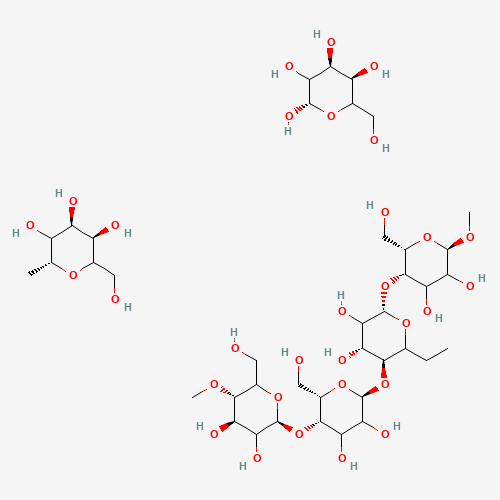
Cassia gum is a thickener from the seed of a legume, used in dairy products, frozen desserts and meat products, often blended with other gums.
Where it is and isn’t permitted
| Jurisdiction | Status | Scope and limits | Citation |
|---|---|---|---|
| Australia and New Zealand | No listed food uses foundThis site has not matched this substance to any food use on this jurisdiction’s list of authorised food additives. A food additive may be used only in foods that list names. Flavourings, enzymes, processing aids and added nutrients are regulated separately and do not appear on it. | ||
| Canada | No listing matchedHealth Canada’s lists name additives without E or INS numbers, so this site matches them by exact name. A substance listed there under a name this site does not recognise has no row here. | ||
| European Union | Permitted, with conditions | 8 food categories highest permitted level 2,500 mg/l Show every food category
| Regulation (EC) No 1333/2008, Annex IIand 7 further provisionsretrieved 2026-10-18 |
| Great Britain | Permitted, with conditions | 8 food categories highest permitted level 2,500 mg/kg or mg/l Show every food category
| Assimilated Regulation (EC) No 1333/2008and 7 further provisionsretrieved 2026-10-18 |
| Japan | No listing matchedThis site imports only Japan’s list of designated additives (Appended Table 1 to the Regulations for Enforcement of the Food Sanitation Act), matched by English name. Existing additives, natural flavouring agents and ordinary foods used as additives are permitted outside that list and are not imported, so an empty row does not show that Japan does not permit the substance. | ||
| South Korea | No listing matchedThis site imports Part III of South Korea’s Standards and Specifications for Food Additives, matched by CAS number, then INS number, then exact name. Mixed preparations and sanitisers are not imported, and an entry whose identifiers disagreed with a page’s is held for review, so an empty row does not show that South Korea does not permit the substance. | ||
| United States | Not listedDoes not appear on this jurisdiction’s permitted list. That is not the same as being prohibited. | ||
| Codex Alimentarius | Permitted | no numerical limit (good manufacturing practice) | CXS 192-1995 Table Three, INS 427retrieved 2026-09-07 |
How much is permitted
A listing usually limits the quantity as well as the food. Only one of the forms that takes is a figure: quantum satis and good manufacturing practice permit the amount the technological effect requires and no more, which is a limit rather than the absence of one. Figures below are the range across every food category this page is listed in, and categories differ between regulators — see how much is permitted.
| European Union | 1,500 mg/kg – 2,500 mg/kg | 8 numeric limit |
|---|---|---|
| Great Britain | 1,500 mg/kg – 2,500 mg/kg | 8 numeric limit |
| Codex Alimentarius | — | 1 GMP |
GRAS notices to the FDA
A GRAS notice is a company’s conclusion that a substance is generally recognised as safe for the use it describes. FDA’s letter responds to that conclusion, for that notifier and that use. It is not a listing in 21 CFR, and it is not counted as a US permission above. The substance and use are as FDA’s inventory words them; this site matched the notice to this page by exact name.
GRN No. 139 · Cassia gum · Noveon, Inc.
Intended use: Use as a thickening agent, texturizer, and water retention aid in cheese-creme filling in pastries and other cheese-creme desserts, dry soup mixes, oil-free salad dressings, and meat and poultry products at a maximum level of 5,000 parts per million
FDA’s response (2004-05-03): At the notifier's request, FDA ceased to evaluate this notice
What it is made from
Milled from the endosperm of Cassia tora and Cassia obtusifolia seeds, then purified to remove anthraquinones present in the raw seed.
- Vegan
- Vegetarian
Compare other additives on the dietary indexes.
- CAS registry number
- 51434-18-5
- InChIKey
- CXBAVTHBIGINMP-PCLGQWBCSA-N
- PubChem
- CID 172642670
How the EU defines it
The legal specification an additive must meet to be sold as this E number in the EU — what it is, how it may be made, and the purity it must reach. From Commission Regulation (EU) No 231/2012.
E 427 Cassia gum
Cassia gum is the ground purified endosperm of the seeds of Cassia tora and Cassia obtusifoli (Leguminosae) containing less than 0,05 % of Cassia occidentalis. It consists mainly of high molecular weight polysaccharides composed primarily of a linear chain of 1,4-β-D-mannopyranose units linked with 1,6-α-D-galactopyranose units. The ratio of mannose to galactose is about 5:1. In the manufacture the seeds are dehusked and degermed by thermal mechanical treatment followed by milling and screening of the endosperm. The ground endosperm is further purified by extraction with propan-2-ol.
Assay, identification and purity criteria
Description and assay
- Assay
- Not less than 75 % of Galactomannan
- Description
- Pale yellow to off-white, odourless powder
Identification
- Solubility
- Insoluble in ethanol. Disperses well in cold water forming a colloidal solution.
- Gel formation with borate
- To an aqueous dispersion of the sample add sufficient sodium borate test solution (TS) to raise the pH to above 9; a gel is formed.
- Gel formation with xanthan gum
- Weigh 1,5 g of the sample and 1,5 g of xanthan gum and blend them. Add this blend (with rapid stirring) into 300 ml water at 80 °C in a 400 ml beaker. Stir until the mixture is dissolved and continue stirring for an extra 30 min after dissolution (maintain the temperature above 60 °C during the stirring process). Discontinue stirring and allow the mixture to cool at room temperature for at least 2 h. A firm, viscoelastic gel forms after the temperature drops below 40 °C, but no such gel forms in a 1 % control solution of cassia gum or xanthan gum alone prepared in a similar manner.
- Viscosity
- Less than 500 mPa.s (25 °C, 2h, 1 % solution) corresponding to an average molecular weight of 200 000 -300 000 Da
Purity criteria
- Acid insoluble matter
- Not more than 2,0 %
- pH
- 5,5-8 (1 % aqueous solution)
- Crude fat
- Not more than 1 %
- Protein
- Not more than 7 %
- Total ash
- Not more than 1,2 %
- Loss on drying
- Not more than 12 % (5h, 105 °C)
- Total anthraquinones
- Not more than 0,5 mg/kg(detection limit)
- Solvent residues
- Not more than 750 mg/kg Propan-2-ol
- Lead
- Not more than 1 mg/kg
- Microbiological criteria: Total plate count
- Not more than 5 000 colony forming units per gram
- Microbiological criteria: Yeast and moulds
- Not more than 100 colony forming units per gram
- Microbiological criteria: Salmonella spp.
- Absent in 25 g
- Microbiological criteria: Escherichia coli
- Absent in 1 g
Every name it appears under
29 recorded names. A label may use any of them.
E number
- E427
CAS registry number
- 51434-18-5
As it appears in regulation
- Cassia gum
Other names
- Cassia gum
- Cassia gum (Cassia tora and Cassia obtusifolia)
- E 427
- Gum cassia tora
Hazard reference values
| Type | Value | Population | Assessed by | Opinion |
|---|---|---|---|---|
| ADI | not specified | — | JECFA | 2010 |
Evidence and how bodies read it
Studies, and the differing conclusions regulators drew from them, are curated rather than machine-read, and none has been written for this substance yet.
Common questions
Assembled from what is above, in the words the questions are usually asked in. Each answer is the same statement the relevant section makes, with the same citations behind it.
- What is E 427?
- E 427 is Cassia gum. Cassia gum is a thickener from the seed of a legume, used in dairy products, frozen desserts and meat products, often blended with other gums.
- What is Cassia gum used for in food?
- It is listed as an emulsifier, a gelling agent and a thickener — the role Codex assigns it. This page shows every function each regulator records, with the citation for each.
- Where is Cassia gum permitted?
- Of the seven regulators this site reads, the EU, Great Britain and the Codex standard permit it. Each permission is for named foods at named levels, not a blanket one; the table on this page gives them with citations.
- Is Cassia gum vegan?
- Yes. Cassia gum is not derived from animals, and is suitable for vegetarians. This page says what it is made from and how.
Sources for this page
- eu retrieved 2026-10-18
- gb retrieved 2026-10-18
- gsfa retrieved 2026-09-07
- euspecs retrieved 2026-10-18
Full licence terms and publisher details on Sources. How this page is built and updated: Method.
Machine-readable: a JSON record of this additive is given on request —how to ask for access.
Follow changes to Cassia gum:Atom feed — regulatory events, and any change the weekly refresh detects in its provisions.