Ethyl alcohol
64-17-5 · 1-Hydroxyethane · absolute alcohol · Absolute ethanol · Aethanol · Aethylalkohol · ALC · Alcare Hand Degermer · alcohol · Alcohol (ethyl alcohol) · Alcohol dehydrated · Alcohol, Absolute · Alcohol, anhydrous · Alcohol, diluted · Alcohol, ethyl · Alcool ethylique · Alcool etilico · Algrain · Alkohol · Alkoholu etylowego · Anhydrol · Anhydrous ethanol · Dehydrated alcohol · Dehydrated ethanol · Denatured ethanol · etanol · Etanolo · ethanol · Ethanol 200 proof · Ethicap · ethyl alcohol · Ethyl alcohol & water, 10% · Ethyl alcohol & water, 20% · Ethyl alcohol & water, 30% · Ethyl alcohol & water, 40% · Ethyl alcohol & water, 5% · Ethyl alcohol & water, 50% · Ethyl alcohol & water, 60% · Ethyl alcohol & water, 70% · Ethyl alcohol & water, 80% · Ethyl alcohol & water, 95% · Ethyl alcohol & water, 96% · Ethyl alcohol anhydrous · Ethyl alcohol usp · Ethyl hydrate · Ethyl hydroxide · Ethylalcohol · EtOH · Etylowy alkohol · Fermentation alcohol · grain alcohol · Hinetoless · Hydroxyethane · Jaysol · Jaysol S · Methylcarbinol · Potato alcohol · Spirt · Synasol · Tecsol · Tecsol C · ethanol · Ethyl alcoholCAS 64-17-5
Listed as a solvent by Canada and the US.
Listed as solvents and vehicles (CA, US) · preservatives (US) · emulsifiers (US) · flavour enhancers (US) · flavouring agents and adjuvants (US) · carriers (CA) · processing aids (US)
- Canada: Carrier solvent — Health Canada, List of Permitted Solvents (List 15)
- Canada: Extraction solvent — Health Canada, List of Permitted Solvents (List 15)
- United States: Solvent or vehicle — FDA, Substances Added to Food: ETHYL ALCOHOL
- United States: Antimicrobial agent — FDA, Substances Added to Food: ETHYL ALCOHOL
- United States: Antimicrobial agents — 21 CFR 184.1293, citing 21 CFR 170.3(o)(2)
- United States: Emulsifier or emulsifier salt — FDA, Substances Added to Food: ETHYL ALCOHOL
- United States: Flavor enhancer — FDA, Substances Added to Food: ETHYL ALCOHOL
- United States: Flavoring agent or adjuvant — FDA, Substances Added to Food: ETHYL ALCOHOL
- Canada: Carrier solvent — Health Canada, List of Permitted Solvents (List 15)
- United States: Processing aid — FDA, Substances Added to Food: ETHYL ALCOHOL
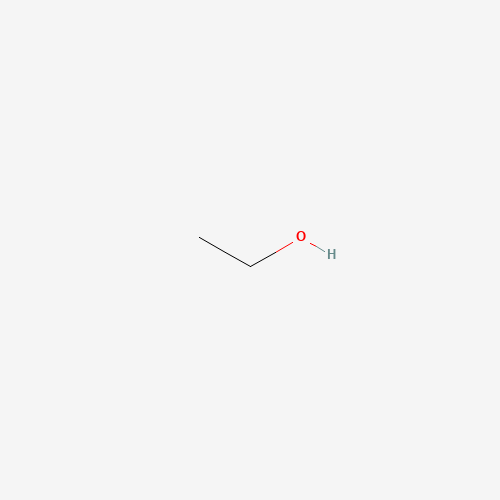
Ethyl alcohol is used as a solvent and carrier for flavourings and extracts, and as a preservative — vanilla extract is essentially vanilla in alcohol.
Where it is and isn’t permitted
| Jurisdiction | Status | Scope and limits | Citation |
|---|---|---|---|
| Australia and New Zealand | Permitted | 2 food categories no numerical limit (good manufacturing practice) Show every food category
| Food Standards Code, Schedule 15, S15—5and 1 further provisionretrieved 2026-10-17 |
| Canada | Permitted | no numerical limit (good manufacturing practice) 7 permitted uses Show every permitted use
| Health Canada, List of Permitted Solvents (List 15)and 6 further provisionsretrieved 2026-10-17 |
| European Union | No listed food uses foundThis site has not matched this substance to any food use on this jurisdiction’s list of authorised food additives. A food additive may be used only in foods that list names. Flavourings, enzymes, processing aids and added nutrients are regulated separately and do not appear on it. | ||
| Great Britain | No listed food uses foundThis site has not matched this substance to any food use on this jurisdiction’s list of authorised food additives. A food additive may be used only in foods that list names. Flavourings, enzymes, processing aids and added nutrients are regulated separately and do not appear on it. | ||
| Japan | No listing matchedThis site imports only Japan’s list of designated additives (Appended Table 1 to the Regulations for Enforcement of the Food Sanitation Act), matched by English name. Existing additives, natural flavouring agents and ordinary foods used as additives are permitted outside that list and are not imported, so an empty row does not show that Japan does not permit the substance. | ||
| South Korea | No listing matchedThis site imports Part III of South Korea’s Standards and Specifications for Food Additives, matched by CAS number, then INS number, then exact name. Mixed preparations and sanitisers are not imported, and an entry whose identifiers disagreed with a page’s is held for review, so an empty row does not show that South Korea does not permit the substance. | ||
| United States | Permitted | 21 CFR 184.1293retrieved 2026-10-17 | |
| Codex Alimentarius | Not listedDoes not appear on this jurisdiction’s permitted list. That is not the same as being prohibited. |
How much is permitted
A listing usually limits the quantity as well as the food. Only one of the forms that takes is a figure: quantum satis and good manufacturing practice permit the amount the technological effect requires and no more, which is a limit rather than the absence of one. Figures below are the range across every food category this page is listed in, and categories differ between regulators — see how much is permitted.
| Australia and New Zealand | — | 2 GMP |
|---|---|---|
| Canada | — | 7 GMP |
| United States | — | 1 no quantity stated |
No regulator sets a figure for Ethyl alcohol. That is not an absence of control: where the listing says quantum satis or good manufacturing practice, the quantity is limited to what the effect requires.
What it is made from
Produced by fermenting sugars with yeast, or synthetically from ethylene. Its use as a food solvent raises a halal question that its function does not resolve.
- Vegan
- Vegetarian
- May raise a halal question
- May raise a kosher question
Compare other additives on the dietary indexes.
- CAS registry number
- 64-17-5
- InChIKey
- LFQSCWFLJHTTHZ-UHFFFAOYSA-N
- PubChem
- CID 702
How JECFA defines it
The international specification for identity and purity, prepared by the Joint FAO/WHO Expert Committee on Food Additives and published by FAO. It is a different document from any above, written by a different body and revised on its own cycle; it is advisory, and a country adopts it or does not.
Ethyl Alcohol
Contains usually about 95% v/v (i.e. with about 5% v/v water) C 2 H 6 O; other grades with a different water content may be used depending on the technological requirements; these specifications apply only to undenaturated ethyl alcohol.
Synonyms: Alcohol, ethanol Alcohol; Ethanol
Assay, identification and purity criteria
Description and assay
- Specification history
- Prepared at the 46th JECFA (1996), published in FNP 52 Add 4 (1996) superseding specifications prepared at the 29th JECFA (1985), published in FNP 34 (1986. An ADI limited by GMP was established at 14th JECFA (1970))
- Chemical names
- Ethanol
- C.A.S. number
- 64-17-5
- Chemical formula
- C 2 H 6 O
- Formula weight
- 46.07
- Assay
- Not less than 94.9% v/v
- DESCRIPTION
- Clear colourless mobile liquid with a mild characteristic odour; flammable
- FUNCTIONAL USES
- Extraction solvent, carrier solvent, flavouring agent (see "Flavouring agents" monograph JECFA no. 41)
- METHOD OF ASSAY
- The specific gravity of the sample is not higher than 0.8096 at 25º/25º (equivalent to 0.8161 at 15.56º/15.56º).
Identification
- Solubility (Vol. 4)
- Soluble in water
- Refractive index (Vol. 4)
- n (20, D): 1.364
- Boiling point (Vol. 4)
- 78º
- Infrared absorption
- The infrared spectrum of the sample corresponds with the reference infrared spectrum below
Purity criteria
- Solubility
- Transfer 50 ml of the sample to a 100 ml glass-stoppered graduated cylinder, dilute to 100 ml with water, and mix. Place the cylinder in a water bath maintained at 10º, and allow to stand for 30 min. No haze or turbidity develops.
- Non-volatile residue (Vol. 4)
- Not more than 2 mg/100 ml
- Acidity
- Not more than 0.005% w/v as acetic acid Transfer 10 ml of the sample to a glass-stoppered flask containing 25 ml of water, add 0.5 ml of phenolphthalein TS. Add 0.02N sodium hydroxide until the first appearance of a pink colour that persists after shaking for 30 sec. Add 25 ml (about 20 g) of the sample, mix, and titrate with 0.02N sodium hydroxide until the pink colour is restored. Not more than 1.0 ml is required.
- Alkalinity
- Not more than 0.003% as ammonia Add 2 drops of methyl red TS to 25 ml of water. Add 0.02N sulfuric acid until a red colour just appears, then add 25 ml (about 20 g) of the sample, and mix. Not more than 2.0 ml of 0.02N sulfuric acid is required to restore the red colour.
- Fusel oil
- Mix 10 ml of the sample with 1 ml of glycerol and 1 ml of water, and allow to evaporate from a piece of clean, odourless absorbent paper. No foreign odour is perceptible when the last traces of ethanol leave the paper.
- Ketones and other alcohols
- Total: Not more than 0.5% Methanol: Not more than 0.02% Other: Not more than 0.1% See description under TESTS
- Readily carbonizable substances
- Transfer 10 ml of sulfuric acid into a small Erlenmeyer flask, cool to 10º, and add 10 ml of the sample, dropwise, with constant agitation. The mixture is colourless or has no more colour than either the acid or sample before mixing.
- Readily oxidizable substances
- Transfer 20 ml of the sample, previously cooled to 15º to a glass-stoppered cylinder, add 0.1 ml of 0.1N potassium permanganate, mix and allow to stand for 5 min. The pink colour is not entirely discharged.
- Lead (Vol. 4)
- Not more than 0.5 mg/kg Determine using an atomic absorption technique appropriate to the specified level. The selection of sample size and method of sample preparation may be based on the principles of the method described in Volume 4, “Instrumental Methods.”
- Test: Ketones and other alcohols
- Proceed as directed under Gas Liquid Chromatography (Volume 4) using the following conditions: Column - length: 1.80 m - diameter: 6.4 mm - material: steel - packing: P.E.G. 400 10% - support: Chromosorb W 60/80 Carrier gas: Helium Flow rate: 45 ml/min Detector type: FID Temperatures - injection port: 150º - column: 90º - detector: 150º Inject 5 μl of the sample. The sum of areas of the peaks other than that of ethyl alcohol is not more than 0.5% of the sum of total peaks. The area of peak of methanol is not more than 0.02% and the area of any other individual peak of impurities is not more than 0.1% of the total.
- Test: Infrared spectrum
- Ethyl alcohol
Every name it appears under
63 recorded names. A label may use any of them.
CAS registry number
- 64-17-5
As it appears in regulation
- Ethyl alcohol
Other names
- 1-Hydroxyethane
- absolute alcohol
- Absolute ethanol
- Aethanol
- Aethylalkohol
- ALC
- Alcare Hand Degermer
- alcohol
- Alcohol (ethyl alcohol)
- Alcohol dehydrated
- Alcohol, Absolute
- Alcohol, anhydrous
- Alcohol, diluted
- Alcohol, ethyl
- Alcool ethylique
- Alcool etilico
- Algrain
- Alkohol
- Alkoholu etylowego
- Anhydrol
- Anhydrous ethanol
- Dehydrated alcohol
- Dehydrated ethanol
- Denatured ethanol
- etanol
- Etanolo
- ethanol
- Ethanol 200 proof
- Ethicap
- ethyl alcohol
- Ethyl alcohol & water, 10%
- Ethyl alcohol & water, 20%
- Ethyl alcohol & water, 30%
- Ethyl alcohol & water, 40%
- Ethyl alcohol & water, 5%
- Ethyl alcohol & water, 50%
- Ethyl alcohol & water, 60%
- Ethyl alcohol & water, 70%
- Ethyl alcohol & water, 80%
- Ethyl alcohol & water, 95%
- Ethyl alcohol & water, 96%
- Ethyl alcohol anhydrous
- Ethyl alcohol usp
- Ethyl hydrate
- Ethyl hydroxide
- Ethylalcohol
- EtOH
- Etylowy alkohol
- Fermentation alcohol
- grain alcohol
- Hinetoless
- Hydroxyethane
- Jaysol
- Jaysol S
- Methylcarbinol
- Potato alcohol
- Spirt
- Synasol
- Tecsol
- Tecsol C
Systematic names
- ethanol
Hazard reference values
No reference value for this substance in the sources we hold.
Evidence and how bodies read it
Studies, and the differing conclusions regulators drew from them, are curated rather than machine-read, and none has been written for this substance yet.
Common questions
Assembled from what is above, in the words the questions are usually asked in. Each answer is the same statement the relevant section makes, with the same citations behind it.
- What is Ethyl alcohol?
- Ethyl alcohol is used as a solvent and carrier for flavourings and extracts, and as a preservative — vanilla extract is essentially vanilla in alcohol.
- What is Ethyl alcohol used for in food?
- It is listed as a solvent — the role Canada and the US assign it. This page shows every function each regulator records, with the citation for each.
- Is Ethyl alcohol banned in Europe?
- No. Ethyl alcohol does not appear on the EU's list of authorised food additives, which is not the same as being banned: the EU permits an additive only where it has authorised it, and usually the reason for an absence is that no one applied. The EU has made no finding against this substance. It does mean it may not be used as a food additive in the EU today.
- Where is Ethyl alcohol permitted?
- Of the seven regulators this site reads, Australia and New Zealand, Canada and the US permit it. Each permission is for named foods at named levels, not a blanket one; the table on this page gives them with citations.
- Is Ethyl alcohol vegan?
- Yes. Ethyl alcohol is not derived from animals, and is suitable for vegetarians. This page says what it is made from and how.
Sources for this page
- anz retrieved 2026-10-17
- ca retrieved 2026-10-17
- ecfr retrieved 2026-10-17
- jecfaspecs retrieved 2026-09-23
Full licence terms and publisher details on Sources. How this page is built and updated: Method.
Machine-readable: a JSON record of this additive is given on request —how to ask for access.
Follow changes to Ethyl alcohol:Atom feed — regulatory events, and any change the weekly refresh detects in its provisions.