Talc
14807-96-6 · 7SEV7J4R1U · Agalite · Asbestine · Desertalc 57 · E 553b · E-553(III) · Emtal 596 · Fibrene C 400 · French chalk · Health Smart Baby · Huashifen · Hydrous magnesium silicate · INS NO.553(III) · INS-553(III) · Mistron 2SC · Mistron frost P · Mistron RCS · Mistron Star · Mistron super frost · Mistron vapor · Natures Choice Baby · Nekvnro Wart Remover Patch · Potstone · Pulvis talci · Purified talc · Sclerosol · Sclerosol Intrapleural Aerosol · Steatite talc · Steawhite · Sterile Talc · Sterile Talc Powder · STERITALC · Steritalc 2g · Steritalc 3g · Steritalc 4g · Supreme dense · TALC · Talc (containing asbestos) · Talc (containing no asbestos and less than 1% quartz) · Talc (containing no asbestos) · Talc (JP17/USP) · TALC (Mg3H2(SiO3)4) · TALC (NOT CONTAINING ASBESTOS FIBERS) · Talc (not containing asbestos) · Talc (silica and fibre free) · Talc powder · Talcum · Talcum Powder · Wart Remover Patch · E553b · 553(iii) · Talc · Mastenec · smukec · Talc · Talco · TALEK · Talk · Talkas · Talkki · Talks · Talkum · Terra · Trikřemičitan hořečnatý Talek · Τάλκης · ТалкE number E553bINS 553(iii)CAS 14807-96-6
Listed as a sweetener, a thickener and an anticaking agent by the US and Codex.
Listed as sweeteners (US) · thickeners (Codex) · anticaking agents (Codex) · glazing and surface-finishing agents (Codex) · formulation aids (US) · processing aids (US)
- United States: Non-nutritive sweetener — FDA, Substances Added to Food: TALC
- Codex Alimentarius: Thickener — CXS 192-1995 Table One, INS 553(iii)
- Codex Alimentarius: Anticaking agent — CXS 192-1995 Table One, INS 553(iii)
- Codex Alimentarius: Glazing agent — CXS 192-1995 Table One, INS 553(iii)
- United States: Formulation aid — FDA, Substances Added to Food: TALC
- United States: Processing aid — FDA, Substances Added to Food: TALC
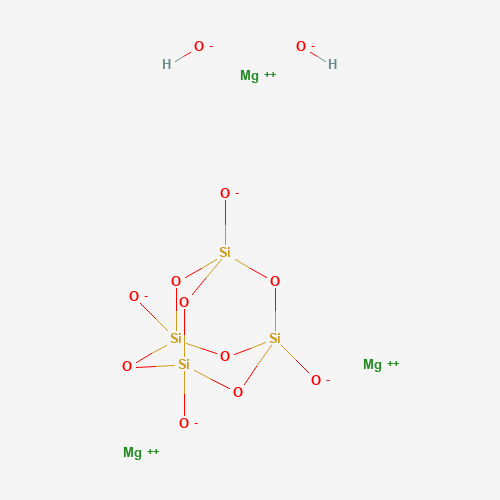
Talc is an anticaking and glazing agent used in some confectionery, rice polishing and chewing gum.
Where it is and isn’t permitted
| Jurisdiction | Status | Scope and limits | Citation |
|---|---|---|---|
| Australia and New Zealand | Permitted, with conditions | 54 food categories no numerical limit (good manufacturing practice) Show every food category
| Food Standards Code, Schedule 15, S15—5and 53 further provisionsretrieved 2026-10-17 |
| Canada | Permitted | no numerical limit (good manufacturing practice) 3 permitted uses Show every permitted use
| Health Canada, List of Permitted Food Additives with Other Purposes of Use (List 8)and 2 further provisionsretrieved 2026-10-17 |
| European Union | Permitted, with conditions | 22 food categories highest permitted level 30,000 mg/kg Show every food category
| Regulation (EC) No 1333/2008, Annex IIand 21 further provisionsretrieved 2026-10-18 |
| Great Britain | Permitted, with conditions | 23 food categories highest permitted level 30,000 mg/kg or mg/l Show every food category
| Assimilated Regulation (EC) No 1333/2008and 22 further provisionsretrieved 2026-10-18 |
| Japan | No listing matchedThis site imports only Japan’s list of designated additives (Appended Table 1 to the Regulations for Enforcement of the Food Sanitation Act), matched by English name. Existing additives, natural flavouring agents and ordinary foods used as additives are permitted outside that list and are not imported, so an empty row does not show that Japan does not permit the substance. | ||
| South Korea | Permitted, with conditions | Designated food additive: Standards and Specifications for Food Additives, Part III, 1. …Designated food additive: Standards and Specifications for Food Additives, Part III, 1. 일반식품첨가물 (general food additives), 탤크 (“Talc”, the English the Code prints beside it); the Code marks it as also usable as a processing aid; 2. 가공보조제 (processing aids), 탤크 (“Talc”, the English the Code prints beside it); the Code marks it as also usable as a general food additive. Main use (주용도) of 탤크: 껌기초제, 표면처리제. Standard for use (사용기준) of 탤크: (1) [may be used only for the purpose or in the food the sentence states; sets a limit on the amount used] “탤크는 식품의 제조 또는 가공상 추잉껌에 사용하거나 정제류에 표면처리제 목적에 한하여 사용하여야 한다. 추잉껌에 있어서의 사용량은 5.0% 이하이어야 한다.” Main use (주용도) of 탤크: 여과보조제. Standard for use (사용기준) of 탤크: (1) “탤크는 식품의 제조 또는 가공상 여과보조제(여과, 탈색, 탈취, 정제 등)로 사용하는 경우 최종식품 완성 전에 제거하여야 하며, 식품 중의 잔류량은 0.5%(규조토, 백도토, 벤토나이트, 산성백토, 탤크, 퍼라이트, 활성탄 등 다른 불용성 광물성물질과 병용할 때에는 전 잔류량의 합계가 0.5%) 이하이어야 한다.” The Korean is the standard as published. There is no official English translation of the current Code (the English version on MFDS’s website is the 2020 edition and has no legal effect); the English in square brackets is this site’s description of what each sentence does, not a translation of the foods or the levels. Compositional specifications (Part IV) are not imported, nor are the general standards in Part II, which apply to every additive. | Standards and Specifications for Food Additives (식품첨가물의 기준 및 규격), MFDS Notification, Part III (Standards for use, by item)retrieved 2026-10-18 |
| United States | Not listedDoes not appear on this jurisdiction’s permitted list. That is not the same as being prohibited. | ||
| Codex Alimentarius | Permitted, with conditions | 6 food categories highest permitted level 10,000 mg/kg Show every food category and its notes
| CXS 192-1995 Table Three, INS 553(iii)and 6 further provisionsretrieved 2026-09-07 |
How much is permitted
A listing usually limits the quantity as well as the food. Only one of the forms that takes is a figure: quantum satis and good manufacturing practice permit the amount the technological effect requires and no more, which is a limit rather than the absence of one. Figures below are the range across every food category this page is listed in, and categories differ between regulators — see how much is permitted.
| Australia and New Zealand | — | 54 GMP |
|---|---|---|
| Canada | — | 3 GMP |
| European Union | 5,400 mg/kg – 30,000 mg/kg | 12 numeric limit, 10 quantum satis |
| Great Britain | 5,400 mg/kg – 30,000 mg/kg | 11 numeric limit, 2 several limits, 10 quantum satis |
| South Korea | — | 1 no quantity stated |
| Codex Alimentarius | 10,000 mg/kg | 1 numeric limit, 6 GMP |
What a label must say
Words a food containing Talc is obliged to carry, quoted from the instrument that imposes them. A required statement is a fact about the regulation, not a finding about the substance — every rule below applies where the additive is authorised.
‘with sweetener(s)’, or ‘with sugar(s) and sweetener(s)’ where the food also contains added sugar. The statement accompanies the name of the food.
Any food containing an authorised sweetener. Regulation (EU) No 1169/2011, Annex III, points 2.1 and 2.2 · Assimilated Regulation (EU) No 1169/2011, Annex III
Every rule collected at what a label must say.
What it is made from
Mined and milled from talc rock. Food-grade specifications limit asbestos-form minerals, which can occur alongside talc in some deposits.
- Vegan
- Vegetarian
Compare other additives on the dietary indexes.
- CAS registry number
- 14807-96-6
- InChIKey
- QLQXSZZVUVMFHZ-UHFFFAOYSA-L
- PubChem
- CID 165411828
The two specifications, compared
The European Union sets identity and purity by regulation; JECFA publishes its own through FAO, advisory until a country adopts it. Both documents are below in full. These are the parameters each puts a number on.
| Parameter | European Union | JECFA |
|---|---|---|
| Loss on drying | no more than 0.5 % | no more than 0.5 % |
| Lead | no more than 2 mg/kg | no more than 2 mg/kg |
| Arsenic | no more than 10 mg/kg | — |
The two documents state the same figures for every parameter compared here.
How the EU defines it
The legal specification an additive must meet to be sold as this E number in the EU — what it is, how it may be made, and the purity it must reach. From Commission Regulation (EU) No 231/2012.
E 553b Talc
Naturally occurring form of hydrous magnesium silicate containing varying proportions of such associated minerals as alpha-quartz, calcite, chlorite, dolomite, magnesite, and phlogopite. The product should be free of asbestos.
Synonyms: Talcum
Assay, identification and purity criteria
Description and assay
- Einecs
- 238-877-9
- Chemical name
- Magnesium hydrogen metasilicate
- Chemical formula
- Mg₃(Si₄O₁₀)(OH)₂
- Molecular weight
- 379,22
- Description
- Light, homogeneous, white or almost white powder, greasy to the touch
Identification
- Infrared absorption spectrum
- Characteristic peaks at 3 677 , 1 018 and 669 cm⁻¹
- X-ray diffraction
- Peaks at 9,34/4,66/3,12 Å
- Solubility
- Insoluble in water and ethanol
Purity criteria
- Loss on drying
- Not more than 0,5 % (105 °C, 1 hour)
- Acid soluble matter
- Not more than 6 %
- Water soluble matter
- Not more than 0,2 %
- Acid-soluble iron
- Not detectable
- Arsenic
- Not more than 10 mg/kg
- Lead
- Not more than 2 mg/kg
How JECFA defines it
The international specification for identity and purity, prepared by the Joint FAO/WHO Expert Committee on Food Additives and published by FAO. It is a different document from any above, written by a different body and revised on its own cycle; it is advisory, and a country adopts it or does not.
INS 553(iii) Talc
Powdered, natural, hydrated magnesium silicate containing varying proportions of such associated materials as alpha-quartz, calcite, chlorite, dolomite, magnesite and phlogopite.
Synonyms: Talcum; INS No. 553(iii)
Assay, identification and purity criteria
Description and assay
- Specification history
- Prepared at the 61st JECFA (2003) and published in FNP 52 Add 11 (2003), superseding specifications prepared at the 55th JECFA (2000) and published in FNP 52 Add 8 (2000). An ADI “not specified” was established at the 30th JECFA (1986).
- C.A.S. number
- 14807-96-6
- DESCRIPTION
- Odourless, very fine, white or greyish white crystalline powder; unctuous, adheres readily to the skin, free from grittiness.
- FUNCTIONAL USES
- Anticaking agent, filtering aid, coating agent, surface-finishing agent, texturizing agent, component of chewing gum base.
Identification
- Solubility (Vol. 4)
- Insoluble in water and ethanol
- Infrared absorption
- The infrared absorption spectrum of a potassium bromide dispersion of the sample exhibits major peaks as follows: 3677 ± 2 cm -1 OH group 1018 ± 2 cm -1 Si-O-Si group 669 ± 2 cm -1 Mg-O-Si group
- X-Ray diffraction
- The X-ray diffraction pattern of a random powder sample exhibits reflections at d values of 9.34 Å, 4.66 Å and 3.12 Å
Purity criteria
- Loss on drying (Vol. 4)
- Not more than 0.5 % (105 o , 1 h)
- Loss on ignition (Vol. 4)
- Not more than 9 %
- Water-soluble substances
- Not more than 0.2 % Boil 20 g sample with 200 ml of water in a 250 ml beaker for 15 min, stir to avoid spurting. Cool to room temperature, transfer the contents to a 250 ml volumetric flask, rinse beaker with 25 ml water, add rinsings to the volumetric flask and make up to volume. Allow the mixture to stand for 15 min and filter (use filtrate for the determination of water-soluble iron, below). Evaporate 100 ml of this solution, representing 8 g of talc, in a tared platinum dish on a steam bath to dryness and ignite gently to constant weight. The weight of the residue does not exceed 16 mg.
- Water-soluble iron
- Using hydrochloric acid TS, dilute, slightly acidify the remaining part of the filtrate obtained in the test for water-soluble substances (above) and add 1 ml of potassium ferrocyanide TS. The solution does not turn blue.
- Acid-soluble substances
- Not more than 2.5 % Accurately weigh 2 g sample into a beaker and add 35 ml of 3N hydrochloric acid. Digest the sample at 50o for 15 min. Cool, transfer the contents into a 50 ml volumetric flask, rinse the beaker with water, add rinsings to the volumetric flask and make up to volume. Mix the contents and filter. To 20 ml of the filtrate in a tared platinum dish, add 2 ml of sulfuric acid TS, dilute, evaporate to dryness and ignite to constant weight. The residue does not exceed 20 mg.
- Asbestos
- Free from asbestos as demonstrated by the test for amphiboles and serpentines See description under TESTS
- Lead (Vol. 4)
- Not more than 2 mg/kg Determine using an atomic absorption technique appropriate to the specified level. The selection of sample size and method of sample preparation may be based on the principles of the methods described in Volume 4, “Instrumental Methods”.
- Test: Asbestos
- The presence of amphiboles and of serpentines is revealed by infrared absorption or by X-ray diffraction (see A and B). If detected, the presence of asbestos is confirmed by optical microscopy. A. An absorption band at 758 ± 1 cm -1 in the infrared spectrum of a potassium bromide dispersion of the material remaining after ignition of the substance at 850 o for at least 30 min, indicates the presence of tremolite, an amphibole. Absorption bands or shoulders between 600 and 650 cm -1 may indicate serpentines. B. An X-ray powder diffraction pattern exhibiting diffraction peaks at 10.5 ± 0.1o 2 θ indicates amphiboles. Peaks at 24.3 ± 0.1o 2 θ and 12.1 ± 0.1o 2 θ indicate serpentines. If amphiboles or serpentines are indicated, examine the sample using optical microscopy to confirm the presence of asbestos. Asbestos is confirmed if the following criteria are met: − a range of length to width ratios of 20:1 to 100:1, or higher for fibres longer than 5 m, − capability of splitting into very thin fibrils, − and if 2 or more of the following 4 criteria are met: − parallel fibres occurring in bundles, − fibre bundles displaying frayed ends, − fibres in the form of thin needles, − matted masses of individual fibres and/or fibres showing curvature
Authorised in other additives, enzymes, flavourings and nutrients
These authorisations are not for use in food. They let this substance be used inside another additive, a food enzyme, a flavouring or a nutrient preparation — often as a carrier — and it reaches food only as part of that product. Annex III to Regulation (EC) No 1333/2008.
| Part | May be used in | Maximum level | Citation |
|---|---|---|---|
| Annex III, Part 1: Carriers in food additives | Colours | 50 mg/kg in the colour preparation | Regulation (EC) No 1333/2008, Annex III, Part 1 |
| Annex III, Part 2: Food additives other than carriers in food additives | Dry powdered preparations of polyolsNote (1): Except enzymes authorised as food additives. | 10 000 mg/kg in the preparation | Regulation (EC) No 1333/2008, Annex III, Part 2 |
Every name it appears under
67 recorded names. A label may use any of them.
E number
- E553b
INS number
- 553(iii)
CAS registry number
- 14807-96-6
As it appears in regulation
- Talc
Other names
- 7SEV7J4R1U
- Agalite
- Asbestine
- Desertalc 57
- E 553b
- E-553(III)
- Emtal 596
- Fibrene C 400
- French chalk
- Health Smart Baby
- Huashifen
- Hydrous magnesium silicate
- INS NO.553(III)
- INS-553(III)
- Mistron 2SC
- Mistron frost P
- Mistron RCS
- Mistron Star
- Mistron super frost
- Mistron vapor
- Natures Choice Baby
- Nekvnro Wart Remover Patch
- Potstone
- Pulvis talci
- Purified talc
- Sclerosol
- Sclerosol Intrapleural Aerosol
- Steatite talc
- Steawhite
- Sterile Talc
- Sterile Talc Powder
- STERITALC
- Steritalc 2g
- Steritalc 3g
- Steritalc 4g
- Supreme dense
- TALC
- Talc (containing asbestos)
- Talc (containing no asbestos and less than 1% quartz)
- Talc (containing no asbestos)
- Talc (JP17/USP)
- TALC (Mg3H2(SiO3)4)
- TALC (NOT CONTAINING ASBESTOS FIBERS)
- Talc (not containing asbestos)
- Talc (silica and fibre free)
- Talc powder
- Talcum
- Talcum Powder
- Wart Remover Patch
The EU re-evaluation programme
Every additive authorised in the EU before 20 January 2009 was put back through EFSA by Commission Regulation (EU) No 257/2010, and this one is named in it. What the Regulation required is below; whether the opinion has since been published is not something this site records.
- To be evaluated by 31 December 2018. Named in Annex II, Part II, point 4 as “Talc”, among the additives given priority within its class.
Hazard reference values
| Type | Value | Population | Assessed by | Opinion |
|---|---|---|---|---|
| ADI | not specified | — | JECFA | 1986 |
Evidence and how bodies read it
What assessing bodies concluded
Each conclusion is paraphrased in the body's own framing, from the published opinion linked beneath it. Where bodies differ, both stand; this site does not adjudicate between them or add a view of its own.
EFSA 2018
The ANS Panel concluded that the safety of calcium silicate (E 552), magnesium silicate and trisilicate (E 553a) and talc (E 553b) as food additives cannot be assessed, citing accumulation of silicon in rat kidney and liver and a lack of reliable longer-term toxicity data. It considered the SCF's group ADI for silicon dioxide and silicates obsolete and recommended revisions to the specifications.
Common questions
Assembled from what is above, in the words the questions are usually asked in. Each answer is the same statement the relevant section makes, with the same citations behind it.
- What is E 553b?
- E 553b is Talc. Talc is an anticaking and glazing agent used in some confectionery, rice polishing and chewing gum.
- What is Talc used for in food?
- It is listed as a sweetener, a thickener and an anticaking agent — the role the US and Codex assign it. This page shows every function each regulator records, with the citation for each.
- Where is Talc permitted?
- Of the seven regulators this site reads, Australia and New Zealand, Canada, the EU, Great Britain, South Korea and the Codex standard permit it. Each permission is for named foods at named levels, not a blanket one; the table on this page gives them with citations.
- Is Talc vegan?
- Yes. Talc is not derived from animals, and is suitable for vegetarians. This page says what it is made from and how.
Sources for this page
- anz retrieved 2026-10-17
- ca retrieved 2026-10-17
- eu retrieved 2026-10-18
- gb retrieved 2026-10-18
- kr retrieved 2026-10-18
- gsfa retrieved 2026-09-07
- euspecs retrieved 2026-10-18
- jecfaspecs retrieved 2026-09-23
Full licence terms and publisher details on Sources. How this page is built and updated: Method.
Machine-readable: a JSON record of this additive is given on request —how to ask for access.
Follow changes to Talc:Atom feed — regulatory events, and any change the weekly refresh detects in its provisions.