Glycerol ester of wood rosin
8050-30-4 · E 445 · Ester gum · GLYCEROL ESTER OF ROSIN · GLYCEROL ESTER OF WOOD ROSIN · Glycerol esters of wood rosins (GEWR) · E445 · 445(iii) · Glycerol esters of wood rosins · Esteri della glicerina della resina del legno · Esteri glicerici ai rășinilor din lemn · ESTERI GLICERINICI AI COLOFONIULUI DIN LEMN · ESTERI TAL-GLIĊEROL TAR-ROŻIN TAL-INJAM · Esteri tal-gliċerol tar-raża tal-injam · Esters glycériques de résine de bois · Estry glicerolu i żywicy roślinnej · Fagyanta glicerin-észterei · Glicerolni esteri smole drveta · GLICEROLNI ESTRI LESNE SMOLE · glicerolni estri lesnih smol · Glycerinester aus Wurzelharz · GLYCEROL ESTERS OF WOOD ROSIN · Glycerol esters of wood rosins · Glycerolestere af fyrreharpiks · Glycerolesters van houthars · Glycerolestery dřevných pryskyřic · Glycerolestery živíc z dreva · Glycerolestrar av trähartser · Kampoli glütseroolestrid · Kolofonija glicerīna esteri · Medienos kanifolijos glicerolio esteriai · Puuhartsien glyseroliesterit · ÉSTERES DE GLICEROL DA COLOFÓNIA · Ésteres de glicerol de colofónia · Ésteres glicéridos de colofonia de madera · ΕΣΤΕΡΕΣ ΓΛΥΚΕΡΟΛΗΣ ΜΕ ΚΟΛΟΦΩΝΙΟ ΞΥΛΟΥ · Εστέρες γλυκερίνης με κολοφώνιο ξύλου · ГЛИЦЕРОЛОВИ ЕСТЕРИ НА ДЪРВЕСНА СМОЛА · Глицеролови естери на дървесни смолиE number E445INS 445(iii)CAS 8050-30-4
Listed as an emulsifier, a stabiliser and a glazing agent by Codex and the US.
Listed as emulsifiers (Codex) · stabilisers (Codex) · glazing and surface-finishing agents (US)
- Codex Alimentarius: Emulsifier — CXS 192-1995 Table One, INS 445(iii)
- Codex Alimentarius: Stabilizer — CXS 192-1995 Table One, INS 445(iii)
- United States: Surface-finishing agent — FDA, Substances Added to Food: ROSIN, WOOD, GLYCEROL ESTER
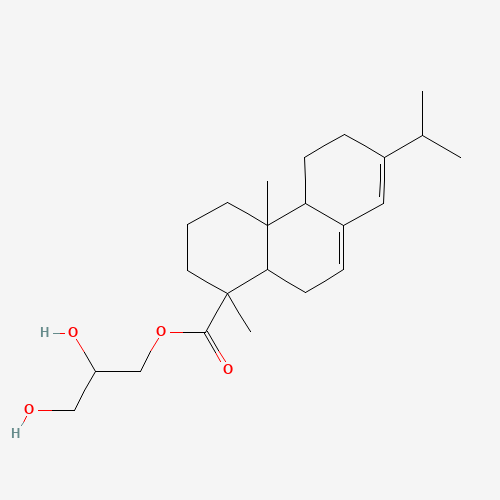
Glycerol ester of wood rosin (E 445, INS 445(iii)) is the rosin ester the EU authorises, with limits for citrus fruit surfaces and cloudy spirit drinks among others; the US and Canada list it alongside the gum and tall oil esters.
Where it is and isn’t permitted
| Jurisdiction | Status | Scope and limits | Citation |
|---|---|---|---|
| Australia and New Zealand | Permitted, with conditions | 4 food categories highest permitted level 100 mg/kg Show every food category
| Food Standards Code, Schedule 15, S15—5and 3 further provisionsretrieved 2026-10-17 |
| Canada | Permitted, with conditions | In: Beverages containing citrus or spruce oils. Purpose: Density adjusting agent. Limit: If used singly, the total amount not to exceed 100 ppm. If used in combination with glycerol ester of gum rosin or glycerol ester of tall oil rosin, or both, the total combined amount not to exceed 100 ppm. | Health Canada, List of Permitted Food Additives with Other Purposes of Use (List 8), item G.6retrieved 2026-10-17 |
| European Union | Permitted, with conditions | 5 food categories highest permitted level 320 mg/l Show every food category
| Regulation (EC) No 1333/2008and 4 further provisionsretrieved 2026-10-18 |
| Great Britain | Permitted, with conditions | 5 food categories highest permitted level 320 mg/kg or mg/l Show every food category
| Assimilated Regulation (EC) No 1333/2008and 4 further provisionsretrieved 2026-10-18 |
| Japan | Permitted, with conditions | Designated additive: Appended Table 1, item 69, エステルガム (“Ester Gum” in the unofficial English translation). …Designated additive: Appended Table 1, item 69, エステルガム (“Ester Gum” in the unofficial English translation). Standards for use — Specifications and Standards for Foods, Food Additives, etc. (MHW Notification No. 370 of 1959), Part II (Food Additives), F (Standards for use), entry エステルガム: (1) [may be used only for the uses stated] “エステルガムは、チューインガム基礎剤以外の用途に使用してはならない。” The Japanese is the standard as published. There is no official English translation of the Notification; the English in square brackets is this site’s description of what each sentence does, not a translation of the foods or the levels. Compositional specifications for this additive, in the same Notification, are not imported and are not shown here; nor are the general rules in F 添加物一般, which apply to every additive. | Regulations for Enforcement of the Food Sanitation Act (MHW Ordinance No. 23 of 1948), Appended Table 1retrieved 2026-10-18 |
| South Korea | Permitted, with conditions | Designated food additive: Standards and Specifications for Food Additives, Part III, 1. …Designated food additive: Standards and Specifications for Food Additives, Part III, 1. 일반식품첨가물 (general food additives), 에스테르검 (“Ester Gum”, the English the Code prints beside it). Main use (주용도) of 에스테르검: 껌기초제, 안정제. Standard for use (사용기준) of 에스테르검: (1) [may be used only in the foods listed] “에스테르검은 아래의 식품에 한하여 사용하여야 한다. 1. 추잉껌기초제 2. 탄산음료, 기타음료 : 0.10g/kg 이하” The Korean is the standard as published. There is no official English translation of the current Code (the English version on MFDS’s website is the 2020 edition and has no legal effect); the English in square brackets is this site’s description of what each sentence does, not a translation of the foods or the levels. Compositional specifications (Part IV) are not imported, nor are the general standards in Part II, which apply to every additive. | Standards and Specifications for Food Additives (식품첨가물의 기준 및 규격), MFDS Notification, Part III (Standards for use, by item)retrieved 2026-10-18 |
| United States | Permitted, with conditions | 2 permitted uses Show every permitted use
| 21 CFR 172.615and 1 further provisionretrieved 2026-10-18 |
| Codex Alimentarius | Permitted, with conditions | 3 food categories highest permitted level 150 mg/kg Show every food category
| CXS 192-1995 Table One, INS 445(iii)and 2 further provisionsretrieved 2026-09-07 |
How much is permitted
A listing usually limits the quantity as well as the food. Only one of the forms that takes is a figure: quantum satis and good manufacturing practice permit the amount the technological effect requires and no more, which is a limit rather than the absence of one. Figures below are the range across every food category this page is listed in, and categories differ between regulators — see how much is permitted.
| Australia and New Zealand | 100 mg/kg | 4 numeric limit |
|---|---|---|
| Canada | — | 1 no quantity stated |
| European Union | 50 mg/kg – 320 mg/kg | 5 numeric limit |
| Great Britain | 50 mg/kg – 320 mg/kg | 5 numeric limit |
| Japan | — | 1 no quantity stated |
| South Korea | — | 1 no quantity stated |
| United States | — | 2 no quantity stated |
| Codex Alimentarius | 110 mg/kg – 150 mg/kg | 3 numeric limit |
What it is made from
Made by reacting rosin, extracted from pine stumps, with glycerol. The glycerol may be plant or animal in origin. 21 CFR 172.615 gives it a chewing-gum-base specification of an acid number of 3 to 9 and a drop-softening point of 88 to 96 °C, and 21 CFR 172.735 uses the same figures for the beverage use, which it extends to the gum and tall oil esters as well.
- Vegan status depends on the source
- Vegetarian status depends on the source
- May raise a halal question
- May raise a kosher question
This is not an omission. What this additive is made from is not fixed — depending on the manufacturer it may be plant, animal or microbial in origin, nobody is required to say which, and the same product can change source between production runs. Ask the manufacturer if it matters to you; a label cannot answer it.
Compare other additives on the dietary indexes.
- CAS registry number
- 8050-30-4
- InChIKey
- HBKBEZURJSNABK-UHFFFAOYSA-N
- PubChem
- CID 11100884
The two specifications, compared
The European Union sets identity and purity by regulation; JECFA publishes its own through FAO, advisory until a country adopts it. Both documents are below in full. These are the parameters each puts a number on.
| Parameter | European Union | JECFA |
|---|---|---|
| Lead | no more than 2 mg/kg | no more than 1 mg/kg |
| Arsenic | no more than 3 mg/kg | — |
| Mercury | no more than 1 mg/kg | — |
| Cadmium | no more than 1 mg/kg | — |
One parameter differs between the two documents. A difference is not a disagreement about safety: the two are revised on their own cycles, and an assay or a drying loss can be measured against a different preparation of the substance, which is why only the contaminant ceilings are marked. Within the EU the EU's figure is the one that binds.
How the EU defines it
The legal specification an additive must meet to be sold as this E number in the EU — what it is, how it may be made, and the purity it must reach. From Commission Regulation (EU) No 231/2012.
E 445 Glycerol esters of wood rosin
A complex mixture of tri- and diglycerol esters of resin acids from wood rosin. The rosin is obtained by the solvent extraction of aged pine stumps followed by a liquid-liquid solvent refining process. Excluded from these specifications are substances derived from gum rosin, and exudate of living pine trees, and substances derived from tall oil rosin, a by-product of kraft (paper) pulp processing. The final product is composed of approximately 90 % resin acids and 10 % neutrals (non-acidic compounds). The resin acid fraction is a complex mixture of isomeric diterpenoid monocarboxylic acids having the empirical molecular formula of C₂₀H₃₀O₂, chiefly abietic acid. The substance is purified by steam stripping or by countercurrent steam distillation
Synonyms: Ester gum
Assay, identification and purity criteria
Description and assay
- Description
- Hard, yellow to pale amber-coloured solid
Identification
- Solubility
- Insoluble in water, soluble in acetone
- Infrared absorption spectrum
- Characteristic of the compound
Purity criteria
- Specific gravity of solution
- [d]²⁰ ₂₅ not less than 0,935 when determined in a 50 % solution in d-limonene (97 %, boiling point 175,5-176 °C, d²⁰ ₄: 0,84)
- Ring and ball softening range
- Between 82 °C and 90 °C
- Acid value
- Not less than 3 and not more than 9
- Hydroxyl value
- Not less than 15 and not more than 45
- Arsenic
- Not more than 3 mg/kg
- Lead
- Not more than 2 mg/kg
- Mercury
- Not more than 1 mg/kg
- Cadmium
- Not more than 1 mg/kg
- Test for absence of tall oil rosin (sulphur test)
- When sulphur-containing organic compounds are heated in the presence of sodium formate, the sulphur is converted to hydrogen sulphide which can readily be detected by the use of lead acetate paper. A positive test indicates the use of tall oil rosin instead of wood rosin
How JECFA defines it
The international specification for identity and purity, prepared by the Joint FAO/WHO Expert Committee on Food Additives and published by FAO. It is a different document from any above, written by a different body and revised on its own cycle; it is advisory, and a country adopts it or does not.
INS 445(iii) Glycerol ester of wood rosin
Glycerol ester of wood rosin (GEWR) is a complex mixture of glycerol di- and tri- esters of resin acids from wood rosin, with a residual fraction of glycerol monoesters. In addition, neutrals (non-acidic saponifiable and unsaponifiable substances) and residual free resin acids are present. Wood rosin is obtained by the solvent extraction of aged pine stumps, followed by a liquid-liquid solvent refining process. Refined wood rosin is composed of approximately 90% resin acids and approximately 10% neutrals. The resin acid fraction is a complex mixture of isomeric diterpenoid monocarboxylic acids having the typical empirical formula C20H30O2, of which the main components are dehydroabietic and abietic acids. GEWR is produced by esterifying the resin acids with food grade glycerol. The product is then purified by steam stripping or by direct countercurrent steam distillation. These specifications do not cover substances derived from gum rosin, an exudate of living pine trees, and substances derived from tall oil rosin, a by-product of kraft (paper) pulp processing.
Synonyms: INS No. 445(iii)
Assay, identification and purity criteria
Description and assay
- Specification history
- 2 out of 8 Prepared at the 86 th JECFA and published in FAO JECFA Monographs 22 (2018), superseding specifications prepared at the 77 th JECFA (2013) and published in FAO JECFA Monographs 14 (2013). An ADI of 0-25 mg/kg bw for glycerol ester of wood rosin was established at the 77 th JECFA (2013).
- C.A.S. number
- 8050-30-4
- DESCRIPTION
- Hard, yellow to pale amber-coloured solid
- FUNCTIONAL USES
- Emulsifier, density adjustment agent (flavouring oils in beverages), stabilizer, plasticizer (in chewing gum bases). 3 out of 8
Identification
- Solubility (Vol. 4)
- Insoluble in water, soluble in acetone
- Infrared absorption (Vol. 4)
- The infrared spectrum of a thin film of the sample (potassium bromide disc) corresponds with the typical infrared spectrum below
- Sulfur test
- Negative Weigh 40-50 mg of sample into a test tube and add 1- 2 drops of a 20% (w/v) solution of sodium formate. Place a strip of lead acetate test paper over the mouth of the test tube. Heat the tube until fumes are formed that contact the test paper. Continue heating for 2-5 min. The formation of a black spot of lead sulfide indicates the presence of sulfur-containing compounds. (Detection Limit: 50 mg/kg sulfur)
- Gas chromatography of resin acids and glycerol
- Passes test See description under TESTS
- Gas chromatography of resin acids
- The ester groups in the glycerol esters of wood rosin are reduced with a metal hydride to form a mixture of corresponding resin alcohols and glycerol which are analyzed by gas chromatography (Vol. 4). The characteristic chromatogram shows predominant peaks for abietic and dehydroabietic alcohols. Apparatus - Gas Chromatograph equipped with a flame ionization detector. - Centrifuge: table top, capable of achieving 3200 rpm Standards and reagents - Internal Standard (1,4-Butanediol: >99% - Toluene - Sodium Vitride Reagent [(Sodium bis(2-methoxyethoxy) aluminium dihydride], 70% in toluene:(~ 3.5 mol/l) Sodium Vitride solution: Pipet 10.0 ml of sodium vitride reagent into a 100 ml volumetric flask dilute to volume with toluene and mix thoroughly. Hydrolysis solution: Slowly add 50 ml of concentrated sulfuric acid, reagent grade, to 200 ml distilled water while stirring in an ice bath. Cool to room temperature. 5 out of 8 Procedure Sample preparation Weigh 250-300 mg sample into a 25 ml Erlenmeyer flask containing a Teflon coated stirrer bar. Pipet 5.0 ml toluene into the flask and stir until sample is dissolved. Pipet 5.0 ml of sodium vitiride solution into the flask, stopper the flask and stir for 30 min. While stirring, pipet 3.0 ml of hydrolysis solution into the flask. Continue stirring for 3 min. Transfer contents of flask to centrifuge tube (15 ml), stopper, and shake vigorously. Vent and centrifuge at 2800-3200 rpm for 5 min. Inject 0.5 μl of the toluene layer into the gas chromatograph operating under the following conditions and record the chromatogram. Compare with the chromatogram shown below to verify the approximate retention order of the resin alcohols. Chromatographic conditions - Column: DB-1 methyl silicone (bonded and crosslinked) wide-bore capillary (15 m x 0.53 mm i.d.,1.5 μm). - Injector: Flash vaporization injector - Flow rates: Carrier Gas (He): 30 ml/min at 63 psi, Hydrogen: 30 ml/min and - Air: 240 ml/min - Temperatures: Column: Isothermal, 190º; Injector: 250º , and Detector: 250º
- Gas chromatography of glycerol
- Standards and reagents - Glycerol: >99% - 1,4-Butanediol (Internal standard): >99% Internal Standard Solution: Weigh 0.1 g of 1,4-butanediol into a 100 ml volumetric flask. Dilute to volume with distilled water and mix thoroughly. Glycerol solution: Weigh 0.1 g of 1,4-butanediol and 0.1 g glycerol into a 100 ml volumetric flask. Dilute to volume with distilled water and mix thoroughly Phenolphthalein Solution: 1% in ethanol. 6 out of 8 Sodium Hydroxide Solution: Dissolve 16 g of reagent grade NaOH in 70-80 ml of distilled water and cool to room temperature. Dilute to 100 ml with distilled water and mix thoroughly. Store in a polyethylene bottle. Procedure Sample preparation Proceed as in the sample preparation for the analysis of resin acids until the centrifugation step. Using a pipet or syringe, remove the toluene layer and part of the aqueous layer leaving approximately 2 ml of the aqueous layer in the centrifuge tube. Add 1 drop of phenolphthalein solution to the remaining aqueous layer in the centrifuge, and neutralize with the sodium hydroxide solution (aluminium salts will precipitate). Pipet 5 ml of the internal standard solution into the tube, dilute to 15 ml with distilled water, stopper, shake, and then centrifuge at 2800-3200 rpm for 5 min. Inject 1 μl of the clear supernatant liquid into the gas chromatograph operating under the following conditions and record the chromatogram. Inject 1 μl of the glycerol solution and record the chromatogram. Measure the retention times of any observed peaks relative to 1,4-butanediol. Compare retention times to that of glycerol standard. Chromatographic conditions - Column: DB-WAX polyethyleneglycol (bonded and cross-linked), wide bore capillary (15 m x 0.53 mm i.d., 1.0 μm) - Flow rates: Carrier Gas (He): 30 ml/min at 60 psi, Hydrogen: 30 ml/min and - Air: 240 ml/min - Temperatures: Column: Programmed, 120 to 200º at 6º /min; Injector: 250º, - and Detector: 250º 7 out of 8 Gas chromatography of resin acids in GEWR (determined as alcohols) Typical GC-FID chromatogram of a GEWR sample. Retention times correspond to pimaric (18.8 min), isopimaric (22.4 min), palustric (23.1 min), dehydroabietic (25.9 min), abietic (29.6 min), and neoabietic (35.2 min) alcohols. This is a product derived from a plant-based source which can demonstrate significant variability and relative intensities. 8 out of 8
Purity criteria
- Specific gravity (Vol. 4)
- d (20, 25): Not less than 0.935 (50% solution in d-limonene)
- Ring and ball softening point (Vol. 4)
- Not less than 82° (see “Specific Methods, Glycerol Esters of Rosins”)
- Acid value (Vol. 4)
- Between 3 and 9 (see “Specific Methods, Fats, Oils, and Hydrocarbons”) 4 out of 8
- Lead (Vol. 4)
- Not more than 1 mg/kg Determine using method appropriate to the specified level. The selection of sample size and method of sample preparation may be based on the principles of the method described in Volume 4 (under “General Methods, Metallic Impurities”).
Every name it appears under
39 recorded names. A label may use any of them.
E number
- E445
INS number
- 445(iii)
CAS registry number
- 8050-30-4
As it appears in regulation
- Glycerol esters of wood rosins
Other names
- E 445
- Ester gum
- GLYCEROL ESTER OF ROSIN
- GLYCEROL ESTER OF WOOD ROSIN
- Glycerol esters of wood rosins (GEWR)
Hazard reference values
| Type | Value | Population | Assessed by | Opinion |
|---|---|---|---|---|
| ADI | 25 mg/kg bw/day | — | JECFA | 2013 |
Evidence and how bodies read it
What assessing bodies concluded
Each conclusion is paraphrased in the body's own framing, from the published opinion linked beneath it. Where bodies differ, both stand; this site does not adjudicate between them or add a view of its own.
EFSA 2023
In a follow-up, the FAF Panel established an ADI of 10 mg/kg bw/day for glycerol esters of wood rosins (E 445), based on a new reproductive and developmental screening study and restricted to material from longleaf and slash pine. It concluded there is no safety concern at maximum permitted or reported use levels, and recommended a revised definition and lower limits for toxic elements.
EFSA 2018
The ANS Panel concluded that the ADI of 12.5 mg/kg bw/day for glycerol esters of wood rosin (E 445) from longleaf and slash pine should be temporary pending reproductive and developmental toxicity data, and that exposure did not exceed it. It could not assess the safety of material from Aleppo and Calabrian pine for lack of data, and recommended updating the specifications.
Common questions
Assembled from what is above, in the words the questions are usually asked in. Each answer is the same statement the relevant section makes, with the same citations behind it.
- What is E 445?
- E 445 is Glycerol ester of wood rosin. Glycerol ester of wood rosin (E 445, INS 445(iii)) is the rosin ester the EU authorises, with limits for citrus fruit surfaces and cloudy spirit drinks among others; the US and Canada list it alongside the gum and tall oil esters.
- What is Glycerol ester of wood rosin used for in food?
- It is listed as an emulsifier, a stabiliser and a glazing agent — the role Codex and the US assign it. This page shows every function each regulator records, with the citation for each.
- Where is Glycerol ester of wood rosin permitted?
- Of the seven regulators this site reads, Australia and New Zealand, Canada, the EU, Great Britain, Japan, South Korea, the US and the Codex standard permit it. Each permission is for named foods at named levels, not a blanket one; the table on this page gives them with citations.
- Is Glycerol ester of wood rosin vegan?
- It depends on the source, and a label will not tell you. Glycerol ester of wood rosin can be made from plant or animal material, manufacturers are not obliged to say which, and the same product can change between production runs. Anyone who needs to know has to ask the manufacturer.
Sources for this page
- anz retrieved 2026-10-17
- ca retrieved 2026-10-17
- eu retrieved 2026-10-18
- gb retrieved 2026-10-18
- jp retrieved 2026-10-18
- kr retrieved 2026-10-18
- us-listings retrieved 2026-10-18
- gsfa retrieved 2026-09-07
- euspecs retrieved 2026-10-18
- jecfaspecs retrieved 2026-09-23
Full licence terms and publisher details on Sources. How this page is built and updated: Method.
Machine-readable: a JSON record of this additive is given on request —how to ask for access.
Follow changes to Glycerol ester of wood rosin:Atom feed — regulatory events, and any change the weekly refresh detects in its provisions.