Triethyl citrate
77-93-0 · 1,2,3-Propanetricarboxylic acid, 2-hydroxy-, 1,2,3-triethyl ester · 1,2,3-Propanetricarboxylic acid, 2-hydroxy-, triethyl ester · 1,2,3-triethyl 2-hydroxypropane-1,2,3-tricarboxylate · 1,3-Propanetricarboxylic acid, 2-hydroxy-, triethyl ester · 2,3-Propanetricarboxylicacid,2-hydroxy-triethylester · 2-Hydroxy-1,2,3-propanetricarboxylic acid, delta triethyl ester · 2-Hydroxy-1,2,3-propanetricarboxylic acid, triethyl ester · 2-hydroxy-propane-1,2,3-tricarboxylic acidtriethyl ester · 8Z96QXD6UM · BRN 1801199 · CAS-77-93-0 · Citric acid ethyl ester · citric acid, triethyl ester · Citroflex 2 · Citroflex c 2 · Citroflex ec · Citroflex sc 60 · Citrofol ai · Crodamol TC · E 1505 · Ethyl citrate · Eudraflex · FCM no 140 · FEMA 3083 · FEMA No. 3083 · HSDB 729 · Hydagen C.A.T · Hydragen CAT · INS NO.1505 · Morflex c 2 · Morflex tec · TEC · Triaethylcitrat · Triethyl 2-hydroxy-1,2,3-propanetricarboxylate · Triethyl 2-hydroxy-1,2,3-propanetricarboxylate # · triethyl 2-hydroxypropane-1,2,3-tricarboxylate · Triethyl citrate · Triethyl citrate (NF) · Triethyl citrate (Standard) · Triethyl citrate Solution in Acetone, 1000?g/mL · Triethyl citrate Solution in Acetone, 1000ug/mL · Triethyl citrate Solution in Acetone, 100ug/mL · Triethyl citrate(TEC) · Triethyl citrate, >=98.0% (GC) · Triethyl citrate, >=99%, FCC, FG · Triethyl citrate, analytical standard · Triethyl Citrate, FCC · Triethyl citrate, natural, >=97%, FG · Triethyl citrate, natural, >=99%, FG · Triethyl citrate, Pharmaceutical Secondary Standard; Certified Reference Material · Triethyl citrate, United States Pharmacopeia (USP) Reference Standard · Triethyl citrate, Vetec(TM) reagent grade, 98% · Triethyl citrate; Triethyl 2-hydroxypropane-1,2,3-tricarboxylate · triethyl2-hydroxypropane-1,2,3-tricarboxylate · Triethylcitrate · Triethylester kyseliny citronove · Uniflex TEC · Uniplex 80 · WLN: 2OV1XQVO2&1VO2 · E1505 · 1505 · triethyl 2-hydroxypropane-1,2,3-tricarboxylate · Triethyl citrate · Citrate de triéthyle · Citrato de trietilo · Citrato di trietile · Citrato trietílico · Cytrynian trietylowy · Triethyl citrate · TRIETHYL-CITRÁT · Triethylcitrát · Trietil citrat · Trietil-citrát · TRIETILCITRAT · Trietilcitratas · Trietilcitrāts · Trietylcitrát · Trietyylisitraatti · Trietüültsitraat · Triëthylcitraat · Ċitrat tat-trietil · ĊITRAT TRIETILIKU · Κιτρικός τριαιθυλεστέρας · Триетил цитратE number E1505INS 1505CAS 77-93-0
Listed as a sequestrant, a carrier and a solvent by Codex, the US and Canada.
Listed as sequestrants (US, Codex) · carriers (CA, Codex) · solvents and vehicles (CA, US) · emulsifiers (Codex) · flavour enhancers (US) · stabilisers (Codex) · foaming and whipping agents (CA) · flavouring agents and adjuvants (US) · formulation aids (US) · surface-active agents (US)
- United States: Sequestrant — FDA, Substances Added to Food: TRIETHYL CITRATE
- Codex Alimentarius: Sequestrant — CXS 192-1995 Table One, INS 1505
- Canada: Carrier solvent — Health Canada, List of Permitted Solvents (List 15)
- Codex Alimentarius: Carrier — CXS 192-1995 Table One, INS 1505
- Canada: Carrier solvent — Health Canada, List of Permitted Solvents (List 15)
- United States: Solvent or vehicle — FDA, Substances Added to Food: TRIETHYL CITRATE
- United States: Solvents and vehicles — 21 CFR 184.1911, citing 21 CFR 170.3(o)(27)
- Codex Alimentarius: Emulsifier — CXS 192-1995 Table One, INS 1505
- United States: Flavor enhancer — FDA, Substances Added to Food: TRIETHYL CITRATE
- Codex Alimentarius: Stabilizer — CXS 192-1995 Table One, INS 1505
- Canada: Whipping agent — Health Canada, List of Permitted Food Additives with Other Purposes of Use (List 8)
- United States: Flavoring agent or adjuvant — FDA, Substances Added to Food: TRIETHYL CITRATE
- United States: Flavoring agents and adjuvants — 21 CFR 184.1911, citing 21 CFR 170.3(o)(12)
- United States: Formulation aid — FDA, Substances Added to Food: TRIETHYL CITRATE
- United States: Surface-active agents — 21 CFR 184.1911, citing 21 CFR 170.3(o)(29)
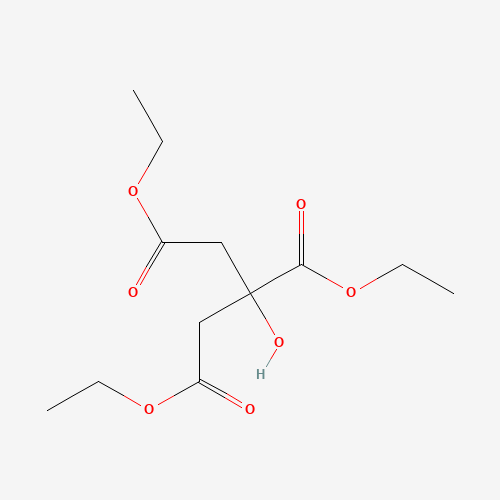
Triethyl citrate is a flavour solvent and a whipping aid for egg white, helping dried egg white foam as well as fresh.
Where it is and isn’t permitted
| Jurisdiction | Status | Scope and limits | Citation |
|---|---|---|---|
| Australia and New Zealand | Permitted, with conditions | 2 food categories highest permitted level 1,250 mg/kg Show every food category
| Food Standards Code, Schedule 15, S15—5and 1 further provisionretrieved 2026-10-17 |
| Canada | Permitted, with conditions | highest permitted level 2,500 mg/kg 3 permitted uses Show every permitted use
| Health Canadaand 2 further provisionsretrieved 2026-10-17 |
| European Union | Permitted, with conditions | 2 food categories highest permitted level 3,500 mg/kg Show every food category
| Regulation (EC) No 1333/2008, Annex IIand 1 further provisionretrieved 2026-10-18 |
| Great Britain | Permitted, with conditions | 2 food categories highest permitted level 3,500 mg/kg or mg/l Show every food category
| Assimilated Regulation (EC) No 1333/2008and 1 further provisionretrieved 2026-10-18 |
| Japan | Permitted, with conditions | Designated additive: Appended Table 1, item 115, クエン酸三エチル (“Triethyl Citrate” in the unofficial English translation). …Designated additive: Appended Table 1, item 115, クエン酸三エチル (“Triethyl Citrate” in the unofficial English translation). Standards for use — Specifications and Standards for Foods, Food Additives, etc. (MHW Notification No. 370 of 1959), Part II (Food Additives), F (Standards for use), entry クエン酸三エチル: (1) [may be used only in the foods stated; states an exception to the preceding sentence] “クエン酸三エチルは、通常の食品形態でない食品(カプセル及び錠剤(チュアブル錠を除く。)に限る。以下この目において同じ。)、液卵(殺菌したものに限る。以下この目において同じ。)、乾燥卵(液卵を乾燥して製造したものに限る。以下この目において同じ。)及び清涼飲料水以外の食品に使用してはならない。ただし、着香の目的で使用する場合は、この限りでない。” (2) [sets maximum levels of use for the foods stated] “クエン酸三エチルの使用量は、通常の食品形態でない食品にあってはその1kgにつき3.5g以下、液卵及び乾燥卵にあってはその1kgにつき2.5g以下、清涼飲料水(希釈して飲用に供する清涼飲料水にあっては、希釈後の清涼飲料水)にあってはその1kgにつき0.2g以下でなければならない。” The Japanese is the standard as published. There is no official English translation of the Notification; the English in square brackets is this site’s description of what each sentence does, not a translation of the foods or the levels. Compositional specifications for this additive, in the same Notification, are not imported and are not shown here; nor are the general rules in F 添加物一般, which apply to every additive. | Regulations for Enforcement of the Food Sanitation Act (MHW Ordinance No. 23 of 1948), Appended Table 1retrieved 2026-10-18 |
| South Korea | No listing matchedThis site imports Part III of South Korea’s Standards and Specifications for Food Additives, matched by CAS number, then INS number, then exact name. Mixed preparations and sanitisers are not imported, and an entry whose identifiers disagreed with a page’s is held for review, so an empty row does not show that South Korea does not permit the substance. | ||
| United States | Permitted | 21 CFR 184.1911retrieved 2026-10-17 | |
| Codex Alimentarius | Permitted, with conditions | 3 food categories highest permitted level 2,500 mg/kg Show every food category and its notes
| CXS 192-1995 Table One, INS 1505and 2 further provisionsretrieved 2026-09-07 |
How much is permitted
A listing usually limits the quantity as well as the food. Only one of the forms that takes is a figure: quantum satis and good manufacturing practice permit the amount the technological effect requires and no more, which is a limit rather than the absence of one. Figures below are the range across every food category this page is listed in, and categories differ between regulators — see how much is permitted.
| Australia and New Zealand | 1,250 mg/kg | 1 numeric limit, 1 GMP |
|---|---|---|
| Canada | 2,500 mg/kg | 1 numeric limit, 2 GMP |
| European Union | 3,500 mg/kg | 1 numeric limit, 1 quantum satis |
| Great Britain | 3,500 mg/kg | 1 numeric limit, 1 quantum satis |
| Japan | — | 1 no quantity stated |
| United States | — | 1 no quantity stated |
| Codex Alimentarius | 200 mg/kg – 2,500 mg/kg | 3 numeric limit |
What it is made from
Made by reacting citric acid with ethanol.
- Vegan
- Vegetarian
Compare other additives on the dietary indexes.
- CAS registry number
- 77-93-0
- InChIKey
- DOOTYTYQINUNNV-UHFFFAOYSA-N
- PubChem
- CID 6506
The two specifications, compared
The European Union sets identity and purity by regulation; JECFA publishes its own through FAO, advisory until a country adopts it. Both documents are below in full. These are the parameters each puts a number on.
| Parameter | European Union | JECFA |
|---|---|---|
| Assay | no less than 99 % | no less than 99 % |
| Lead | no more than 2 mg/kg | no more than 2 mg/kg |
| Arsenic | no more than 3 mg/kg | — |
The two documents state the same figures for every parameter compared here.
How the EU defines it
The legal specification an additive must meet to be sold as this E number in the EU — what it is, how it may be made, and the purity it must reach. From Commission Regulation (EU) No 231/2012.
E 1505 Triethyl citrate
Synonyms: Ethyl citrate
Assay, identification and purity criteria
Description and assay
- Einecs
- 201-070-7
- Chemical name
- Triethyl-2-hydroxypropan-1,2,3-tricarboxylate
- Chemical formula
- C₁₂H₂₀O₇
- Molecular weight
- 276,29
- Assay
- Content not less than 99,0 %
- Description
- Odourless, practically colourless, oily liquid
Identification
- Specific gravity (25° C/25 °C)
- 1,135-1,139
- Refractive index
- [n]D ²⁰: 1,439-1,441
Purity criteria
- Water content
- Not more than 0,25 % (Karl Fischer method)
- Acidity
- Not more than 0,02 % (as citric acid)
- Arsenic
- Not more than 3 mg/kg
- Lead
- Not more than 2 mg/kg
How JECFA defines it
The international specification for identity and purity, prepared by the Joint FAO/WHO Expert Committee on Food Additives and published by FAO. It is a different document from any above, written by a different body and revised on its own cycle; it is advisory, and a country adopts it or does not.
INS 1505 Triethyl Citrate
Synonyms: Ethyl citrate; INS No. 1505
Assay, identification and purity criteria
Description and assay
- Specification history
- Prepared at the 28 th JECFA (1984), published in FNP 31/2 (1984) and in FNP 52 (1992). Metals and arsenic specifications revised at the 61 st JECFA (2003). An ADI of 0-20 mg/kg bw was established at the 28 th JECFA (1984).
- Chemical names
- Triethyl 2-hydroxypropan-1,2,3-tricarboxylate
- C.A.S. number
- 77-93-0
- Chemical formula
- C12H20O7
- Formula weight
- 276.29
- Assay
- Not less than 99% w/w
- DESCRIPTION
- Odourless, practically colourless, oily liquid
- FUNCTIONAL USES
- Carrier solvent, sequestrant
- METHOD OF ASSAY
- Weigh accurately about 1.5 g of the sample into a 500-ml flask equipped with a standard taper ground joint, and add 25 ml of isopropanol and 25 ml of water. Pipet 50 ml of 0.5 N sodium hydroxide into the mixture, add a few boiling chips, and attach a suitable water-cooled condenser. Reflux for 1.5 h, then cool, wash down the condenser with about 20 ml of water, add 5 drops of bromothymol blue TS, and titrate the excess alkali with 0.5 N sulfuric acid. Perform a blank determination. Each ml of 0.5 N sulfuric acid is equivalent to 46.05 mg of C12H20O7.
Identification
- Solubility (Vol. 4)
- Slightly soluble in water; miscible with ethanol and ether
- Refractive index (Vol. 4)
- n (20, D):1.439 - 1.441
- Specific gravity (Vol. 4)
- d (25, 25): 1.135 - 1.139
Purity criteria
- Water (Vol. 4)
- Not more than 0.25% w/w (Karl Fischer Method)
- Acidity
- Not more than 0.02% w/w (as citric acid) Dissolve 32 g of the sample, accurately weighted, in 30 ml of neutralized ethanol, add phenolphthalein TS, and titrate with 0.1 N sodium hydroxide. Not more than 1.0 ml is required.
- Lead (Vol. 4)
- Not more than 2 mg/kg Determine using an AAS/ICP-AES technique appropriate to the specified level. The selection of sample size and method of sample preparation may be based on principles of methods described in Volume 4 (under “General Methods, Metallic Impurities”).
Authorised in other additives, enzymes, flavourings and nutrients
These authorisations are not for use in food. They let this substance be used inside another additive, a food enzyme, a flavouring or a nutrient preparation — often as a carrier — and it reaches food only as part of that product. Annex III to Regulation (EC) No 1333/2008.
| Part | May be used in | Maximum level | Citation |
|---|---|---|---|
| Annex III, Part 1: Carriers in food additives | All food additivesNote (1): Maximum level from all sources in foodstuffs 3 000 mg/kg (individually or in combination with E 1505, E 1517 and E 1518). In the case of beverages, with the exception of cream liqueurs, the maximum level of E 1520 shall be 1 000 mg/l from all sources. | quantum satis | Regulation (EC) No 1333/2008, Annex III, Part 1 |
| Annex III, Part 4: Food additives including carriers in food flavourings | All flavourings | 3 000 mg/kg from all sources in foodstuffs as consumed or as reconstituted according to the instructions of the manufacturer; individually or in combination. In the case of beverages, with the exception of cream liqueurs, the maximum level of E 1520 shall be 1 000 mg/l from all sources | Regulation (EC) No 1333/2008, Annex III, Part 4 |
Every name it appears under
85 recorded names. A label may use any of them.
E number
- E1505
INS number
- 1505
CAS registry number
- 77-93-0
As it appears in regulation
- Triethyl citrate
Other names
- 1,2,3-Propanetricarboxylic acid, 2-hydroxy-, 1,2,3-triethyl ester
- 1,2,3-Propanetricarboxylic acid, 2-hydroxy-, triethyl ester
- 1,2,3-triethyl 2-hydroxypropane-1,2,3-tricarboxylate
- 1,3-Propanetricarboxylic acid, 2-hydroxy-, triethyl ester
- 2,3-Propanetricarboxylicacid,2-hydroxy-triethylester
- 2-Hydroxy-1,2,3-propanetricarboxylic acid, delta triethyl ester
- 2-Hydroxy-1,2,3-propanetricarboxylic acid, triethyl ester
- 2-hydroxy-propane-1,2,3-tricarboxylic acidtriethyl ester
- 8Z96QXD6UM
- BRN 1801199
- CAS-77-93-0
- Citric acid ethyl ester
- citric acid, triethyl ester
- Citroflex 2
- Citroflex c 2
- Citroflex ec
- Citroflex sc 60
- Citrofol ai
- Crodamol TC
- E 1505
- Ethyl citrate
- Eudraflex
- FCM no 140
- FEMA 3083
- FEMA No. 3083
- HSDB 729
- Hydagen C.A.T
- Hydragen CAT
- INS NO.1505
- Morflex c 2
- Morflex tec
- TEC
- Triaethylcitrat
- Triethyl 2-hydroxy-1,2,3-propanetricarboxylate
- Triethyl 2-hydroxy-1,2,3-propanetricarboxylate #
- triethyl 2-hydroxypropane-1,2,3-tricarboxylate
- Triethyl citrate
- Triethyl citrate (NF)
- Triethyl citrate (Standard)
- Triethyl citrate Solution in Acetone, 1000?g/mL
- Triethyl citrate Solution in Acetone, 1000ug/mL
- Triethyl citrate Solution in Acetone, 100ug/mL
- Triethyl citrate(TEC)
- Triethyl citrate, >=98.0% (GC)
- Triethyl citrate, >=99%, FCC, FG
- Triethyl citrate, analytical standard
- Triethyl Citrate, FCC
- Triethyl citrate, natural, >=97%, FG
- Triethyl citrate, natural, >=99%, FG
- Triethyl citrate, Pharmaceutical Secondary Standard; Certified Reference Material
- Triethyl citrate, United States Pharmacopeia (USP) Reference Standard
- Triethyl citrate, Vetec(TM) reagent grade, 98%
- Triethyl citrate; Triethyl 2-hydroxypropane-1,2,3-tricarboxylate
- triethyl2-hydroxypropane-1,2,3-tricarboxylate
- Triethylcitrate
- Triethylester kyseliny citronove
- Uniflex TEC
- Uniplex 80
- WLN: 2OV1XQVO2&1VO2
Systematic names
- triethyl 2-hydroxypropane-1,2,3-tricarboxylate
Hazard reference values
No reference value for this substance in the sources we hold.
Evidence and how bodies read it
Studies, and the differing conclusions regulators drew from them, are curated rather than machine-read, and none has been written for this substance yet.
Common questions
Assembled from what is above, in the words the questions are usually asked in. Each answer is the same statement the relevant section makes, with the same citations behind it.
- What is E 1505?
- E 1505 is Triethyl citrate. Triethyl citrate is a flavour solvent and a whipping aid for egg white, helping dried egg white foam as well as fresh.
- What is Triethyl citrate used for in food?
- It is listed as a sequestrant, a carrier and a solvent — the role Codex, the US and Canada assign it. This page shows every function each regulator records, with the citation for each.
- Where is Triethyl citrate permitted?
- Of the seven regulators this site reads, Australia and New Zealand, Canada, the EU, Great Britain, Japan, the US and the Codex standard permit it. Each permission is for named foods at named levels, not a blanket one; the table on this page gives them with citations.
- Is Triethyl citrate vegan?
- Yes. Triethyl citrate is not derived from animals, and is suitable for vegetarians. This page says what it is made from and how.
Sources for this page
- anz retrieved 2026-10-17
- ca retrieved 2026-10-17
- eu retrieved 2026-10-18
- gb retrieved 2026-10-18
- jp retrieved 2026-10-18
- ecfr retrieved 2026-10-17
- gsfa retrieved 2026-09-07
- euspecs retrieved 2026-10-18
- jecfaspecs retrieved 2026-09-23
Full licence terms and publisher details on Sources. How this page is built and updated: Method.
Machine-readable: a JSON record of this additive is given on request —how to ask for access.
Follow changes to Triethyl citrate:Atom feed — regulatory events, and any change the weekly refresh detects in its provisions.