Glycerin
56-81-5 · 1,2,3-Propanetriol · 1,2,3-trihydroxypropane · 90 Technical glycerine · Antizom · blink boost · Brazilian Firm · Citifluor AF 2 · Clyzerin, wasserfrei · Dagralax · Dryness Relief · E 422 · FEMA No. 2525 · Firming · Glicerina · Glicerol · glicerolo · Glycerin · Glycerin Adult · Glycerin Cream · Glycerin, anhydrous · Glycerine · Glycerinum · Glyceritol · Glycerol · Glycerol 85% · Glycerolum · Glycogelatin · Glycyl alcohol · Glyrol · Glysanin · Grocolene · Inclear · Incorporation factor · INS NO.422 · INS-422 · keragel · keragelT · Keybells · MeWrinkle · Monagra · Monoctanoin Component D · Moon · myCellCare · Nirolex · Ophthalgan · Optim · Osmoglyn · PDC6A3C0OX · PZN 7474853 · RepoveSolutionA · RepoveSolutionB · Sayak · Scrub · Synthetic glycerin · Synthetic glycerine · Tixylix toddler · Trihydroxypropane · Tryhydroxypropane · Vitrosupos · Waterhouse · E422 · 422 · Propane-1,2,3-triol · Glycerin · Glycerol · Glicerin · Glicerina · GLICEROL · Glicerolis · Glicerolo · Glicerīns · Glycerin · Glycerol · Glyseroli · Glütserool · ΓΛΥΚΕΡΟΛΗ · Γλυκερόλη (γλυκερίνη) · ГлицеролE number E422INS 422CAS 56-81-5
Listed as a humectant by Canada, Codex and the US.
Listed as humectants (CA, US, Codex) · thickeners (US, Codex) · solvents and vehicles (CA, US) · sweeteners (US) · emulsifiers (US) · stabilisers (US) · anticaking agents (US) · glazing and surface-finishing agents (CA) · carriers (CA) · texturisers (US)
- Canada: Humectant — Health Canada, List of Permitted Food Additives with Other Purposes of Use (List 8)
- United States: Humectant — FDA, Substances Added to Food: GLYCERIN, SYNTHETIC
- Codex Alimentarius: Humectant — CXS 192-1995 Table One, INS 422
- United States: Stabilizer or thickener — FDA, Substances Added to Food: GLYCERIN, SYNTHETIC
- Codex Alimentarius: Thickener — CXS 192-1995 Table One, INS 422
- Canada: Carrier solvent — Health Canada, List of Permitted Solvents (List 15)
- United States: Solvent or vehicle — FDA, Substances Added to Food: GLYCERIN, SYNTHETIC
- United States: Nutritive sweetener — FDA, Substances Added to Food: GLYCERIN, SYNTHETIC
- United States: Emulsifier or emulsifier salt — FDA, Substances Added to Food: GLYCERIN, SYNTHETIC
- United States: Stabilizer or thickener — FDA, Substances Added to Food: GLYCERIN, SYNTHETIC
- United States: Anticaking agent or free-flow agent — FDA, Substances Added to Food: GLYCERIN, SYNTHETIC
- Canada: Glazing agent — Health Canada, List of Permitted Food Additives with Other Purposes of Use (List 8)
- Canada: Carrier solvent — Health Canada, List of Permitted Solvents (List 15)
- United States: Texturizer — FDA, Substances Added to Food: GLYCERIN, SYNTHETIC
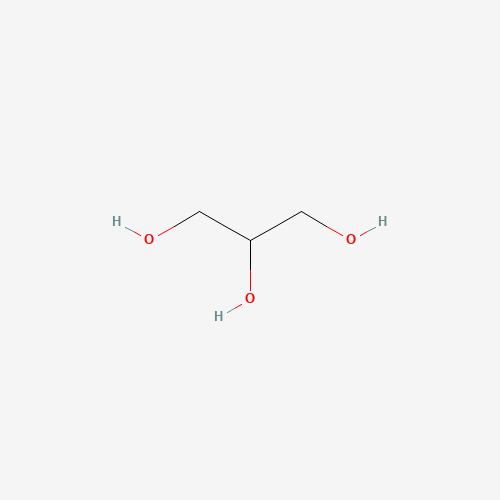
Glycerol, sold as glycerin, is a sweet-tasting liquid used as a humectant to keep foods moist — in baked goods, confectionery, dried fruit and low-fat spreads.
Where it is and isn’t permitted
| Jurisdiction | Status | Scope and limits | Citation |
|---|---|---|---|
| Australia and New Zealand | Permitted, with conditions | 54 food categories no numerical limit (good manufacturing practice) Show every food category
| Food Standards Code, Schedule 15, S15—5and 53 further provisionsretrieved 2026-10-17 |
| Canada | Permitted | no numerical limit (good manufacturing practice) 7 permitted uses Show every permitted use
| Health Canadaand 6 further provisionsretrieved 2026-10-17 |
| European Union | Permitted, with conditions | 70 food categories Show every food category
| Regulation (EC) No 1333/2008, Annex IIand 69 further provisionsretrieved 2026-10-18 |
| Great Britain | Permitted, with conditions | 68 food categories Show every food category
| Assimilated Regulation (EC) No 1333/2008and 67 further provisionsretrieved 2026-10-18 |
| Japan | Permitted, with conditions | Designated additive: Appended Table 1, item 123, グリセリン(別名グリセロール) (“Glycerin (Glycerol)” in the unofficial English translation). …Designated additive: Appended Table 1, item 123, グリセリン(別名グリセロール) (“Glycerin (Glycerol)” in the unofficial English translation). Standards for use — Specifications and Standards for Foods, Food Additives, etc. (MHW Notification No. 370 of 1959), Part II (Food Additives), F (Standards for use): The Notification sets no standard for use (使用基準) for this additive, so it is not restricted there to particular foods or amounts. Compositional specifications for this additive, in the same Notification, are not imported and are not shown here; nor are the general rules in F 添加物一般, which apply to every additive. | Regulations for Enforcement of the Food Sanitation Act (MHW Ordinance No. 23 of 1948), Appended Table 1retrieved 2026-10-18 |
| South Korea | Permitted, with conditions | Designated food additive: Standards and Specifications for Food Additives, Part III, 1. …Designated food additive: Standards and Specifications for Food Additives, Part III, 1. 일반식품첨가물 (general food additives), 글리세린 (“Glycerin”, the English the Code prints beside it). Main use (주용도) of 글리세린: 습윤제, 안정제. Standard for use (사용기준) of 글리세린: (1) [to be used under the general standard for use in II. 2. 1), the minimum amount that achieves the technical effect, with no limit set for this additive in particular] “II. 2. 1)의 규정에 따라 사용하여야 한다.” The Korean is the standard as published. There is no official English translation of the current Code (the English version on MFDS’s website is the 2020 edition and has no legal effect); the English in square brackets is this site’s description of what each sentence does, not a translation of the foods or the levels. Compositional specifications (Part IV) are not imported, nor are the general standards in Part II, which apply to every additive. | Standards and Specifications for Food Additives (식품첨가물의 기준 및 규격), MFDS Notification, Part III (Standards for use, by item)retrieved 2026-10-18 |
| United States | Permitted | 21 CFR 182.1320retrieved 2026-10-17 | |
| Codex Alimentarius | Permitted, with conditions | 14 food categories no numerical limit (good manufacturing practice) Show every food category and its notes
| CXS 192-1995 Table Three, INS 422and 14 further provisionsretrieved 2026-09-07 |
How much is permitted
A listing usually limits the quantity as well as the food. Only one of the forms that takes is a figure: quantum satis and good manufacturing practice permit the amount the technological effect requires and no more, which is a limit rather than the absence of one. Figures below are the range across every food category this page is listed in, and categories differ between regulators — see how much is permitted.
| Australia and New Zealand | — | 54 GMP |
|---|---|---|
| Canada | — | 7 GMP |
| European Union | — | 46 several limits, 2 quantum satis, 22 no quantity stated |
| Great Britain | — | 68 quantum satis |
| Japan | — | 1 no quantity stated |
| South Korea | — | 1 no quantity stated |
| United States | — | 1 no quantity stated |
| Codex Alimentarius | — | 15 GMP |
No regulator sets a figure for Glycerin. That is not an absence of control: where the listing says quantum satis or good manufacturing practice, the quantity is limited to what the effect requires.
What a label must say
Words a food containing Glycerin is obliged to carry, quoted from the instrument that imposes them. A required statement is a fact about the regulation, not a finding about the substance — every rule below applies where the additive is authorised.
‘with sweetener(s)’, or ‘with sugar(s) and sweetener(s)’ where the food also contains added sugar. The statement accompanies the name of the food.
Any food containing an authorised sweetener. Regulation (EU) No 1169/2011, Annex III, points 2.1 and 2.2 · Assimilated Regulation (EU) No 1169/2011, Annex III
Every rule collected at what a label must say.
What it is made from
Obtained as a by-product of soap manufacture and biodiesel production, or by hydrolysing fats and oils. Those fats may be plant or animal, and glycerin can also be made synthetically from petroleum. The route is not declared, which makes this a genuinely open question on a label.
- Vegan status depends on the source
- Vegetarian status depends on the source
- May raise a halal question
- May raise a kosher question
This is not an omission. What this additive is made from is not fixed — depending on the manufacturer it may be plant, animal or microbial in origin, nobody is required to say which, and the same product can change source between production runs. Ask the manufacturer if it matters to you; a label cannot answer it.
Compare other additives on the dietary indexes.
- CAS registry number
- 56-81-5
- InChIKey
- PEDCQBHIVMGVHV-UHFFFAOYSA-N
- PubChem
- CID 753
The two specifications, compared
The European Union sets identity and purity by regulation; JECFA publishes its own through FAO, advisory until a country adopts it. Both documents are below in full. These are the parameters each puts a number on.
| Parameter | European Union | JECFA |
|---|---|---|
| Assay | no less than 98 % | no less than 99 % |
| Sulphated ash | no more than 0.01 % | no more than 0.01 % |
| Lead | no more than 0.1 mg/kg | no more than 2 mg/kg |
| Arsenic | no more than 0.1 mg/kg | — |
| Mercury | no more than 0.1 mg/kg | — |
| Cadmium | no more than 0.1 mg/kg | — |
2 parameters differ between the two documents. A difference is not a disagreement about safety: the two are revised on their own cycles, and an assay or a drying loss can be measured against a different preparation of the substance, which is why only the contaminant ceilings are marked. Within the EU the EU's figure is the one that binds.
How the EU defines it
The legal specification an additive must meet to be sold as this E number in the EU — what it is, how it may be made, and the purity it must reach. From Commission Regulation (EU) No 231/2012.
E 422 Glycerol
Glycerol is obtained only from vegetable oils and fats, either directly or from the crude glycerol obtained as a by-product of biodiesel production and undergoes purification processes that involve distillation, and other clean up steps to obtain refined glycerol.
Synonyms: Glycerin; Glycerine
Assay, identification and purity criteria
Description and assay
- Einecs
- 200-289-5
- Chemical name
- 1,2,3-propanetriol; Glycerol; Trihydroxypropane
- Chemical formula
- C₃H₈O₃
- Molecular weight
- 92,10
- Assay
- Content not less than 98 % of glycerol on the anhydrous basis
- Description
- Clear, colourless hygroscopic syrupy liquid with not more than a slight characteristic odour, which is neither harsh nor disagreeable
Identification
- Specific gravity (25 °C/25 °C)
- Not less than 1,257
- Refractive index
- [n]D ²⁰ between 1,471 and 1,474
Purity criteria
- Water content
- Not more than 5 % (Karl Fischer method)
- Sulphated ash
- Not more than 0,01 % determined at 800 ± 25 °C
- Butanetriols
- Not more than 0,2 %
- Acrolein
- Not more than 3 mg/kg
- Fatty acids and esters
- Not more than 0,1 % calculated as butyric acid
- Chlorinated compounds
- Not more than 30 mg/kg (as chlorine)
- 3-Monochloropropane-1,2-diol (3- MCPD)
- Not more than 0,1 mg/kg
- Arsenic
- Not more than 0,1 mg/kg
- Lead
- Not more than 0,1 mg/kg
- Mercury
- Not more than 0,1 mg/kg
- Cadmium
- Not more than 0,1 mg/kg
How JECFA defines it
The international specification for identity and purity, prepared by the Joint FAO/WHO Expert Committee on Food Additives and published by FAO. It is a different document from any above, written by a different body and revised on its own cycle; it is advisory, and a country adopts it or does not.
INS 422 Glycerol
Synonyms: Glycerin; INS No. 422
Assay, identification and purity criteria
Description and assay
- Specification history
- Prepared at the 20th JECFA (1976), published in FNS 1B (1977) and in FNP 52 (1992). Metals and arsenic specifications revised at the 63rd JECFA (2004). An ADI 'not specified' was established at the 20th JECFA (1976)
- Chemical names
- 1,2,3-Propanetriol, glycerol, trihydroxypropane
- C.A.S. number
- 56-81-5
- Chemical formula
- C 3 H 8 O 3
- Formula weight
- 92.10
- Assay
- Not less than 99% of on the anhydrous basis
- DESCRIPTION
- Clear, colourless, hygroscopic, syrupy liquid, having a not more than a slight characteristic odour, which is neither harsh nor disagreeable
- FUNCTIONAL USES
- Humectant, solvent, bodying agent, plasticizer
- METHOD OF ASSAY
- Weigh accurately about 1 g of the sample and dissolve in water to make 100 ml. Add 100 ml of 0.3% potassium periodate solution to a 5 ml portion of the solution, shake thoroughly, and allow to stand for 1 h. Add 1 ml of propylene glycol, allow to stand for 10 min, and titrate with 0.05 N sodium hydroxide, using 3 drops of phenol red TS as the indicator, until a pink colour persists. Perform a blank test in the same manner as the sample. Each ml of 0.05 N sodium hydroxide is equivalent to 4.605 mg of C 3 H 8 O 3 .
Identification
- Solubility (Vol. 4)
- Miscible with water and with ethanol; immiscible with ether
- Test for glycerol (Vol. 4)
- Passes test
Purity criteria
- Water (Vol. 4)
- Not more than 5% (Karl Fischer Method)
- Colour
- The colour of the sample, when viewed downward against a white surface in a 50-ml Nessler tube, is not darker than the colour of a standard made by diluting 0.4 ml of ferric chloride TSC with water to 50 ml and similarly viewed in a Nessler tube of approximately the same diameter and colour as that containing the sample.
- Sulfated ash
- Not more than 0.01% Heat 50 g in a tared, open dish, and ignite the vapours, allowing them to burn until the sample has been completely consumed. After cooling, moisten the residue with 0.5 ml of concentrated sulfuric acid, and complete the ignition by heating for 15 min periods at 800±25 o to constant weight.
- Chlorides (Vol. 4)
- Not more than 10 mg/kg Test 10 g of the sample as directed in the Limit Test using 0.1 mg of chloride ion in the control
- Chlorinated compounds
- Not more than 30 mg/kg (as chloride ion) Transfer 5 g of the sample into a dry 100 ml round bottom ground joint flask and add 15 ml of morpholine. Connect the flask with a ground joint reflux condenser, and reflux the mixture gently for 3 h. Rinse the condenser with 10 ml of water, receiving the washing into the flask, and cautiously acidify with nitric acid. Transfer the solution to a suitable comparison tube, add 0.5 ml of silver nitrate TS, dilute with water to 50 ml, and mix thoroughly. Any turbidity does not exceed that produced by 150 μg of chloride ion (Cl) in an equal volume of solution containing the quantities of reagents used in the test, omitting the refluxing.
- Fatty acids and esters
- Not more than 30 mg/kg To a 40 ml (50 g) of the sample add 50 ml of recently boiled water and 5 ml of 0.5 N sodium hydroxide, then mix. Boil the mixture for 5 min, cool, add phenolphthalein TS, and titrate the excess alkali with 0.5 N hydrochloric acid. Not more than 1 ml of 0.5 N sodium hydroxide is consumed.
- Readily carbonizable substances
- Rinse a glass-stoppered, 25-ml cylinder with sulfuric acid TS, and allow to drain for 10 min. Add 5 ml of the sample and 5 ml of sulfuric acid TS, shake vigorously for 1 min, and allow to stand for 1 h. The mixture is no darker than Matching Fluid H.
- Butanetriols
- Not more than 0.2% See description under TESTS
- Lead (Vol. 4)
- Not more than 2 mg/kg Determine using an atomic absorption technique appropriate to the specified level. The selection of sample size and method of sample preparation may be based on the principles of the method described in Volume 4, “Instrumental Methods.”
- Test: Butanetrioles
- Reagents - Chromatographic Siliceous Earth: Use 80- to 100-mesh Chromosorb W or other comparable grade of purified chromatographic siliceous earth. - 1,4-Butanediol: Purify the commercial product by vacuum distillation, collecting the portion distilling between 120 o and 121 o at 8 mm of mercury. - 1,2,4-Butanetriol: Purify the commercial product by vacuum distillation, collecting the portion distilling between 151 o and 153 o at 2 mm of mercury. Preparation of Column Material Place about 500 g of chromatographic siliceous earth in a large beaker, add sufficient 6 N hydrochloric acid to cover the material, and allow to stand overnight. Decant the acid, wash the siliceous earth on a Buchner funnel with water until the wash water is neutral to pH indicator paper then wash with acetone until free from water, and spread out to dry in the air. Transfer the washed and dried material to a sintered glass funnel, cover with chloroform, stir, and remove the chloroform, by aspiration. Repeat the washing with chloroform, and again dry in the air at room temperature. Weigh 87.5 g of the dried siliceous earth into a dish, and add sufficient acetone to form a slurry. Transfer 12.5 g of polyoxyethylene-(8)- ethylenediamine into a beaker, and dissolve in acetone. Place the dish on a steam bath, and heat gently, with stirring, while adding the solution of polyoxyethylene-(8)-ethylenediamine. Continue heating until enough acetone has evaporated to cause the mixture to become free-flowing, and spread out to dry at room temperature. (Note: The column prepared with polyoxyethylene-(8)-ethylene-diamine does not have long-term stability, particularly when used with a flame-ionization detector; it is more stable, however, when used with a thermal-ionization detector. To prolong stability in either case, the column should be kept sealed against exposure to air when not in use.) Weigh accurately about 10 g of the sample, add 1 drop of 1,4-butanediol, accurately weighed, as internal standard, dilute with 5 ml of methanol, and mix. Inject a 10- portion of this solution into a gas chromatographic apparatus equipped with a linear temperature programming device. The operating conditions of the apparatus may vary, depending upon the particular instrument used, but a suitable chromatogram is obtained with a copper column, 1.5 m in length and 6.3 mm in outside diameter, packed with the column material previously described. In addition, the carrier is helium, flowing at the rate of 100 ml per min; the injector block temperature is 320 o , the detector block temperature is 250 o , and the column temperature is programmed to rise from 150 o to 180 o at a rate of 5.60 per min. The detector bridge current should be maintained at 250 mA when the operating conditions described are employed. The resolution factor, R. should be not less than 1.9 between the threo-and the erythro-butanetriols peaks, not less than 2.5 between the erythro-1,2,3-butanetriol and the glycerol peaks, and not less than 4.5 between the glycerol and the 1,2,4-butanetriol peaks. (These values for R are obtained when mixtures of equal quantities of glycerol and the butanetriols are determined in an apparatus programmed as described above). Prepare a 1 in 1,000 solution in glycerol of 1,2,4-butane-triol, accurately weighed, and calculate the percent (P) of 1,2,4-butanetriol in the standard mixture. Weigh accurately about 10 g of the standard mixture, add 1 drop of 1,4-butane-diol, accurately weighed, as the internal standard, and dilute with 5 ml of methanol. Inject about 10 μl of this solution, and obtain a standard chromatogram under the same operating conditions as employed for the sample, applying attenuation of the detector signal as necessary. Under the conditions described, the 1,4-butanediol is eluted in about 8 min, and an area of about 10 cm 2 is generated as compared to an area of 1.0-1.5 cm 2 for the butanetriols when present in a concentration of about 0.1%. In addition, the following retention times have been obtained: 1.00 for 1,4-butanediol, 2.14 for threo-1,2,3-butanetriol, 2.52 for erythro-1,2,3-butanetriol, and 5.26 for 1,2,4-butanetriol. Retention times will vary if programming different from that described is used. Calculation Measure the areas of the peaks produced by the 1,4-butanediol (a) and by the 1,2,4-butanetriol (A), and calculate the response factor (f) by the formula: where W = the exact weight of the standard mixture used for dilution with the methanol w = the exact weight of the drop of 1,4-butanediol internal standard added to the standard mixture. Calculate the percent of each butanetriol in the sample by the formula: where f = the response factor previously determined W' = the exact weight of 1,4-butanediol internal standard added to the sample solution Ax = the area of the peak produced by each butanetriol A' = the area of the 1,4-butanediol peak W = the weight of the sample The sum of the percents found does not exceed 0.2.
Authorised in other additives, enzymes, flavourings and nutrients
These authorisations are not for use in food. They let this substance be used inside another additive, a food enzyme, a flavouring or a nutrient preparation — often as a carrier — and it reaches food only as part of that product. Annex III to Regulation (EC) No 1333/2008.
| Part | May be used in | Maximum level | Citation |
|---|---|---|---|
| Annex III, Part 1: Carriers in food additives | All food additives | quantum satis | Regulation (EC) No 1333/2008, Annex III, Part 1 |
| Annex III, Part 2: Food additives other than carriers in food additives | All food additive preparationsAuthorised as a member of Table 1 of Part 6, listed as "Table 1" Note (1): Except enzymes authorised as food additives. | quantum satis | Regulation (EC) No 1333/2008, Annex III, Part 2, via Table 1 of Part 6 |
| Annex III, Part 3: Food additives including carriers in food enzymes | Food enzymesCan be used as a carrier: Yes Note (1): Including enzymes authorised as food additives. | In enzyme preparation: quantum satis In final food except beverages: quantum satis In beverages: quantum satis | Regulation (EC) No 1333/2008, Annex III, Part 3 |
| Annex III, Part 4: Food additives including carriers in food flavourings | All flavouringsAuthorised as a member of Table 1 of Part 6, listed as "Table 1" | quantum satis | Regulation (EC) No 1333/2008, Annex III, Part 4, via Table 1 of Part 6 |
| Annex III, Part 5, Section A: Food additives added in nutrients except in nutrients intended to be used in foodstuffs listed in Part E, point 01.10, of Annex II and foodstuffs for infants and young children listed in Part E, point 13.1, of Annex II | All nutrientsCan be used as a carrier: Yes | quantum satis | Regulation (EC) No 1333/2008, Annex III, Part 5, Section A |
Every name it appears under
79 recorded names. A label may use any of them.
E number
- E422
INS number
- 422
CAS registry number
- 56-81-5
As it appears in regulation
- Glycerin
- Glycerol
Other names
- 1,2,3-Propanetriol
- 1,2,3-trihydroxypropane
- 90 Technical glycerine
- Antizom
- blink boost
- Brazilian Firm
- Citifluor AF 2
- Clyzerin, wasserfrei
- Dagralax
- Dryness Relief
- E 422
- FEMA No. 2525
- Firming
- Glicerina
- Glicerol
- glicerolo
- Glycerin
- Glycerin Adult
- Glycerin Cream
- Glycerin, anhydrous
- Glycerine
- Glycerinum
- Glyceritol
- Glycerol
- Glycerol 85%
- Glycerolum
- Glycogelatin
- Glycyl alcohol
- Glyrol
- Glysanin
- Grocolene
- Inclear
- Incorporation factor
- INS NO.422
- INS-422
- keragel
- keragelT
- Keybells
- MeWrinkle
- Monagra
- Monoctanoin Component D
- Moon
- myCellCare
- Nirolex
- Ophthalgan
- Optim
- Osmoglyn
- PDC6A3C0OX
- PZN 7474853
- RepoveSolutionA
- RepoveSolutionB
- Sayak
- Scrub
- Synthetic glycerin
- Synthetic glycerine
- Tixylix toddler
- Trihydroxypropane
- Tryhydroxypropane
- Vitrosupos
- Waterhouse
Systematic names
- Propane-1,2,3-triol
The EU re-evaluation programme
Every additive authorised in the EU before 20 January 2009 was put back through EFSA by Commission Regulation (EU) No 257/2010, and this one is named in it. What the Regulation required is below; whether the opinion has since been published is not something this site records.
- To be evaluated by 31 December 2016. Named in Annex II, Part II, point 2 as “Glycerol”, among the additives given priority within its class.
Hazard reference values
| Type | Value | Population | Assessed by | Opinion |
|---|---|---|---|---|
| ADI | not specified | — | JECFA | 2002 |
Evidence and how bodies read it
What assessing bodies concluded
Each conclusion is paraphrased in the body's own framing, from the published opinion linked beneath it. Where bodies differ, both stand; this site does not adjudicate between them or add a view of its own.
EFSA 2022
In a follow-up addressing specification data gaps, the FAF Panel concluded that limits for toxic elements in glycerol (E 422) should be lowered and a numerical limit set for acrolein, and that free 3-MCPD at the existing specification limit does not give rise to a health concern.
EFSA 2017
The ANS Panel found no genotoxicity or carcinogenicity concern for glycerol (E 422) and concluded that no numerical ADI is needed and there is no safety concern at the refined exposure assessment. It noted that infants and toddlers could reach an estimated therapeutic dose from less than one can of a flavoured drink, and recommended changes to the specifications to limit genotoxic and carcinogenic residues.
Common questions
Assembled from what is above, in the words the questions are usually asked in. Each answer is the same statement the relevant section makes, with the same citations behind it.
- What is E 422?
- E 422 is Glycerin. Glycerol, sold as glycerin, is a sweet-tasting liquid used as a humectant to keep foods moist — in baked goods, confectionery, dried fruit and low-fat spreads.
- What is Glycerin used for in food?
- It is listed as a humectant — the role Canada, Codex and the US assign it. This page shows every function each regulator records, with the citation for each.
- Where is Glycerin permitted?
- Of the seven regulators this site reads, Australia and New Zealand, Canada, the EU, Great Britain, Japan, South Korea, the US and the Codex standard permit it. Each permission is for named foods at named levels, not a blanket one; the table on this page gives them with citations.
- Is Glycerin vegan?
- It depends on the source, and a label will not tell you. Glycerin can be made from plant or animal material, manufacturers are not obliged to say which, and the same product can change between production runs. Anyone who needs to know has to ask the manufacturer.
Sources for this page
- anz retrieved 2026-10-17
- ca retrieved 2026-10-17
- eu retrieved 2026-10-18
- gb retrieved 2026-10-18
- jp retrieved 2026-10-18
- kr retrieved 2026-10-18
- ecfr retrieved 2026-10-17
- gsfa retrieved 2026-09-07
- euspecs retrieved 2026-10-18
- jecfaspecs retrieved 2026-09-23
Full licence terms and publisher details on Sources. How this page is built and updated: Method.
Machine-readable: a JSON record of this additive is given on request —how to ask for access.
Follow changes to Glycerin:Atom feed — regulatory events, and any change the weekly refresh detects in its provisions.