Propylene glycol
57-55-6 · (+-)-1,2-Propanediol · (+-)-Propylene glycol · (2RS)-PROPANE-1,2-DIOL · (RS)-1,2-Propanediol · 1,2 Propanediol · 1,2-(RS)-Propanediol · 1,2-dihydroxypropane · 1,2-Propandiol · 1,2-propanediol · 1,2-Propylene glycol · 1,2-Propylenglykol · 2-Hydroxypropanol · alpha-Propylene glycol · alpha-Propyleneglycol · Baby Wipes · CVS Lubricant Eye Drops 15mL · DEROFEN MIEL · DL-1,2-Propanediol · dl-Propylene glycol · Dowfrost · E 1520 · EGHMTW hair oil · Equate Support Moisture Lubricant Eye · Eyelash and Eyebrow Lengthener · FEMA No. 2940 · GENERAL OB LUBRICANT · Glycol, Propylene · Hot Sweat Cream · Ins no.1520 · Isopropylene glycol · KETO-TREAT · Kilfrost ABC-S · Kollisolv pg · Methyl Ethyl Glycol · Methyl glycol · Methylethyl glycol · Methylethylene glycol · Monohydrate, Propylene Glycol · Monopropylene glycol · MSM (MoSaengMo) · Polypeptidemulti-Effectseye Cream · Propan-1,2-Diol · Propane-1,2-diol · propylene glycol · Propylene glycol (solvent) · propylene glycol cefatrizine · Propylene glycol dl- · Propylene Glycol USP · Propyleneglycolum · Sentry Propylene Glycol · Sirlene · Solar Winter BAN · Solargard P · Systane Balance · Systane COMPLETE · Systane COMPLETE PF · Systane Pro PF · Trimethyl glycol · Ucar 35 · Walgreen Sterile Lubricant · Walgreens Lubricant Eye Drops · E1520 · 1520 · propane-1,2-diol · Propane-1, 2-diol · Propane-1, 2-diol (propylene glycol) · Propylene glycol · 1,2-PROPAANDIOOL · 1,2-Propandijol (propilengliċol) · 1,2-PROPANDIOL · 1,2-PROPANDIOLIS · 1,2-propandiolis (propilenglikolis) · 1,2-PROPANDIOLO · 1,2-Propandiolo (propilenglicole) · PROPAAN-1,2-DIOL · Propaan-1,2-diol (propyleenglycol) · Propaan-1,2-diool (propüleenglükool) · PROPAANI-1,2-DIOLI · Propaani-1,2-dioli (propyleeniglykoli) · PROPAN-1,2-DIOL · Propan-1,2-diol (propilen glikol) · Propan-1,2-diol (propilenglicol) · Propan-1,2-diol (propylenglycol) · Propan-1,2-diol (propylenglykol) · Propane-1, 2-diol (propylene glycol) · PROPANE-1,2-DIOL · Propanediol-1,2 (propylène glycol) · PROPANO-1,2-DIOL · Propano-1,2-diol (glikol propylenowy) · Propano-1,2-diol (propilenglicol) · Propano-1,2-diol (propilenoglicol) · Propylenglycol (1,2-Propandiol) · Propán-1,2-diol (propilénglikol) · PROPĀN-1,2-DIOLS · Propān-1,2-diols (propilēnglikols) · ΠΡΟΠΑΝΟΔΙΟΛΗ-1, 2 (ΠΡΟΠΥΛΕΝΟΓΛΥΚΟΛΗ) · Προπανο-1, 2-διόλη (προπυλενογλυκόλη) · ПРОПАН-1,2-ДИОЛ · Пропан-1, 2-диол (пропилен гликол)E number E1520INS 1520CAS 57-55-6
Listed as a humectant by Canada, Codex and the US.
Listed as humectants (CA, US, Codex) · emulsifiers (US, Codex) · anticaking agents (CA, US) · carriers (CA, Codex) · solvents and vehicles (CA, US) · preservatives (US) · antioxidants (US) · thickeners (US) · flavour enhancers (US) · stabilisers (US) · glazing and surface-finishing agents (Codex) · dough strengtheners (US) · flavouring agents and adjuvants (US) · texturisers (US) · formulation aids (US) · surface-active agents (US) · processing aids (US)
- Canada: Humectant — Health Canada, List of Permitted Food Additives with Other Purposes of Use (List 8)
- United States: Humectant — FDA, Substances Added to Food: PROPYLENE GLYCOL
- United States: Humectants — 21 CFR 184.1666, citing 21 CFR 170.3(o)(16)
- Codex Alimentarius: Humectant — CXS 192-1995 Table One, INS 1520
- United States: Emulsifier or emulsifier salt — FDA, Substances Added to Food: PROPYLENE GLYCOL
- United States: Emulsifiers and emulsifier salts — 21 CFR 184.1666, citing 21 CFR 170.3(o)(8)
- Codex Alimentarius: Emulsifier — CXS 192-1995 Table One, INS 1520
- Canada: Anticaking agent — Health Canada, List of Permitted Anticaking Agents (List 1)
- United States: Anticaking agent or free-flow agent — FDA, Substances Added to Food: PROPYLENE GLYCOL
- United States: Anticaking agents and free-flow agents — 21 CFR 184.1666, citing 21 CFR 170.3(o)(1)
- Canada: Carrier solvent — Health Canada, List of Permitted Solvents (List 15)
- Codex Alimentarius: Carrier — CXS 192-1995 Table One, INS 1520
- Canada: Carrier solvent — Health Canada, List of Permitted Solvents (List 15)
- United States: Solvent or vehicle — FDA, Substances Added to Food: PROPYLENE GLYCOL
- United States: Solvents and vehicles — 21 CFR 184.1666, citing 21 CFR 170.3(o)(27)
- United States: Antimicrobial agent — FDA, Substances Added to Food: PROPYLENE GLYCOL
- United States: Antioxidant — FDA, Substances Added to Food: PROPYLENE GLYCOL
- United States: Antioxidants — 21 CFR 184.1666, citing 21 CFR 170.3(o)(3)
- United States: Stabilizers and thickeners — 21 CFR 184.1666, citing 21 CFR 170.3(o)(28)
- United States: Flavor enhancer — FDA, Substances Added to Food: PROPYLENE GLYCOL
- United States: Stabilizers and thickeners — 21 CFR 184.1666, citing 21 CFR 170.3(o)(28)
- Codex Alimentarius: Glazing agent — CXS 192-1995 Table One, INS 1520
- United States: Dough strengtheners — 21 CFR 184.1666, citing 21 CFR 170.3(o)(6)
- United States: Flavoring agent or adjuvant — FDA, Substances Added to Food: PROPYLENE GLYCOL
- United States: Flavoring agents and adjuvants — 21 CFR 184.1666, citing 21 CFR 170.3(o)(12)
- United States: Texturizers — 21 CFR 184.1666, citing 21 CFR 170.3(o)(32)
- United States: Formulation aid — FDA, Substances Added to Food: PROPYLENE GLYCOL
- United States: Formulation aids — 21 CFR 184.1666, citing 21 CFR 170.3(o)(14)
- United States: Surface-active agents — 21 CFR 184.1666, citing 21 CFR 170.3(o)(29)
- United States: Processing aids — 21 CFR 184.1666, citing 21 CFR 170.3(o)(24)
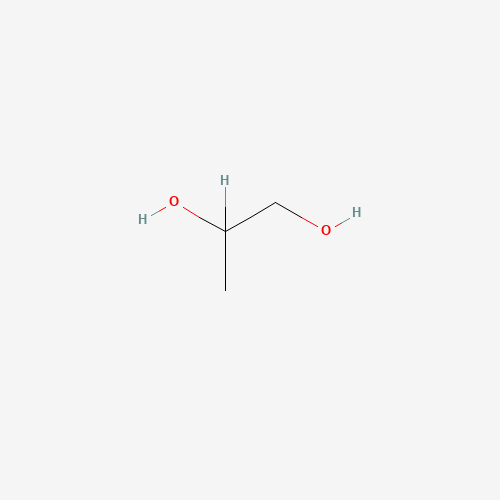
Propylene glycol is a humectant and carrier solvent, used to hold flavours and colours in solution and to keep foods moist. It is a common carrier in flavourings, which is how it reaches many products indirectly.
Where it is and isn’t permitted
| Jurisdiction | Status | Scope and limits | Citation |
|---|---|---|---|
| Australia and New Zealand | Permitted, with conditions | 55 food categories highest permitted level 30,000 mg/kg Show every food category
| Food Standards Code, Schedule 15, S15—5and 54 further provisionsretrieved 2026-10-17 |
| Canada | Permitted, with conditions | highest permitted level 350 mg/kg 5 permitted uses Show every permitted use
| Health Canadaand 4 further provisionsretrieved 2026-10-17 |
| European Union | No listed food uses foundThis site has not matched this substance to any food use on this jurisdiction’s list of authorised food additives. A food additive may be used only in foods that list names. Flavourings, enzymes, processing aids and added nutrients are regulated separately and do not appear on it. | ||
| Great Britain | No listed food uses foundThis site has not matched this substance to any food use on this jurisdiction’s list of authorised food additives. A food additive may be used only in foods that list names. Flavourings, enzymes, processing aids and added nutrients are regulated separately and do not appear on it. | ||
| Japan | Permitted, with conditions | Designated additive: Appended Table 1, item 377, プロピレングリコール (“Propylene Glycol” in the unofficial English translation). …Designated additive: Appended Table 1, item 377, プロピレングリコール (“Propylene Glycol” in the unofficial English translation). Standards for use — Specifications and Standards for Foods, Food Additives, etc. (MHW Notification No. 370 of 1959), Part II (Food Additives), F (Standards for use), entry プロピレングリコール: (1) [sets maximum levels of use for the foods stated] “プロピレングリコールの使用量は、プロピレングリコールとして、生めん及びいかくん製品にあってはその2.0%以下、ギョウザ、シュウマイ、春巻及びワンタンの皮にあってはその1.2%以下、その他の食品にあってはその0.60%以下でなければならない。” The Japanese is the standard as published. There is no official English translation of the Notification; the English in square brackets is this site’s description of what each sentence does, not a translation of the foods or the levels. Compositional specifications for this additive, in the same Notification, are not imported and are not shown here; nor are the general rules in F 添加物一般, which apply to every additive. | Regulations for Enforcement of the Food Sanitation Act (MHW Ordinance No. 23 of 1948), Appended Table 1retrieved 2026-10-18 |
| South Korea | Permitted, with conditions | Designated food additive: Standards and Specifications for Food Additives, Part III, 1. …Designated food additive: Standards and Specifications for Food Additives, Part III, 1. 일반식품첨가물 (general food additives), 프로필렌글리콜 (“Propylene Glycol”, the English the Code prints beside it). Main use (주용도) of 프로필렌글리콜: 유화제, 습윤제, 안정제. Standard for use (사용기준) of 프로필렌글리콜: (1) [sets a limit on the amount used] “프로필렌글리콜의 사용량은 1. 만두류:1.2% 이하 2. 땅콩 또는 견과류가공품 : 5% 이하 3. 아이스크림류:2.5% 이하 4. 빵류, 떡류, 빙과, 초콜릿류, 당류가공품, 잼류, 식물성크림, 탄산음료, 가공소금, 절임류, 주류, 기타 농산가공품류, 캡슐류 : 1% 이하 5. 건강기능식품 : 2% 이하(다만, 희석하여 음용하는 건강기능식품은 희석한 것으로서 0.3% 이하) 6. 상기 식품을 제외한 식품 : 2% 이하” The Korean is the standard as published. There is no official English translation of the current Code (the English version on MFDS’s website is the 2020 edition and has no legal effect); the English in square brackets is this site’s description of what each sentence does, not a translation of the foods or the levels. Compositional specifications (Part IV) are not imported, nor are the general standards in Part II, which apply to every additive. | Standards and Specifications for Food Additives (식품첨가물의 기준 및 규격), MFDS Notification, Part III (Standards for use, by item)retrieved 2026-10-18 |
| United States | Permitted | 21 CFR 184.1666retrieved 2026-10-17 | |
| Codex Alimentarius | Permitted, with conditions | 13 food categories highest permitted level 20,000 mg/kg Show every food category and its notes
| CXS 192-1995 Table One, INS 1520and 12 further provisionsretrieved 2026-09-07 |
How much is permitted
A listing usually limits the quantity as well as the food. Only one of the forms that takes is a figure: quantum satis and good manufacturing practice permit the amount the technological effect requires and no more, which is a limit rather than the absence of one. Figures below are the range across every food category this page is listed in, and categories differ between regulators — see how much is permitted.
| Australia and New Zealand | 30,000 mg/kg | 1 numeric limit, 54 GMP |
|---|---|---|
| Canada | 350 mg/kg | 1 numeric limit, 4 GMP |
| Japan | — | 1 no quantity stated |
| South Korea | — | 1 no quantity stated |
| United States | — | 1 no quantity stated |
| Codex Alimentarius | 300 mg/kg – 20,000 mg/kg | 13 numeric limit |
What it is made from
Produced from petroleum-derived propylene oxide. It should not be confused with ethylene glycol, the toxic antifreeze compound, which is a different substance.
- Vegan
- Vegetarian
Compare other additives on the dietary indexes.
- CAS registry number
- 57-55-6
- InChIKey
- DNIAPMSPPWPWGF-UHFFFAOYSA-N
- PubChem
- CID 1030
The two specifications, compared
The European Union sets identity and purity by regulation; JECFA publishes its own through FAO, advisory until a country adopts it. Both documents are below in full. These are the parameters each puts a number on.
| Parameter | European Union | JECFA |
|---|---|---|
| Assay | no less than 99.5 % | no less than 99.5 % |
| Sulphated ash | no more than 0.07 % | no more than 0.07 % |
| Lead | no more than 2 mg/kg | no more than 2 mg/kg |
The two documents state the same figures for every parameter compared here.
How the EU defines it
The legal specification an additive must meet to be sold as this E number in the EU — what it is, how it may be made, and the purity it must reach. From Commission Regulation (EU) No 231/2012.
A specification does not authorise use. This site holds no EU permission for Propylene glycol in food; see the EU row in the status panel above.
E 1520 Propane-1,2-diol
Synonyms: Propylene glycol
Assay, identification and purity criteria
Description and assay
- Einecs
- 200-338-0
- Chemical name
- 1,2-dihydroxypropane
- Chemical formula
- C₃H₈O₂
- Molecular weight
- 76,10
- Assay
- Content not less than 99,5 % on the anhydrous basis
- Description
- Clear, colourless, hygroscopic, viscous liquid
Identification
- Solubility
- Soluble in water, ethanol and acetone
- Specific gravity (20° C/20 °C)
- 1,035-1,040
- Refractive index
- [n]D ²⁰: 1,431-1,433
Purity criteria
- Distillation test
- 99,5% of the product distils between 185-189 °C. The remaining 0,5% consists mainly of dimers and traces of trimers from propylene glycol.
- Sulphated ash
- Not more than 0,07 %
- Water content
- Not more than 1,0 % (Karl Fischer method)
- Lead
- Not more than 2 mg/kg
How JECFA defines it
The international specification for identity and purity, prepared by the Joint FAO/WHO Expert Committee on Food Additives and published by FAO. It is a different document from any above, written by a different body and revised on its own cycle; it is advisory, and a country adopts it or does not.
INS 1520 Propylene Glycol
Synonyms: Propanediol, Methyl glycol, INS No. 1520 Methyl glycol; Propanediol
Assay, identification and purity criteria
Description and assay
- Specification history
- Prepared at the 49th JECFA (1997), published in FNP 52 Add 5 (1997) superseding specifications prepared at the 46th JECFA (1996), published in FNP 52 Add 4 (1996). Metals and arsenic specifications revised at the 63rd JECFA (2004). An ADI of 0-25 mg/kg bw was established at the 17th JECFA (1973)
- Chemical names
- Propane-1,2-diol, 1,2-dihydroxypropane
- C.A.S. number
- 57-55-6
- Chemical formula
- C 3 H 8 O 2
- Molecular weight
- 76.10
- Assay
- Not less than 99.5% on the anhydrous basis
- DESCRIPTION
- Clear, colourless, hygroscopic, viscous liquid
- FUNCTIONAL USES
- Solvent, glazing agent, humectant
- METHOD OF ASSAY
- Inject a 10-μl portion of the sample into a suitable gas chromatograph equipped with a thermal conductivity detector and a stainless steel column, 1-m x 1/4-in, packed with 4% Carbowax 20 M on 40/60-mesh Chromosorb T, or equivalent materials. The carrier gas is helium flowing at 75 ml/min. The injection port temperature is 240 o , the column temperature 120 to 200 o , programmed at a rate of 5 o per min, and the block temperature 250 o . Under the conditions described, the approximate retention time for propylene glycol is 5.7 min, and 8.2, 9.0, and 10.2 min for the three isomers of dipropylene glycol, respectively. Measure the area under all peaks by any convenient means, calculate the normalized area percentage of propylene glycol, and report as weight percentage.
Identification
- Solubility (Vol. 4)
- Soluble in water, ethanol and acetone
- Infrared absorption
- The infrared spectrum of a potassium bromide dispersion of the sample corresponds with the infrared spectrum below
Purity criteria
- Water (Vol. 4)
- Not more than 1.0% (Karl Fischer)
- Distillation range (Vol. 4)
- 99% v/v distils between 185-189 o
- Specific gravity (Vol. 4)
- d (20, 20): 1.035 - 1.040
- Sulfated ash (Vol. 4)
- Not more than 0.07% Test 5 g of the sample
- Free acid
- Add 3-6 drops of phenol red TS to 50 ml water, then add 0.1N sodium hydroxide until solution remains red for 30 sec. To this solution add about 50 g of the sample accurately weighed. Titrate with 0.01N sodium hydroxide until the original red colour returns and remains for 15 sec. Not more than 1.67 ml of 0.01N sodium hydroxide are consumed by a sample of 50.0 g.
- Lead (Vol. 4)
- Not more than 2 mg/kg Determine using an atomic absorption technique appropriate to the specified level. The selection of sample size and method of sample preparation may be based on the principles of the method described in Volume 4, “Instrumental Methods.”
Authorised in other additives, enzymes, flavourings and nutrients
These authorisations are not for use in food. They let this substance be used inside another additive, a food enzyme, a flavouring or a nutrient preparation — often as a carrier — and it reaches food only as part of that product. Annex III to Regulation (EC) No 1333/2008.
| Part | May be used in | Maximum level | Citation |
|---|---|---|---|
| Annex III, Part 1: Carriers in food additives | Colours, emulsifiers and antioxidantsNote (1): Maximum level from all sources in foodstuffs 3 000 mg/kg (individually or in combination with E 1505, E 1517 and E 1518). In the case of beverages, with the exception of cream liqueurs, the maximum level of E 1520 shall be 1 000 mg/l from all sources. | 1 000 mg/kg in final food (as carry-over) | Regulation (EC) No 1333/2008, Annex III, Part 1 |
| Annex III, Part 3: Food additives including carriers in food enzymes | Food enzymesCan be used as a carrier: Yes, only as a carrier Note (1): Including enzymes authorised as food additives. Note (2): Maximum level from all sources in foodstuffs 3 000 mg/kg (individually or in combination with E 1505, E 1517 and E 1518). In the case of beverages, with the exception of cream liqueurs, the maximum level of E 1520 shall be 1 000 mg/l from all sources. | In enzyme preparation: 500 g/kg In final food except beverages: (see footnote) In beverages: (see footnote) | Regulation (EC) No 1333/2008, Annex III, Part 3 |
| Annex III, Part 4: Food additives including carriers in food flavourings | All flavourings | 3 000 mg/kg from all sources in foodstuffs as consumed or as reconstituted according to the instructions of the manufacturer; individually or in combination. In the case of beverages, with the exception of cream liqueurs, the maximum level of E 1520 shall be 1 000 mg/l from all sources | Regulation (EC) No 1333/2008, Annex III, Part 4 |
| Annex III, Part 5, Section A: Food additives added in nutrients except in nutrients intended to be used in foodstuffs listed in Part E, point 01.10, of Annex II and foodstuffs for infants and young children listed in Part E, point 13.1, of Annex II | All nutrientsCan be used as a carrier: Yes, only as a carrier Note (1): Maximum level for E 1518 and E 1520 from all sources in foodstuffs 3 000 mg/kg (individually or in combination with E 1505 and E 1517). In the case of beverages, with the exception of cream liqueurs, the maximum level of E 1520 shall be 1 000 mg/l from all sources. | 1 000 mg/kg in final food (as carry-over) | Regulation (EC) No 1333/2008, Annex III, Part 5, Section A |
Every name it appears under
100 recorded names. A label may use any of them.
E number
- E1520
INS number
- 1520
CAS registry number
- 57-55-6
As it appears in regulation
- Propane-1, 2-diol
- Propane-1, 2-diol (propylene glycol)
- Propylene glycol
Other names
- (+-)-1,2-Propanediol
- (+-)-Propylene glycol
- (2RS)-PROPANE-1,2-DIOL
- (RS)-1,2-Propanediol
- 1,2 Propanediol
- 1,2-(RS)-Propanediol
- 1,2-dihydroxypropane
- 1,2-Propandiol
- 1,2-propanediol
- 1,2-Propylene glycol
- 1,2-Propylenglykol
- 2-Hydroxypropanol
- alpha-Propylene glycol
- alpha-Propyleneglycol
- Baby Wipes
- CVS Lubricant Eye Drops 15mL
- DEROFEN MIEL
- DL-1,2-Propanediol
- dl-Propylene glycol
- Dowfrost
- E 1520
- EGHMTW hair oil
- Equate Support Moisture Lubricant Eye
- Eyelash and Eyebrow Lengthener
- FEMA No. 2940
- GENERAL OB LUBRICANT
- Glycol, Propylene
- Hot Sweat Cream
- Ins no.1520
- Isopropylene glycol
- KETO-TREAT
- Kilfrost ABC-S
- Kollisolv pg
- Methyl Ethyl Glycol
- Methyl glycol
- Methylethyl glycol
- Methylethylene glycol
- Monohydrate, Propylene Glycol
- Monopropylene glycol
- MSM (MoSaengMo)
- Polypeptidemulti-Effectseye Cream
- Propan-1,2-Diol
- Propane-1,2-diol
- propylene glycol
- Propylene glycol (solvent)
- propylene glycol cefatrizine
- Propylene glycol dl-
- Propylene Glycol USP
- Propyleneglycolum
- Sentry Propylene Glycol
- Sirlene
- Solar Winter BAN
- Solargard P
- Systane Balance
- Systane COMPLETE
- Systane COMPLETE PF
- Systane Pro PF
- Trimethyl glycol
- Ucar 35
- Walgreen Sterile Lubricant
- Walgreens Lubricant Eye Drops
Systematic names
- propane-1,2-diol
Hazard reference values
EFSA and JECFA have both set an acceptable daily intake for Propylene glycol, and they agree: 25 mg/kg bw/day. An acceptable daily intake is a reference value set by a committee, not a threshold above which harm begins. See where the two committees differ.
| Type | Value | Population | Assessed by | Opinion |
|---|---|---|---|---|
| ADI | 25 mg/kg bw/day | — | JECFA | 2002 |
| ADI | 25 mg/kg bw/day | consumers | EFSA | not identified in the dataset |
Evidence and how bodies read it
What assessing bodies concluded
Each conclusion is paraphrased in the body's own framing, from the published opinion linked beneath it. Where bodies differ, both stand; this site does not adjudicate between them or add a view of its own.
EFSA 2018
The ANS Panel found no genotoxicity concern for propane-1,2-diol (E 1520) and saw no reason to revise the ADI of 25 mg/kg bw/day. It concluded that mean and high exposure in the refined brand-loyal scenario did not exceed the ADI in any population group.
Common questions
Assembled from what is above, in the words the questions are usually asked in. Each answer is the same statement the relevant section makes, with the same citations behind it.
- What is E 1520?
- E 1520 is Propylene glycol. Propylene glycol is a humectant and carrier solvent, used to hold flavours and colours in solution and to keep foods moist. It is a common carrier in flavourings, which is how it reaches many products indirectly.
- What is Propylene glycol used for in food?
- It is listed as a humectant — the role Canada, Codex and the US assign it. This page shows every function each regulator records, with the citation for each.
- Is Propylene glycol banned in Europe?
- No. Propylene glycol does not appear on the EU's list of authorised food additives, which is not the same as being banned: the EU permits an additive only where it has authorised it, and usually the reason for an absence is that no one applied. The EU has made no finding against this substance. It does mean it may not be used as a food additive in the EU today.
- Where is Propylene glycol permitted?
- Of the seven regulators this site reads, Australia and New Zealand, Canada, Japan, South Korea, the US and the Codex standard permit it. Each permission is for named foods at named levels, not a blanket one; the table on this page gives them with citations.
- Is Propylene glycol vegan?
- Yes. Propylene glycol is not derived from animals, and is suitable for vegetarians. This page says what it is made from and how.
Sources for this page
- anz retrieved 2026-10-17
- ca retrieved 2026-10-17
- jp retrieved 2026-10-18
- kr retrieved 2026-10-18
- ecfr retrieved 2026-10-17
- gsfa retrieved 2026-09-07
- euspecs retrieved 2026-10-18
- jecfaspecs retrieved 2026-09-23
Full licence terms and publisher details on Sources. How this page is built and updated: Method.
Machine-readable: a JSON record of this additive is given on request —how to ask for access.
Follow changes to Propylene glycol:Atom feed — regulatory events, and any change the weekly refresh detects in its provisions.